6 Best Mesh Laundry Bags For Blocking Delicate Accessories
Keep your delicates safe with our top six mesh laundry bags. This guide details the best durable designs to prevent snagging, stretching, and damage in wash.
After spending two decades at the loom and the knitting needles, I have learned that the most beautiful lace shawl can be ruined in a single, careless spin cycle. Protecting your hand-knit treasures requires more than just a gentle cycle; it demands a physical barrier between your yarn and the harsh agitation of a machine. Mesh laundry bags are the unsung heroes of a knitter’s laundry room, transforming your wash day from a high-stakes gamble into a stress-free routine. Here is how to choose the right gear to keep your stitches pristine and your fibers intact.
Baggu Go Pouch Set: Best For Delicate Lace Shawls


When you have spent fifty hours working a gossamer-thin mohair lace shawl, you need a bag that offers a fine, protective barrier. The Baggu Go Pouch set is exceptional because it features a tighter weave than standard laundry bags, effectively shielding delicate fibers from catching on the agitator.
These pouches are particularly useful for items that tend to "bloom" or shed, like angora or loose-twist alpaca blends. Because they aren’t strictly designed for laundry, the zippers are robust and stay closed, ensuring your project doesn’t escape during the rinse cycle.
The trade-off here is airflow. Because the mesh is finer, you must ensure you aren’t overstuffing the pouch so that water and soap can circulate freely through the fibers.
Eono Mesh Laundry Bags: Best Value Multi-Pack

If you are a prolific knitter who frequently washes entire sweater quantities, buying individual bags becomes expensive quickly. The Eono multi-pack provides a range of sizes, which is vital when you have a mix of bulky cowls and lightweight baby garments.
I appreciate these for their structured shape, which prevents the bag from collapsing into a tight ball during the wash. When a bag collapses, your knitwear can get compressed, leading to unwanted creases that are difficult to steam out later.
These are a fantastic entry-level choice, though the zippers may require a quick check after every few washes. If you notice a zipper sticking, a quick rub with a bit of beeswax will keep it gliding smoothly.
Brabantia Mesh Laundry Bag: Best Durable Option

Longevity is the hallmark of the Brabantia bag, which features a reinforced frame and a high-quality, snag-free zipper. For those who wash their favorite wool socks weekly, this bag will hold up to years of friction without fraying at the seams.
The material is slightly thicker than most, providing a structural buffer that keeps your hand-knits from being crushed against the drum. This is essential for garments made with delicate, high-twist merino that might otherwise lose its stitch definition under heavy pressure.
While it is a heavier investment, it pays for itself by preventing the tiny tears that often occur in cheaper, thinner mesh bags. It is the reliable workhorse your laundry room deserves.
Household Essentials Bag: Best For Heavy Knits

Heavy-weight wools, like worsted or chunky-weight fisherman’s sweaters, need room to move without becoming waterlogged and heavy. The Household Essentials bag is designed with a generous capacity and a sturdy mesh that allows for significant water flow.
When washing heavy knits, the weight of the water-saturated wool can actually stretch the fabric if the bag is too small. This bag’s size ensures that your heavy winter gear has enough space to remain buoyant during the cycle.
Avoid using these for very fine lace, however, as the mesh holes are larger to accommodate the needs of heavier, thicker yarns. If you put a fine lace shawl in here, you risk the shawl’s delicate loops poking through the mesh.
Honey-Can-Do Mesh Bags: Best For Small Projects

We all have those small, precious accessories—fingerless mitts, headbands, or swatches—that feel lost in a standard-sized bag. Honey-Can-Do bags are perfect for these smaller items, keeping them contained and preventing them from getting tangled in larger laundry items.
Using a bag that is too large for a small project is a common mistake; the item will tumble violently inside the excess space. These smaller bags keep your mitts snug and secure, minimizing the friction that leads to pilling.
They are also excellent for "blocking" swatches in the machine if you are testing how a new yarn reacts to washing. Just ensure the bag is small enough to keep the swatch flat rather than folded.
Whitmor Mesh Wash Bags: Best For Easy Access
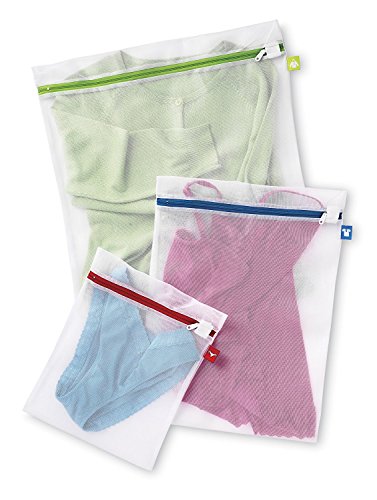
Sometimes the simplest tool is the best, and the Whitmor bags are a staple for a reason. They feature a straightforward design that is easy to open and close, which is a blessing when your hands are tired after a long knitting session.
These bags are widely available and offer a consistent, reliable mesh size that works for most standard wool projects. They are my go-to recommendation for beginners who need a fuss-free way to transition from hand-washing everything to using a machine’s delicate cycle.
The only downside is that the zippers can occasionally snag on the mesh itself. Always tuck the zipper pull into the protective elastic loop provided to prevent it from catching on your yarn.
How To Block Delicate Knits Using Mesh Bags
Blocking is the final, vital step of knitting that evens out your stitches and sets the garment’s final dimensions. While most people think of blocking as a flat-surface activity, the "wash-and-tumble" method is a secret weapon for superwash wools.
Place your damp, finished item inside a mesh bag and run a very short, low-spin cycle to remove excess water. This creates a uniform moisture level throughout the fabric, making it much easier to pin out on your blocking mats afterward.
Never use this method for non-superwash wools or delicate fibers like cashmere, as even a gentle cycle can lead to accidental felting. Always check your yarn label for the "machine wash" symbol before attempting this.
Why Mesh Bags Prevent Fiber Pilling And Snagging
Pilling occurs when loose fibers on the surface of your yarn rub against each other or against the rough surfaces of a washing machine drum. A mesh bag acts as a physical shield, ensuring your garment only touches the smooth surface of the bag rather than the metal drum.
Snagging is even more dangerous; a single rogue hook or zipper from a pair of jeans can pull a stitch, causing a ladder that is a nightmare to repair. By isolating your knits, you eliminate the risk of external hardware damaging your hard work.
Remember that even within a bag, friction exists. Always turn your garments inside out before placing them in the bag to ensure that any pilling that does occur happens on the "wrong" side of the fabric.
Essential Tips For Washing Hand-Knit Accessories
Always use a wool-specific detergent, as standard laundry soaps are often too harsh and can strip the natural lanolin from your yarn. Lanolin is what keeps wool soft and water-resistant, so protecting it is key to the longevity of your accessories.
Consider the weight of the item. A heavy, water-logged sweater should never be hung to dry, as the weight of the water will stretch the fibers permanently. Always lay your knits flat on a towel or drying rack after they come out of the mesh bag.
Finally, never mix your hand-knits with items that have zippers, hooks, or velcro. Even if your knits are safely inside a bag, those items can snag the mesh itself and potentially tear through to your garment.
Frequently Asked Questions About Blocking Tools
Can I wash silk or alpaca in a mesh bag? Silk and alpaca are notorious for being temperamental; I recommend hand-washing these in a basin rather than risking the machine, even with a bag. If you must use a machine, ensure the bag is the highest quality and the cycle is the shortest possible duration.
Does the mesh bag affect the soap distribution? Not significantly, provided you use a liquid detergent. Powdered detergents can sometimes get trapped in the mesh or fail to dissolve, so always dissolve your soap in water before adding your knits.
How do I know if my project is too big for a bag? If you have to force the item into the bag, it is too small. Your project should have enough room to move slightly so that the water and soap can penetrate every fiber evenly.
Taking care of your hand-knits is just as much a part of the craft as the actual knitting process. By using these mesh bags, you are extending the life of your projects and ensuring that your hard work remains as beautiful as the day you cast off. Treat your fibers with respect, choose your tools wisely, and your accessories will remain staples in your wardrobe for years to come.