7 Best Yarn Winders For Organizing Hanks Worth Having
Struggling with tangled yarn? We evaluate the 7 best yarn winders to help you organize hanks efficiently, saving time and frustration for every fiber artist.
There is nothing quite as frustrating as watching a beautiful, hand-dyed hank of luxury wool collapse into a tangled, hopeless bird’s nest mid-project. A high-quality yarn winder transforms these unruly hanks into neat, center-pull cakes that sit perfectly still while you knit. Investing in the right tool saves you hours of tedious detangling and preserves the integrity of your delicate fibers. Here are the top choices to help you tame your stash and keep your focus on the stitches.
Stanwood Needlecraft Large Metal Yarn Winder


The Stanwood Large Metal Yarn Winder is the gold standard for those who regularly work with bulky weight yarns or large yardage hanks. Unlike plastic models that can flex under tension, this unit features a heavy-duty metal gear system that feels solid and responsive.
If you are winding a massive 400-gram skein of superwash merino for a sweater, you need a winder that won’t skip or wobble. The metal gears provide a smooth, consistent rotation that prevents the yarn from snagging or unevenly stretching during the process.
The primary trade-off here is the footprint; this is a substantial piece of equipment that requires a sturdy table edge. However, if you are a serious knitter who buys yarn in sweater quantities, the durability of this metal construction makes it a true "buy it once" investment.
KnitPicks Hand-Operated Yarn Ball Winder

For the knitter who needs a reliable, entry-level tool that doesn’t break the bank, the KnitPicks Hand-Operated Winder is a perennial favorite. It is compact, lightweight, and surprisingly effective at turning small-to-medium hanks into tidy cakes.
This winder is ideal for someone just beginning to build their stash or for those who primarily knit with fingering weight sock yarns. It handles standard 100-gram hanks with ease, making it perfect for preparing your yarn before you cast on a new pair of heels.
Keep in mind that this is a plastic-based tool, so it isn’t designed for heavy, continuous commercial use. If you try to force a massive, heavy-worsted cake onto it, the gears may eventually protest, but for the hobbyist knitter, it remains a fantastic value.
Lacis Jumbo Yarn Ball Winder for Large Skeins

When you find yourself working with "jumbo" hanks—often found in hand-spun or artisanal yarns—a standard winder will fail you immediately. The Lacis Jumbo Yarn Ball Winder is specifically engineered to handle the extra volume without the cake becoming unstable.
The wide base and robust spindle allow you to wind significantly more yarn at once, which is a lifesaver when you are trying to combine multiple hanks for a large-scale project. It prevents the common issue of the yarn cake "blooming" or falling over because it couldn’t be contained by the spindle.
This tool is a bit of a niche purchase, but it is indispensable for the fiber artist who buys large, irregular hanks. If your stash is filled with bulky, unspun, or oversized skeins, this is the winder that will save you from having to split your yarn into multiple smaller balls.
Nancy’s Knit Knacks Heavy Duty Yarn Winder
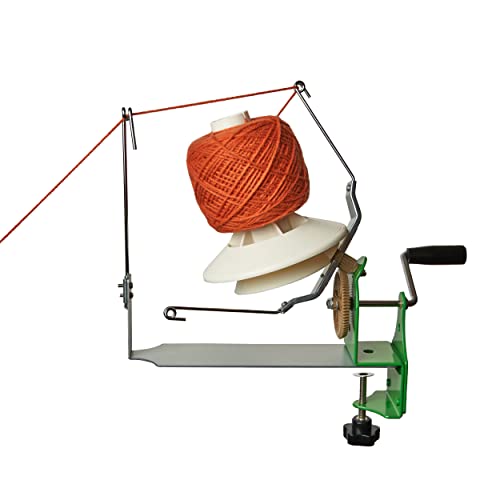
The Nancy’s Knit Knacks Heavy Duty Winder is widely respected for its longevity and its clever, user-friendly design. It is often cited by long-time knitters as the most reliable workhorse in the craft room.
What sets this model apart is the attention to the mechanical motion; it winds with a very specific, smooth tension that keeps the yarn from being pulled too tight. This is crucial for delicate fibers like alpaca or mohair, which can lose their loft if they are wound under too much strain.
While the price point is higher than basic plastic models, the quality of the components ensures that you won’t be dealing with stripped gears after a year of use. It is a professional-grade tool designed for the knitter who treats their yarn stash as a long-term collection.
U-nitt Metal Yarn Winder With Gear System
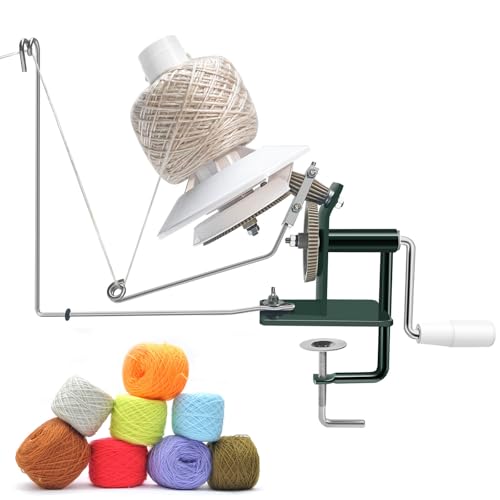
The U-nitt Metal Yarn Winder bridges the gap between industrial utility and home-knitting convenience. Featuring a robust gear system, it offers a level of precision that is hard to find in consumer-grade plastic winders.
The metal construction is particularly beneficial if you live in a dry climate or have a high-static environment, as it helps ground the yarn and reduce the "flyaway" effect often seen with synthetic fibers. It provides a consistent, rhythmic winding experience that feels almost meditative.
This winder is best suited for the knitter who wants a machine that feels like a permanent fixture on their craft desk. It is heavy, stable, and built to withstand the rigors of winding hundreds of yards of yarn without skipping a beat.
ChiaoGoo Hand-Operated Yarn Ball Winder

ChiaoGoo is a brand synonymous with quality in the knitting world, and their Hand-Operated Yarn Ball Winder maintains that reputation for reliability. It is a straightforward, no-nonsense tool that performs exactly as expected every time you use it.
It is particularly well-suited for knitters who already love ChiaoGoo needles and appreciate the brand’s focus on functional, ergonomic design. The tension guide is easy to thread, and the winding handle is positioned to minimize wrist strain during long sessions.
While it lacks the heavy-duty metal gears of more expensive units, its performance is remarkably consistent for its class. It is the perfect middle-ground choice for a knitter who wants a reliable, branded tool that won’t take up too much space or cost a fortune.
Royal Yarn Winder: A Classic Choice for Knitters
The Royal Yarn Winder is a nostalgic favorite that has been a staple in knitting circles for decades. It is a simple, effective design that has stood the test of time, proving that you don’t always need complex features to get the job done.
This winder is excellent for the occasional knitter who wants a functional tool that is easy to store away when not in use. It is lightweight and portable, making it a great option if you often take your knitting (and your winding) to local group meetups.
The bottom line is that the Royal Winder is a classic for a reason: it’s uncomplicated and gets the job done without fuss. While it may not have the high-speed capability of the heavy-duty metal models, it is a reliable companion for standard yarn weights and everyday projects.
Why Every Knitter Needs a Reliable Yarn Winder
A yarn winder is more than just a convenience; it is a tool for preserving the quality of your expensive fibers. When yarn is left in a hank, it is prone to tangling and catching, which can lead to broken strands or uneven tension when you finally start knitting.
By winding your hanks into center-pull cakes, you create a stable, organized source of yarn that feeds smoothly from the inside out. This allows you to maintain a consistent gauge, which is the most important factor in ensuring your finished garment actually fits the way it was intended.
Furthermore, a winder allows you to easily weigh your yarn using a kitchen scale, helping you track exactly how much you have left for a project. It turns the chaotic process of "yarn management" into a structured, satisfying part of your crafting routine.
How to Properly Wind a Center-Pull Yarn Cake
To get the perfect center-pull cake, you must start with a properly opened hank placed on a swift. Never try to wind directly from a twisted hank, as this will almost certainly result in a tangled mess that will stop your winder dead in its tracks.
As you begin to crank, keep a light, guiding hand on the yarn as it travels from the swift to the winder. This prevents the yarn from jumping off the guide and ensures the tension remains uniform throughout the entire winding process.
If you are winding a delicate yarn, such as a single-ply wool or a high-silk blend, wind slowly to avoid stretching the fiber. Remember, the goal is to create a cake that is firm enough to stand on its own, but not so tight that it loses its natural elasticity.
Essential Maintenance Tips for Your Yarn Winder
Your winder is a mechanical device, and like any tool, it requires occasional care to keep it running smoothly. The most important maintenance step is to keep the gears free of dust, lint, and stray fibers that can accumulate over time.
Periodically check the tension guide for any sharp edges or grooves that might have formed from friction against the yarn. If you notice the yarn snagging, a quick polish with a fine-grit sandpaper or a bit of wax can often smooth out the surface and restore performance.
Finally, avoid over-tightening the clamp that attaches the winder to your table. While you want it to be secure, too much pressure can warp the base of plastic models, leading to misaligned gears and a winder that wobbles or squeaks during use.
Choosing the right yarn winder is a personal decision that depends on the volume of your stash and the types of fibers you prefer to use. Whether you opt for a heavy-duty metal machine or a simple, portable plastic winder, the goal remains the same: protecting your yarn and simplifying your knitting process. Once you make the transition to center-pull cakes, you will wonder how you ever managed to knit without one. Happy winding, and may your yarn always flow smoothly from your cakes to your needles.