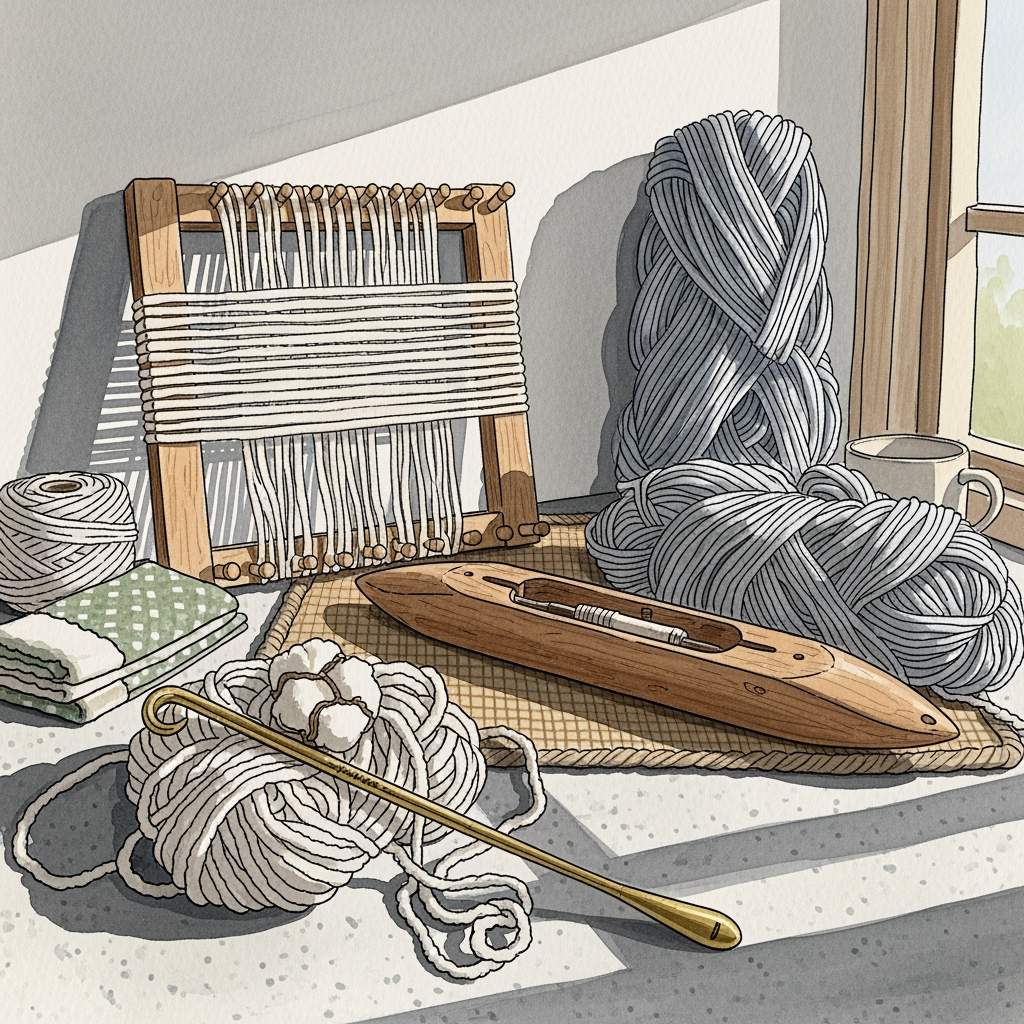
6 Best Warping Boards For Long Warp Lengths Tested
We tested 6 warping boards to find the best for long projects. Discover our top picks for stability, capacity, and ease of use in this comprehensive review.
Preparing a long warp is the foundational step that determines the success of every complex weaving project, from intricate table runners to heirloom-quality blankets. Choosing the right warping board is not just about convenience; it is about maintaining consistent tension to prevent dreaded uneven selvedges or tangled threads. With two decades of experience behind the loom, I have learned that the right tool transforms a tedious chore into a rhythmic, meditative process. Here are the top six warping boards that stand up to the demands of long, high-tension warp lengths.
Schacht Flip Folding Warping Board: Best Overall


When space is at a premium in your studio, the Schacht Flip is a revelation. It manages to offer a generous capacity while folding down into a compact profile that slides easily under a bed or behind a door.
The construction is rock-solid, which is essential when you are winding a long, high-tension warp. If you have ever had a board flex or wobble while under the strain of a thick wool warp, you know how quickly that ruins your tension. The pegs are positioned perfectly to allow for smooth cross-winding without snagging your fibers.
The bottom line is that this board strikes the best balance between footprint and professional utility. It is an ideal choice for the weaver who wants to work on larger projects but doesn’t have a dedicated weaving room to leave equipment set up permanently.
Leclerc Vertical Warping Mill: Best for Long Warps
If you are planning to weave a long, multi-yard warp, a traditional board may become physically exhausting to use. The Leclerc Vertical Warping Mill allows you to wind your warp in a circular motion, which is far more ergonomic than walking back and forth across a flat board.
Because you are rotating the mill, you maintain a consistent physical distance from the yarn path. This reduces the likelihood of "tension drift," where your warp threads vary in tightness as you move further from the starting point. It is a game-changer for those tackling large-scale projects like long curtains or multiple sets of placemats.
While it does require more floor space than a wall-mounted board, the efficiency gain is undeniable. If you find your shoulders aching after warping a 10-yard project, this piece of equipment will save your practice.
Ashford 11-Yard Warping Board: Best for Beginners

The Ashford 11-yard board is the quintessential "first board" for a reason. It is straightforward, intuitive, and lacks the intimidating complexity of larger, adjustable systems.
For a beginner, the most important factor is understanding how to build a cross—the crucial intersection of threads that keeps your warp organized. This board’s layout makes the cross-building process visible and easy to manage. You aren’t fighting the tool; you are learning the mechanics of the warp.
It is sturdy enough to handle standard cottons and wools without feeling flimsy. While you might eventually outgrow the 11-yard limit, it serves as an excellent training ground for mastering the fundamentals of loom preparation.
Glimakra Wooden Warping Frame: Best Professional
Glimakra tools are legendary for their craftsmanship, and their wooden warping frame is no exception. This is a tool designed for the weaver who treats their craft with the seriousness of a master artisan.
The wood is finished to a high standard, ensuring that your delicate silk or fine linen warps won’t catch on rough grain. When you are working with high-twist yarns that are prone to snarling, having a smooth, snag-free surface is the difference between a smooth setup and a frustrating afternoon of detangling.
This frame is built to last a lifetime. It is a significant investment, but for the weaver who spends hours every week at the loom, the tactile pleasure and reliability of this frame are worth every penny.
Kromski Adjustable Warping Board: Best Versatility
The Kromski adjustable board is a brilliant solution for weavers who fluctuate between small samples and full-length projects. The ability to move the pegs allows you to customize the board to the specific length of your warp, rather than being forced to use a fixed-length path.
This versatility is particularly useful when you are calculating for loom waste. By adjusting the board, you can minimize the amount of yarn left on the loom as "thrums," saving you money and reducing fiber waste over the long term.
It is a flexible system that grows with your skill level. If you are the type of weaver who likes to experiment with different loom setups and varying warp lengths, this board will adapt to your changing needs.
Harrisville Designs Warping Mill: Best Durability

Harrisville Designs has a reputation for creating equipment that can withstand the rigors of a busy school or studio environment. Their warping mill is built like a tank, featuring heavy-duty construction that remains stable even under the tension of a very long, heavy warp.
Durability matters because a warping mill is subject to constant lateral pressure as you wind your threads. Cheaper models can develop a "wobble" over time, which introduces inconsistency into your warp. The Harrisville model stays true, ensuring that your tension remains uniform from the first thread to the last.
If you are a high-volume weaver, this is the workhorse you want in your corner. It is a no-nonsense tool that prioritizes structural integrity above all else.
Essential Factors for Choosing a Warping Board
When selecting a board, consider the maximum length of the projects you intend to weave. A board that is too short will force you to wind your warp in sections, which increases the risk of tangles and tension variations.
- Material: Hardwood boards offer better durability and smoother surfaces than softwoods.
- Peg Strength: Ensure the pegs are securely anchored; they should not flex under tension.
- Space: Measure your workspace, including the area you need to stand while winding.
- Portability: If you have a small space, prioritize folding or wall-mounted designs.
Remember that the board is only as good as your ability to use it consistently. No matter which model you choose, focus on developing a rhythmic, even winding technique.
Understanding Warp Capacity and Loom Compatibility
Your warping board capacity must exceed your desired warp length by at least the amount of loom waste you expect. Loom waste is the length of yarn that cannot be woven because it is held by the loom’s mechanics, usually between 18 and 30 inches.
If you are using a rigid heddle loom, you may be able to get away with a smaller board than someone using a floor loom with a deeper shed. Always check the manufacturer’s specifications for maximum warp capacity to avoid mid-winding surprises.
It is better to have a board that is slightly larger than you think you need. Having extra space on the board allows for easier threading and more room to manage your lease sticks and cross.
How to Maintain Your Warping Board for Longevity
A warping board is a long-term investment, but it requires basic care to stay in top shape. Periodically check that all pegs are tight and free of burrs or splinters that could snag your yarn.
If your board is made of unfinished wood, a light sanding with fine-grit sandpaper can remove any rough spots that appear over time. Avoid using waxes or oils that could transfer to your yarn, as these can interfere with dyeing or finishing processes later on.
Store your board in a climate-controlled environment to prevent the wood from warping or cracking. A warping board that is kept dry and clean will serve you faithfully for decades.
Frequently Asked Questions About Warp Management
Q: Can I use a warping board for very fine lace yarn? A: Yes, but ensure the board is smooth. If you are worried about snagging, you can lightly buff the pegs with a soft cloth before starting.
Q: Is a warping mill always better than a board? A: Not necessarily. Mills are better for speed and long warps, but boards often provide more control for beginners learning to manage a cross.
Q: How do I prevent my warp from sagging? A: Sagging is usually a result of uneven tension during winding. Keep your yarn path consistent and use a tensioning device if the board allows.
Selecting the right warping board is a deeply personal decision that should align with your specific weaving goals and studio space. Whether you prioritize the portability of a folding board or the professional-grade stability of a vertical mill, the goal remains the same: a perfectly tensioned warp that makes weaving a joy. Take your time, assess your typical project lengths, and invest in a tool that will support your craft for years to come. Happy weaving, and may your selvedges always be straight.