7 Best Project Notebooks For Record Keeping To Use
Stay organized with our top 7 project notebooks. We review essential features for effective record-keeping to help you find the perfect tool for your work.
Every project you cast on tells a story, but even the most seasoned knitters often forget the specific needle size or yarn batch that made a garment sing. Keeping a dedicated project notebook transforms your knitting from a series of isolated tasks into a cohesive, evolving craft practice. Whether you are tracking complex lace repeats or simply trying to remember which bind-off you used for a pair of socks, the right journal acts as your external memory. Here are seven of the best options to help you document your journey from first stitch to final weave-in.
The Knit Kit Project Journal: Best Overall Choice
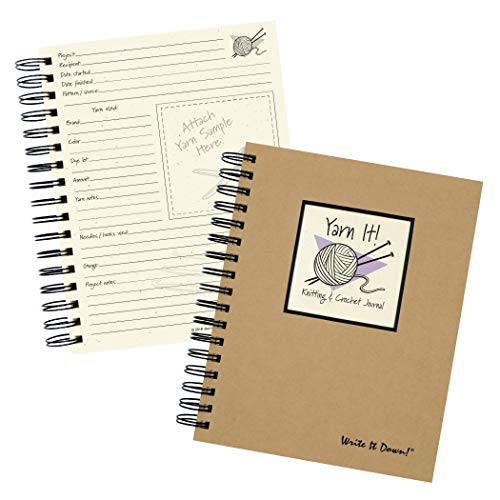

This journal is designed specifically for the way a knitter’s mind actually works. It balances structured data entry with enough open space to account for the unpredictable nature of fiber arts.
If you have ever reached the end of a sweater only to realize you forgot to note the dye lot of your yarn, you will appreciate the dedicated fields here. It forces you to pause and record the "boring" details that become vital if you ever need to repair a snag or duplicate a successful fit.
The layout is intuitive, making it a fantastic choice for intermediate knitters who want to track multiple projects simultaneously. It avoids the fluff of generic planners, focusing instead on the metrics that actually impact the final fabric.
Cocoknits Maker’s Journal for Project Planning
Cocoknits understands that knitting isn’t just about the stitches; it’s about the entire construction process. This journal is built for makers who view their projects through an engineering lens.
It excels at helping you map out modifications, which is essential if you are adjusting a pattern for a different body type or fiber weight. The pages are designed to hold up to the wear and tear of being tossed into a project bag alongside sharp needles and metal stitch markers.
The trade-off here is the level of detail; it requires a commitment to filling out every section. If you prefer a quick, "just-the-facts" log, this might feel slightly overwhelming. However, for those who love to tweak patterns and customize fits, it is an invaluable tool.
Fringe Association Field Notes for Knitters

Sometimes the best notebook is the one you actually carry with you to the yarn shop or your local knitting group. These slim, portable journals are perfect for jotting down quick notes on the go.
They are ideal for tracking your "stash" or comparing WPI (wraps per inch) when you find a mystery skein of yarn in a bin. Because they are compact, they fit easily into even the smallest notions pouch.
Don’t expect to document a complex colorwork chart in these, as the space is limited. Instead, use them for essential project snapshots and quick reminders that you can transfer to a larger archive later.
The Knitter’s Planner: Best for Time Management
If you are a knitter who struggles with "Startitis"—the urge to cast on five projects at once—this planner is your best defense. It helps you manage your time and prioritize your WIPs (works in progress) effectively.
It includes calendars that allow you to set realistic deadlines for gifts or seasonal garments. Seeing your progress mapped out over a month can be the difference between finishing that holiday sweater and having it sit in a basket until next year.
The structured nature of this planner is its greatest strength, but it can feel rigid. If you prefer a more fluid, organic approach to your knitting schedule, you might find the date-based layout restrictive.
Moleskine Classic Notebook for Custom Logbooks

The Moleskine is the gold standard for those who want a blank canvas. It offers high-quality paper that handles everything from ink pens to glued-in yarn swatches without bleeding through.
Using a blank notebook allows you to create your own system. You can dedicate one page to a hand-drawn schematic of a garment and the next to a list of row counts for a sleeve increase.
The downside is that you have to build the structure yourself, which can be daunting for beginners. If you are a visual thinker who likes to sketch stitch patterns, this is the most flexible medium available.
Leuchtturm1917 Notebooks for Detailed Tracking

Leuchtturm1917 journals are beloved for their numbered pages and table of contents, which makes indexing your projects effortless. Over time, you will build a personal library of your knitting history.
The paper weight is excellent for those who use fountain pens or markers to color-code their charts. It provides a tactile, professional experience that makes the act of logging your project feel like a reward rather than a chore.

Because these notebooks are durable, they are perfect for long-term archiving. You will be grateful to have these records years later when you want to recreate a specific cable detail or remember how a certain wool-alpaca blend blocked out.
Rite in the Rain Journal for Outdoor Knitting

If you are a knitter who takes your craft to the park, the beach, or on hiking trips, you know the dangers of moisture and spills. This journal is specifically engineered to repel water, mud, and grease.
It is an unconventional choice, but for those who knit outdoors, it is the only way to ensure your notes survive the elements. The paper has a unique texture that feels different from standard journals, so it’s worth testing with your favorite pen first.
It is a specialized tool, but it serves its purpose perfectly. If you are a traveling knitter who values durability over aesthetics, this is an essential addition to your kit.
Why You Should Keep a Detailed Knitting Journal
A journal does more than just track progress; it creates a record of your growth as a maker. You will notice patterns in your tension, your preference for certain needle materials, and the types of fibers you enjoy working with most.
When you hit a plateau, looking back at your early projects can provide a massive confidence boost. It also serves as a technical reference, saving you from repeating the same mistakes twice.
Ultimately, keeping a journal turns your knitting into a tangible history of your creative life. It transforms a pile of finished objects into a legacy of skill and experimentation.
Essential Data to Track in Your Project Notes
To make your notes truly useful, you need to move beyond just the pattern name. Focus on the variables that directly impact the outcome of your fabric:
- Yarn details: Brand, fiber content, colorway, and dye lot.
- Needle specifications: Material (wood, metal, carbon), size, and cable length.
- Gauge measurements: Both pre- and post-blocking to understand how the fabric grows.
- Modifications: Every change you made to the pattern, no matter how small.
- Calculations: Your math for stitch counts or row repeats.
By tracking these, you create a "recipe" for your success. If a garment fits perfectly, you will know exactly how to replicate it in a different color.
How to Organize Your Knitting History Effectively
The key to a good system is accessibility. Don’t worry about making it look perfect; focus on making it easy to search.
Use a consistent format for every entry so your brain knows where to look for information. If you have a large collection of journals, create a master index or digital spreadsheet that lists your projects by year, fiber type, or garment category.
Treat your notebook as a living document. It’s okay to have messy sketches, taped-in yarn swatches, or coffee stains on the pages. The value is in the information, not in the presentation.
Your knitting journey is unique, and your project notebook should be a reflection of that path. Whether you choose a highly structured planner or a simple blank notebook, the act of recording your work will deepen your understanding of the craft. Start small, be consistent, and enjoy the process of documenting your evolution as a fiber artist. Happy knitting, and may your rows always be even.