6 Best Sewing Gauges For Accurate Seam Allowance
Achieve perfect seams with our top 6 sewing gauges. This guide compares essential tools to help you maintain consistent, accurate allowances in every project.
Achieving a consistent seam allowance is the quiet secret behind a professional-looking knitted garment that fits exactly as intended. While many fiber artists focus exclusively on needle size and tension, the precision of your finishing work often dictates the final structure of the piece. A reliable sewing gauge acts as the bridge between your hand-knitted fabric and a perfectly tailored result. These six tools offer the accuracy needed to ensure your seams are as thoughtful as your stitches.
Clover 5-in-1 Sliding Gauge: The Top All-Rounder


The Clover 5-in-1 is a staple in many sewing kits because it offers more than just a straight edge. It features a sliding marker that stays put, allowing you to check seam allowances, hem depths, and even buttonhole spacing with a single tool.
For knitters who occasionally dabble in sewing linings or attaching facings, this tool is incredibly versatile. It eliminates the guesswork when you are trying to match a seam allowance to the specific weight of your knitted fabric.
The plastic construction is lightweight, though it lacks the heft of metal options. If you are prone to misplacing your tools, the bright color makes it easy to spot on a cluttered craft desk.
Dritz Sewing Gauge: Best Value for Beginners
If you are just starting to experiment with sewing seams into your knitwear, you don’t need a complex array of tools. The Dritz Sewing Gauge is a classic, no-nonsense metal ruler that does exactly what it promises.
It is inexpensive and durable enough to survive being tossed into a project bag alongside your circular needles. The sliding marker is simple to adjust, making it perfect for quick checks during the construction of a cardigan or sweater.
Because it is made of aluminum, it won’t warp or melt if it accidentally touches your iron during a pressing session. It is the perfect "starter" tool that will likely stay in your kit for years.
Collins Metal Sewing Gauge: Best for Durability and Precision
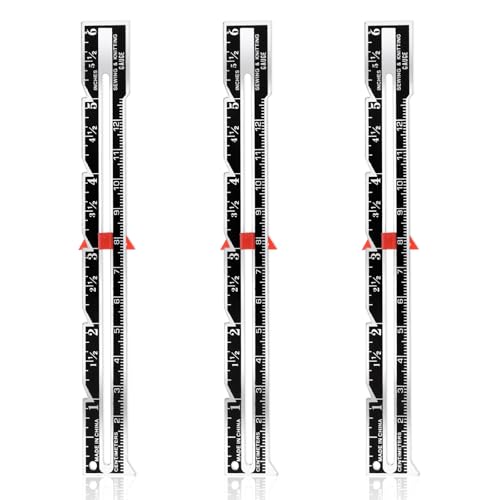
When you are working with expensive hand-dyed wool or delicate silk blends, you want a tool that won’t flex or bend. The Collins Metal Sewing Gauge offers a rigid structure that provides a consistent edge for marking.
Its etched markings are highly visible and won’t rub off after a few months of heavy use. This is crucial when you are measuring tight, precise seam allowances on delicate, fine-gauge knitting.
The downside to its rigidity is that it doesn’t have the "give" of plastic, so it feels very mechanical. However, for the knitter who values precision above all else, this tool feels like a professional instrument.
Singer Multi-Purpose Gauge: Best for Hemming
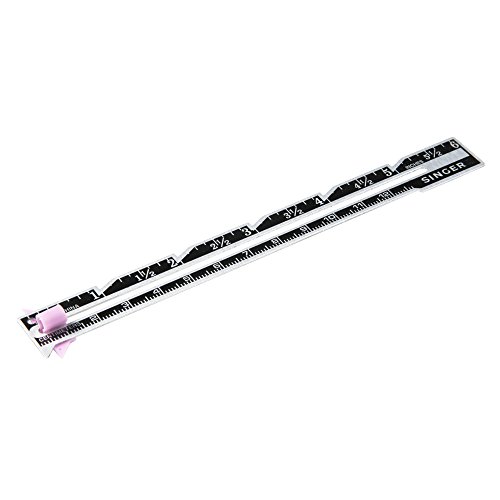
Hemming a knitted garment can be tricky because the fabric often has a natural bias or stretch. The Singer Multi-Purpose Gauge is designed specifically to help you fold and press consistent hems without distorting the knit stitches.
Its unique shape allows you to slide it inside a hem to hold the fabric in place while you steam it. This is a game-changer for those who struggle with "wavy" hems on stockinette-based projects.
It is particularly useful when working with slippery fibers like bamboo or rayon blends. These fibers tend to shift, and having a dedicated tool to hold the fold while you work is essential for a clean finish.
Hemline Sliding Gauge: Best for Curved Seams
Knitted garments often have curved edges, such as armscyes or necklines, where a standard straight ruler just won’t cut it. The Hemline Sliding Gauge is designed to navigate these curves with ease, allowing for accurate seam allowances even on non-linear edges.
The slider moves smoothly, which is a significant advantage when you are working on a complex project and need to move quickly. It helps prevent the fabric from stretching out of shape while you measure.
If you are sewing a set-in sleeve into a hand-knitted sweater, this tool is your best friend. It helps ensure that the seam allowance remains uniform throughout the entire curve of the armhole.
Quilter’s Rule 6-Inch Gauge: Best for Accuracy
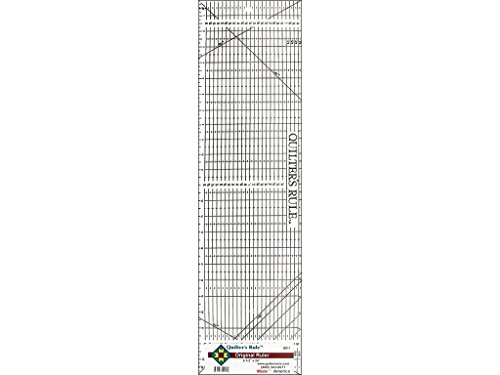
Quilters are notoriously obsessed with precision, and their tools often bleed over into the knitting world for good reason. The Quilter’s Rule 6-Inch Gauge is exceptionally precise, with markings that are fine enough for the most detailed work.
If you are working on intarsia or stranded colorwork where the seams must be perfectly aligned to maintain the pattern, this is the tool for you. The clarity of the lines allows you to measure to the millimeter.
It is a bit more expensive than a standard sewing gauge, but the quality is evident in the feel of the material. It is a "buy it once" tool that will serve you well through countless projects.
Why Accurate Seam Allowances Matter for Knits
Many knitters assume that because knitting is stretchy, seam allowances don’t need to be perfect. This is a common misconception that can lead to garments that pull, sag, or lose their intended shape over time.
When you sew a seam, you are effectively "locking" a portion of the fabric. If one side of a seam has a 1/2-inch allowance and the other has a 3/4-inch allowance, the garment will pull unevenly.
Consistent seam allowances distribute the weight of the garment evenly across the seam. This prevents stress points that could eventually lead to dropped stitches or thinning fabric in high-wear areas like underarms.
How to Use a Sliding Gauge for Precise Hems
To get the most out of your sliding gauge, start by setting the marker to your desired hem depth. Place the gauge flat against the edge of your fabric and fold the edge up to meet the marker.
Always press your hem while the gauge is nearby, but be careful not to press the gauge itself if it is made of plastic. Use a light touch; you want the fabric to conform to the gauge, not the other way around.
If you are working with a heavy yarn, like a bulky wool, remember that the thickness of the fabric will eat into your allowance. You may need to adjust your gauge slightly to account for the "turn of the cloth."
Essential Features to Seek in a Sewing Gauge
When shopping for a gauge, look for markings that are etched rather than printed. Printed markings will eventually fade, especially if you are working with lanolin-rich wools that can be slightly oily.
Consider the material based on your environment. If you do a lot of pressing, metal is superior to plastic because it won’t warp under heat.
Finally, test the slider. It should be firm enough to stay in place, but smooth enough to adjust with one hand. A slider that slips constantly is more frustrating than having no gauge at all.
Tips for Maintaining Your Metal Sewing Notions
Metal gauges are hardy, but they aren’t invincible. Keep them clean by wiping them down with a soft cloth after use to remove any residual lanolin or fiber dust that might accumulate.
If your metal gauge starts to feel "sticky," a tiny drop of sewing machine oil on the slider track can work wonders. Just be sure to wipe away any excess so it doesn’t transfer to your beautiful hand-knitted wool.
Store your gauge in a dedicated pouch or a magnetic board. Keeping it away from moisture will prevent any oxidation, ensuring your tool remains accurate for years to come.
Investing in a quality sewing gauge is a small step that yields massive improvements in the professional look of your knitted items. By choosing a tool that fits your specific needs—whether it’s the versatility of the Clover or the precision of the Quilter’s Rule—you empower yourself to finish every project with confidence. Remember, the beauty of a hand-knitted garment is in the details, and a consistent seam is the foundation of a piece that lasts a lifetime. Happy knitting, and may your seams be as straight as your stitches.