6 Best Yarn Guides For Multi-color Knitting To Try
Master multi-color knitting with these six essential yarn guides. Learn to manage tension, choose palettes, and perfect colorwork techniques with ease.
Stepping into the world of multi-color knitting opens up a vibrant landscape of design possibilities, but choosing the right yarn is the foundation of your success. Whether you are tackling a traditional Fair Isle sweater or a modern color-blocked accessory, the fiber you select dictates how your stitches behave and how your colors interact. This guide highlights six essential yarns that offer distinct advantages for stranded, intarsia, or mosaic projects. By understanding these materials, you can move beyond simple aesthetics to choose yarns that truly support your technical goals.
Jamieson’s of Shetland: Best for Traditional Fair Isle
If you are planning an authentic Fair Isle project, there is no substitute for the authentic "stickiness" of Shetland wool. This yarn is spun from the fleeces of Shetland sheep, resulting in a fiber that is slightly coarse and full of crimp.
This texture is the secret weapon for stranded colorwork. Because the fibers grab onto one another, your floats—the strands of yarn carried across the back of the work—stay firmly in place. This prevents the dreaded "puckering" that can occur with smoother, slicker yarns.
Be aware that this yarn is not soft against the skin, and it can feel quite rustic while you are knitting. However, after a thorough soak and block, the fibers bloom and soften significantly, creating a cohesive, wind-resistant fabric that lasts for decades.
Rowan Felted Tweed: Best for Versatile Colorwork
Rowan Felted Tweed is perhaps the most beloved yarn in the modern colorwork community for good reason. It is a blend of merino, alpaca, and viscose, which creates a lightweight, airy fabric that behaves beautifully in stranded patterns.
The magic of this yarn lies in its "halo." The slight fuzziness of the fiber helps blur the transition between colors, making your colorwork look seamless and professional even if your tension isn’t perfectly uniform.
Because it is a DK weight, it works up quickly, making it ideal for sweaters and cardigans. It is not as "grippy" as Shetland wool, so if you are a beginner at holding two strands at once, you may find it slides a bit more on your needles.
Brooklyn Tweed Loft: Best for Crisp Stitch Definition
When you want your colorwork to look like a sharp, graphic illustration, Brooklyn Tweed Loft is the gold standard. This is a woolen-spun yarn, meaning the fibers are arranged in a disorganized, airy way that traps a great deal of air.
This construction makes the yarn incredibly light and provides exceptional stitch definition. When you work a complex geometric motif, every stitch will pop clearly against the background, ensuring your hard work is visible from across the room.
Because it is a single-ply yarn, it is more delicate than plied alternatives. It can break if you pull too hard, so it is best suited for knitters who have a light touch and are comfortable handling slightly more fragile materials.
Cascade 220 Heathers: Best Value for Large Projects


If you are embarking on a massive colorwork project like a full-length coat or a heavy blanket, the cost of high-end wool can become prohibitive. Cascade 220 Heathers offers a massive palette of colors at a price point that makes large-scale projects realistic.
The "heathered" aspect of this yarn is its greatest strength for colorwork. The subtle flecks of different shades within each ball help bridge the gap between colors, creating a more harmonious and sophisticated finished look.
Keep in mind that this is a standard 100% Peruvian Highland wool, which is sturdy and reliable but lacks the extreme softness of luxury fibers. It is a workhorse yarn that will stand up to years of wear and tear, making it perfect for items that will see daily use.
Malabrigo Rios: Best for Vibrant Hand-Dyed Effects
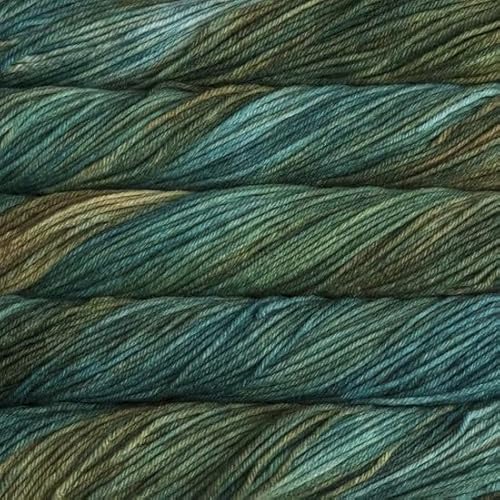
Malabrigo Rios is a superwash merino that offers depth of color that is almost unmatched in the industry. If you want your colorwork to have a painterly, multi-dimensional quality, this is the yarn to reach for.
Because it is a superwash fiber, it is smooth and has a beautiful drape. It is also machine washable, which is a massive bonus for garments that you intend to wear frequently.
The trade-off is that superwash wool is heavier and has less "memory" than non-superwash wool. If you are knitting a garment that requires a very specific structure, ensure you knit a gauge swatch and block it aggressively to see how much the fabric will grow or stretch.
Sandnes Garn Peer Gynt: Best for Sturdy Colorwork
Sandnes Garn Peer Gynt is a Norwegian classic that has gained massive popularity for its durability and firm structure. It is a 100% Norwegian wool that feels substantial in your hands and produces a garment that will hold its shape indefinitely.
This yarn is the antithesis of the "soft and slouchy" trend. It creates a crisp, architectural fabric that is perfect for traditional Norwegian sweaters that need to withstand harsh weather.
If you are looking for a yarn that won’t pill or sag over time, this is it. While it may feel a bit stiff while you are knitting, the resulting garment will be a heirloom piece that maintains its structure for years.
How to Manage Multiple Yarn Strands While Knitting
Managing two or more strands of yarn requires finding a rhythm that feels natural to your hands. Many knitters prefer the "two-handed" method, where one color is held in the left hand (picked) and the other in the right hand (thrown).
If you find that your hands are cramping, try using a colorwork ring or a thimble. These tools keep the strands separated, preventing them from twisting around each other as you work your way across the row.

Ultimately, the goal is to keep your floats consistent. If you are carrying a strand for more than three or four stitches, you must "trap" the float by twisting it with the working yarn to prevent long, snag-prone loops on the inside of your garment.
Understanding Color Theory for Multi-Color Projects
The success of a colorwork project often depends more on value—the lightness or darkness of a color—than on the hue itself. If two colors have the same value, they will blend together and the pattern will be lost, no matter how beautiful the colors are individually.
A simple trick to check your color choices is to take a black-and-white photo of your yarn skeins together. If you cannot clearly distinguish one from the other in the photo, they are too close in value for a high-contrast pattern.
Don’t be afraid to incorporate a neutral or a "bridge" color to help separate two bold shades. Sometimes, a thin line of white or charcoal is all you need to make a complex motif pop.
Essential Tools for Keeping Your Yarn Tangle Free
The biggest frustration in multi-color knitting is often the "yarn ball dance" where your skeins become a knotted mess. To solve this, consider using yarn bowls or even simple ceramic mugs to keep each ball in its own designated space.
If you are working with many colors at once, such as in intarsia, use bobbins to keep the yarn from tangling. These small plastic or cardboard tools allow you to wind off only the amount of yarn you need, keeping the rest of the strand contained.
Always ensure your yarn is wound into a center-pull cake or a neat ball before you begin. A messy hank will almost always lead to a tangle, which can ruin your momentum and lead to uneven tension.
Tips for Achieving Even Tension in Colorwork
Tension issues in colorwork usually stem from the difference in how you hold the two yarns. If one yarn is held tighter than the other, you will see "puckering" or "stretching" in your finished fabric.
To combat this, practice knitting a simple swatch using both hands to feel the difference in your tension. If you find one hand is naturally tighter, try using a slightly larger needle for the color held in that hand, or simply focus on relaxing your grip.
Remember that blocking is not a magic eraser for poor tension. While it can smooth out minor irregularities, it cannot fix a project where the floats are too tight to allow the fabric to stretch. Always swatch, wash, and block your colorwork before starting your main project.
Mastering multi-color knitting is a journey that rewards patience and experimentation with texture and hue. By selecting the right yarn for your specific project and refining your technique, you can elevate your work from simple knitting to true fiber art. Remember that every knitter’s tension is unique, so trust your hands and prioritize your comfort as you develop your own signature style. Happy knitting, and may your floats always be even and your colors perfectly chosen.