6 Best Ergonomic Grips For Thin Metal Needles
Enhance your crafting comfort with our top 6 ergonomic grips for thin needles. Discover tools that reduce hand fatigue and improve precision during long tasks.
Knitting with thin metal needles is a rite of passage for every sock knitter, but the small diameter often leads to localized cramping and strain. These slender tools are essential for achieving the tight gauge required for durable garments, yet they can be punishing on the hands over long sessions. Finding the right ergonomic grip can transform a painful project into a meditative experience. Here are the best solutions to keep you stitching comfortably for hours on end.
Addi Comfort Grip Handles for Precision Needles
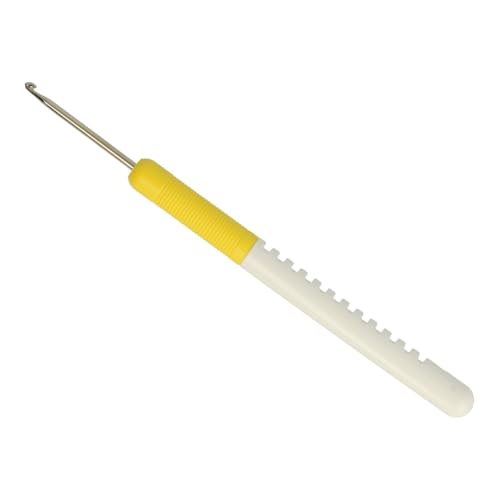

Addi’s approach to comfort is rooted in their signature German engineering, focusing on a firm but yielding surface. These handles are designed to slide onto your existing metal needles, instantly increasing the diameter of the shaft.
If you are working on a pair of fine lace socks, the added bulk helps distribute the pressure across your palm rather than concentrating it on your fingertips. The material is dense enough to provide support without feeling mushy or unstable.
The primary tradeoff here is the weight distribution. Adding a handle to a short needle can make the tool feel slightly top-heavy, which might take a few rows to adjust your muscle memory. The bottom line is that these are best for knitters who need a substantial grip to prevent their fingers from locking up during long sessions.
Clover Soft Touch Ergonomic Needle Adapters

Clover is famous for its distinctive, flattened handle shape that prevents the needle from rotating in your grip. This is a game-changer if you struggle with consistent stitch formation while using slippery nickel-plated needles.
The "Soft Touch" material feels almost like a high-density silicone, providing just enough friction to keep the needle secure without feeling tacky. It is particularly helpful for knitters who have mild arthritis, as the wider handle allows for a lighter, more relaxed hold.
Be aware that these adapters are intended for specific needle sizes; forcing them onto a needle that is too thick will eventually cause the plastic to split. Choose these if you prioritize stability and need a physical guide to keep your needle orientation consistent.
Pony Flexible Ergonomic Needle Extensions

Pony takes a different route by focusing on flexibility and ease of application. These extensions are designed to be soft and pliable, making them incredibly easy to slip on and off your needles between projects.
Because they are so flexible, they don’t add the rigid weight that some other handles do. This makes them an excellent choice for traveling, as they add minimal bulk to your project bag and won’t snap if they get squashed in your luggage.
However, because they are soft, they don’t offer as much structural support for those with severe joint pain. Use these if you want a lightweight, portable solution that adds a bit of cushion without changing the balance of your needle.
Susan Bates Handi Tool Comfort Sleeves

Susan Bates is a classic name in the industry, and their comfort sleeves reflect a utilitarian, no-nonsense design philosophy. These sleeves are typically made from a foam-like material that provides a significant amount of "give" when you squeeze them.
If you are a "tight" knitter who tends to white-knuckle the needles, the compression offered by these sleeves can be a literal lifesaver. They act as a shock absorber for your hands, dampening the impact of your movements.
The drawback is that the foam can eventually lose its shape or become compressed after months of heavy use. These are the most affordable option for knitters who need immediate relief from cramping and don’t mind replacing their grips periodically.
Boye Ergonomic Needle Grip Attachments

Boye’s ergonomic attachments are designed to be highly versatile, often fitting a wider range of needle brands than proprietary options. They feature a contoured shape that mimics the natural curve of a resting hand.
This ergonomic shaping is beneficial for those who find themselves constantly adjusting their grip to find a comfortable position. By guiding your fingers into a more natural posture, these grips help reduce the repetitive strain that leads to fatigue.
Keep in mind that these can feel quite large in the hand, which might be overwhelming if you have smaller fingers. Opt for these if you need a significant ergonomic intervention to correct your hand posture while knitting.
Tulip Etimo Comfort Cushion Needle Grips

Tulip has built a reputation for luxury, and their comfort cushions are arguably the most ergonomic on the market. While they are often sold as part of their integrated needles, you can find similar after-market grips that mimic this specific, high-quality elastomer material.
The texture is the standout feature here; it is smooth enough to prevent snagging on your yarn but grippy enough to stay put in your hand. It feels like a high-end pen grip, providing a premium tactile experience that encourages a light touch.
The trade-off is the price point, as these are generally more expensive than basic foam or rubber sleeves. Invest in these if you are a dedicated knitter who spends hours every day working with fine-gauge yarn and wants the ultimate in comfort.
Why Thin Metal Needles Cause Hand Fatigue
Thin metal needles, such as those in the 2.0mm to 3.0mm range, force your hand to maintain a very tight, precise pincer grasp. Because the needle shaft is so narrow, your fingers must work harder to control the tip, leading to rapid muscle exhaustion.
Furthermore, metal is inherently slippery. To compensate for the lack of friction, many knitters instinctively squeeze harder to prevent the needle from sliding out of their stitches, which only accelerates cramping.
- Small diameter: Requires more precise motor control.
- Slippery surface: Leads to "over-gripping" the needle.
- Lack of mass: Offers no structural support for the palm.
How Ergonomic Grips Improve Your Tension
When your hands are relaxed, your stitch tension naturally becomes more even. If you are constantly fighting cramping, your tension will fluctuate as your muscles tire throughout the row.
Ergonomic grips allow you to maintain a "soft" hold, which is the secret to consistent gauge. By increasing the diameter of the needle handle, you allow your hand to engage more muscles, rather than relying solely on the tiny muscles in your fingertips.
When your hands are comfortable, you can focus on the rhythm of the knitting rather than the pain. A relaxed hand produces a more uniform fabric, which is essential for projects like fitted garments or lace.
Choosing the Right Grip for Your Hand Size
Not every grip is a "one size fits all" solution. A grip that feels supportive for a large hand might feel clunky and cumbersome for someone with smaller fingers.
- Small hands: Look for slim, low-profile silicone grips that don’t add too much bulk.
- Large hands: Seek out wider, contoured grips that fill the palm and prevent finger overlap.
- Arthritic hands: Prioritize soft, high-cushion materials that require minimal pressure to hold.
Always test your grip by holding the needle for at least ten minutes before starting a major project. If you feel any tension in your wrist or forearm, the grip may be too large or incorrectly shaped for your anatomy.
Maintaining Your Grips for Long Term Use
Most ergonomic grips are made from materials that can attract dust, lint, and skin oils over time. A quick wipe with a damp, lint-free cloth after every few sessions will keep them tacky and comfortable.
Avoid using harsh cleaning chemicals, as these can degrade the rubber or silicone and cause the grip to become brittle or sticky. If a grip becomes permanently tacky, it is usually a sign that the material is breaking down and it is time for a replacement.
Store your needles with the grips attached in a cool, dry place away from direct sunlight. Proper care will extend the life of your grips and ensure they continue to provide the support you need for years of knitting.
Investing in the right ergonomic grip is not a sign of weakness, but a sign of a knitter who plans to keep creating for a lifetime. By reducing the physical toll of working with thin metal needles, you open the door to longer, more enjoyable sessions. Experiment with different styles to see which material and shape best suits your unique hand anatomy. Happy knitting, and may your hands stay as relaxed as your gauge.