7 Best Stitch Holders For Resting Live Stitches
Keep your knitting secure with our top 7 stitch holders. Discover the best tools to safely rest live stitches and prevent dropped loops in your next project.
Every knitter eventually faces the moment where a project must be set aside, leaving delicate live stitches waiting for their return. Choosing the right tool to hold these loops is more than a matter of convenience; it is a critical step in preserving your tension and yarn integrity. Using the wrong holder can lead to distorted stitches, dropped loops, or even permanent fiber damage. This guide explores the best options to ensure your hard work remains pristine while it rests.
Cocoknits Stitch Holder Kit: The Best Overall Pick


The Cocoknits Stitch Holder Kit is a masterclass in functional design. By utilizing a threaded needle system, it allows you to slide the holder through your stitches as easily as a tapestry needle, then screw on a cap to secure them.
This design is a game-changer for complex projects like top-down sweaters where you need to hold sleeve stitches while continuing the body. Because the cord is flexible, the garment can lay flat without the awkward bulk of traditional rigid metal holders.
The kit includes various cord lengths and sizes, making it incredibly versatile for everything from lace weight shawls to worsted weight pullovers. It is an investment, but one that replaces the need for a dozen different specialized tools.
Clover Jumbo Stitch Holders: Best for Bulky Knits
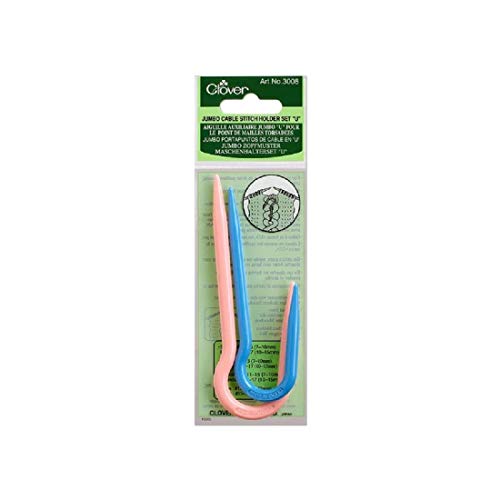
When you are working with chunky, weight-five or weight-six yarns, standard holders often feel cramped and flimsy. Clover Jumbo Stitch Holders offer the necessary girth to prevent the yarn from being crushed or distorted while it sits idle.
These are essentially oversized safety pins, which makes them incredibly quick to use. If you are a knitter who frequently pauses mid-row to check a pattern, the speed of this mechanism is a significant advantage.
However, be mindful of the metal finish. If you are working with high-friction, fuzzy mohair or single-ply wool, the metal surface can sometimes catch on the fibers. Always ensure the clasp is fully snapped shut to prevent the stitches from sliding off during storage.
Brittany Birch Stitch Holders: Best Wooden Option
For those who prefer the warmth and tactile feel of wood, Brittany Birch holders are the gold standard. They provide a gentle, snag-free environment that is perfect for delicate fibers like silk, alpaca, or hand-dyed wools that might react poorly to metal.
The smooth, polished finish of the birch ensures that stitches slide off easily when it is time to resume knitting. Unlike plastic or metal, wood has a natural slight "grip" that keeps the holder from sliding out of the stitches if the project is tossed into a project bag.
Keep in mind that wood is organic and can be fragile if stored improperly. Avoid putting these in a bag where they might be crushed under a heavy book or a collection of scissors.
Susan Bates Flexible Stitch Holders: Best Value

If you are a budget-conscious knitter or someone who likes to have a holder for every single WIP, the Susan Bates flexible holders are an unbeatable value. They consist of a simple plastic tube that slides over your needle tip, allowing you to transfer stitches directly.
These are incredibly lightweight and essentially weightless, which is vital when you are holding a large number of stitches for an extended period. They don’t add any unnecessary tension to the fabric, which helps maintain your gauge.
The primary tradeoff is durability. Over time, the plastic can become brittle or lose its grip on the needle tip. They are best treated as a practical, disposable-leaning solution rather than a lifelong heirloom tool.
HiyaHiya Point Protectors: Best Minimalist Choice

Sometimes the best stitch holder is not a holder at all, but a pair of high-quality point protectors. By sliding these onto the ends of your current needles, you essentially turn your needles into their own stitch holders.
This is the safest way to store stitches because it eliminates the need for a transfer process entirely. Every time you move stitches from a needle to a holder and back again, you risk dropping a loop or twisting a stitch.
This method works best if you have a large collection of fixed circular needles. If you are using interchangeable needles, you can simply unscrew the needle tips and screw on a stopper, keeping your stitches safely on the cable.
Della Q Circular Stitch Holders: Best for Comfort

Della Q has reimagined the stitch holder by focusing on the knitter’s experience. Their circular holders use a soft, plastic-coated cable that is incredibly gentle on the yarn, preventing the "pinched" look that can happen with rigid metal pins.
The aesthetic is also a major draw; they are designed to look as beautiful as the projects they hold. If you enjoy the ritual of knitting and appreciate high-quality accessories, these provide a tactile pleasure that makes the process feel more intentional.
They are particularly effective for holding stitches in the round, such as a neckline or a hat brim. The circular shape mimics the actual structure of your knitting, ensuring the stitches remain in their natural orientation.
Lantern Moon Heritage Holder: The Premium Selection

The Lantern Moon Heritage collection offers a level of refinement that is rare in knitting notions. Crafted from ebony wood, these holders are smooth, durable, and exceptionally beautiful.
They are designed for the knitter who treasures their tools as much as their finished garments. The dark, polished wood creates a stunning contrast against lighter-colored yarns, making it easy to see your stitches clearly.
While they are a premium item, the quality of the finish ensures that they will never snag your yarn. They are an excellent choice for heirloom-quality projects like intricate lace or fine-gauge colorwork where you want to ensure the highest level of care.
Why You Should Never Use Waste Yarn for Live Loops
It is a common piece of advice to use "waste yarn" to hold stitches, but I strongly advise against it for any project you care about. Waste yarn often has a different texture, fuzziness, or fiber content than your project yarn, which can lead to fiber transfer or snagging.
Furthermore, waste yarn is often limp and lacks the structural integrity to keep stitches properly spaced. When you pick the stitches back up, you will often find they have become uneven or slightly felted if the waste yarn was too grabby.
If you must use a substitute, choose a smooth, mercerized cotton yarn of a contrasting color. However, dedicated holders will always provide a more consistent tension and a cleaner transition back to your needles.
How to Safely Transfer Stitches to Your Holders
Transferring stitches is a moment where many mistakes happen. Always move your stitches one by one, ensuring that you are not twisting the loop as it moves from the needle to the holder.
If you are using a needle-based system like the Cocoknits kit, insert the tapestry needle through the stitch before dropping it off the knitting needle. This prevents the "runaway" stitch that can occur if you drop the loop prematurely.
Take your time during this process. Many knitters try to rush to the end of a project, but a slow, deliberate transfer ensures that your final row remains as even as your first.
Essential Tips for Preventing Stretched Stitches
Stretched stitches often occur because of the weight of the holder pulling on the fabric. To prevent this, always ensure your stitch holder is supported by the project bag and not left dangling in the air.
If you are holding a large number of stitches, consider using two separate holders rather than one long one. This distributes the weight more evenly and prevents the yarn from sagging under the strain.
Finally, always check your tension after you pick up your stitches. If you notice a slight gap where the stitches were held, a quick steam block or a gentle wash will usually help the fibers relax back into their original position.
Selecting the right stitch holder is a small but vital part of maintaining the integrity of your knitting. Whether you choose the flexibility of a cord-based system or the simplicity of point protectors, the goal is always the same: to keep your stitches safe and tension-perfect. Invest in tools that respect your yarn, and your projects will reward you with a professional finish every time. Happy knitting, and may your stitches always stay exactly where you left them.