6 Best Thread Clippers For Clean Finishes To Try
Achieve professional results with our top 6 thread clippers. Discover precision tools that ensure clean finishes and effortless trimming for every project.
Every knitter knows that the final step of a project—weaving in ends—is only as clean as the cut you make. A dull blade can leave behind a fuzzy, frayed yarn tail that refuses to hide neatly into your fabric. Investing in a pair of high-quality thread clippers turns a tedious chore into a satisfying, precise finish. Here are six reliable tools that will ensure your hard work looks professional from the inside out.
Gingher 4-Inch Knife Edge Thread Nippers


These nippers are a legendary staple in sewing rooms for a reason. They feature a double-plated chrome finish that resists rust and maintains an incredibly sharp edge over years of use.
If you are working with slippery luxury fibers like silk or bamboo blends, these blades provide the clean "bite" necessary to prevent the yarn from sliding away. The spring-action design allows for quick, repetitive snips, which is a lifesaver when you are finishing a complex colorwork project with dozens of ends.
The trade-off here is the weight; they are heavier than plastic alternatives, which can cause hand fatigue during long sessions. However, the heft provides a sense of stability that lighter tools often lack.
Havel’s Sewing Snips: Precise Tip Control
Havel’s snips are designed for those who need to get into tight spaces without nicking the surrounding stitches. The ultra-fine, pointed tips allow you to trim a yarn tail flush against your knitting without accidentally clipping the live fabric.
This level of precision is invaluable when you are working on delicate lace shawls where every stitch counts. If you have ever accidentally snipped a strand of mohair while trying to trim an end, you will appreciate how these tips isolate the yarn perfectly.
Keep in mind that these are delicate instruments, not heavy-duty cutters. Avoid using them on thick, multi-ply wool or cotton cord, as the fine tips can misalign if forced through bulky materials.
Dritz Deluxe Seam Ripper and Thread Cutter

While often marketed for sewing, this tool is a dual-threat for the knitter’s notions bag. The curved blade is excellent for surgical-style removal of a mistake, while the point is sharp enough to act as a thread cutter.
This is the ultimate "space-saver" tool for knitters who travel with their projects. If you are knitting socks on the go and need to minimize your notions pouch, this single tool handles both emergency surgery and finishing work.
It isn’t as ergonomic as dedicated spring-action snips, so it isn’t ideal for large-scale weaving-in sessions. Use it for quick snips, but keep a dedicated pair of scissors at your home station for major finishing work.
Fiskars Micro-Tip Fashion Thread Snips

Fiskars has mastered the art of the ergonomic handle, and these snips are no exception. The spring-loaded design reduces the physical effort required to cut, which is a major benefit if you suffer from hand strain or arthritis.
The blades are made from hardened stainless steel, providing a consistent cut across various yarn weights. Whether you are working with fine fingering weight or worsted wool, these snips handle the tension well without bending the yarn.
The plastic construction makes them very lightweight, though some knitters find the "click" of the spring a bit loud. If you prefer a silent, tactile experience, you might find the mechanical sound distracting.
Clover Patchwork Scissors for Clean Cuts
Clover is synonymous with quality in the fiber arts world, and these scissors are built specifically for the precision required in patchwork and finishing. The blades are incredibly sharp and meet perfectly at the tip.
These are excellent for knitters who prefer the control of a traditional scissor handle over spring-action nippers. If you have larger hands, the finger loops provide a more secure grip than the pinch-style nippers found in other brands.
Because they are traditional scissors, they require a bit more manual dexterity to open and close. They are best suited for those who want a classic feel combined with modern, high-quality steel.
LDH Scissors Thread Snips for Fiber Arts
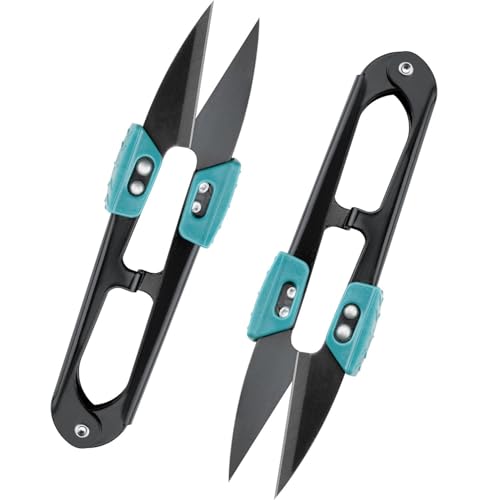
LDH Scissors are a favorite among modern makers for their aesthetic appeal and high-carbon steel construction. These snips are remarkably sharp and feel substantial in the hand, signaling a tool built to last.
The high-carbon steel holds an edge longer than standard stainless steel, making them a great investment for a dedicated knitter. They cut through even the most stubborn, sticky wool fibers with minimal effort.
The main consideration here is maintenance; high-carbon steel can rust if left in a humid environment or near a damp blocking mat. Wipe them down with a dry cloth after every use to keep them in top condition.
Essential Features to Look for in Thread Snips
When shopping for snips, prioritize the blade material and the spring mechanism. High-carbon or high-quality stainless steel will stay sharp longer, saving you from the frustration of "chewed" yarn ends.
Look for a comfortable grip that doesn’t force your hand into an unnatural position. If you are trimming ends for an hour after finishing a large sweater, poor ergonomics will lead to cramping.
Finally, consider the tip profile. A needle-sharp point is essential for getting close to your work, while a slightly curved blade can help you navigate around buttonholes or seams.
Why Sharp Blades Prevent Frayed Yarn Ends
A dull blade acts like a wedge, pushing the fibers apart rather than slicing through them cleanly. This results in a frayed, fuzzy end that is difficult to thread through a tapestry needle and even harder to weave in securely.
Sharp blades create a clean, singular cut that keeps the yarn plies together. When you weave in a clean-cut tail, it is far less likely to work its way back out of your fabric over time.
Think of it like pruning a plant; a clean cut heals better and stays put. A jagged, crushed cut will inevitably create a weak point in your finished garment.
Proper Care and Maintenance for Your Snips
Never use your thread snips to cut anything other than yarn or thread. Cutting paper, labels, or plastic will dull the blades instantly, ruining their ability to provide a clean finish.
Keep your snips clean by wiping them with a soft, dry cloth after your knitting session. If you notice them getting "sticky" from yarn oils or lanolin, a quick wipe with a tiny drop of sewing machine oil can keep the pivot point moving smoothly.
If your snips begin to drag or fold the yarn, it is time to have them professionally sharpened. Many local quilt shops or knife sharpeners can restore the edge for a fraction of the cost of a new pair.
How to Safely Store Your Precision Cutting Tools
Always store your snips with the blades in a closed or protected position. If they don’t come with a sheath, consider making a small felt sleeve to protect the tips from damage.
Keep them in a dedicated notions case rather than loose in your knitting bag. Loose tools can get snagged on your yarn or, worse, poke through your bag and cause injury.
If you have curious children or pets, ensure your snips are stored in a zippered pouch out of reach. These tools are sharp enough to cut through skin just as easily as they cut through your favorite merino wool.
Choosing the right thread snips is about balancing your personal comfort with the needs of your yarn. Whether you prefer the classic feel of scissors or the efficiency of spring-action nippers, a sharp, dedicated tool is a non-negotiable part of a well-stocked kit. By treating your snips with care and keeping them sharp, you ensure that every project ends with the clean, professional finish your hard work deserves.