6 Best Weight Hangers For Consistent Fabric Pull
Achieve uniform fabric tension with our top 6 weight hangers. Discover durable, precision-engineered tools essential for consistent, high-quality results.
Mastering the art of machine knitting requires more than just a steady hand and a quality yarn; it demands a precise balance of tension across your fabric. Without the right amount of downward pull, stitches will inevitably snag, skip, or drop entirely as the carriage passes. These weight hangers serve as the essential anchors that keep your work uniform and professional. Finding the right system for your specific machine can be the difference between a finished garment and a tangled mess.
Addi Express Machine Tension Weight Hangers


The Addi Express is a fantastic entry point into circular knitting, but its lightweight plastic construction often struggles with slippery yarns. Adding dedicated tension weight hangers is the most effective way to ensure the needles fully release the yarn loops.
These hangers are specifically designed to clip onto the existing fabric edge, providing a consistent, vertical pull. By distributing weight evenly around the circumference of the machine, they prevent the "bunching" effect that occurs when you rely solely on the machine’s internal tension.
If you are working with a slick, high-twist acrylic or a delicate silk blend, these weights are non-negotiable. Without them, the yarn often pops out of the hooks, leading to those frustrating dropped stitches that are notoriously difficult to fix on a circular machine.
Sentro Knitting Machine Claw Weight System

Sentro machines are popular for their accessibility, but they are notorious for being "picky" about yarn thickness. The claw weight system is a classic solution that mimics the weighted combs used on professional-grade knitting machines.
These claws grip the fabric firmly, allowing you to add varying amounts of tension as your project grows longer. This is particularly useful when you transition from the initial cast-on—where you need very little weight—to the main body of a scarf or hat.
The tradeoff here is the potential for the "teeth" of the claws to snag delicate fibers. If you are using a loose, single-ply wool or a mohair blend, be extremely careful where you place these clips to avoid damaging the integrity of your yarn.
Prym Ergonomics Knitting Machine Weights
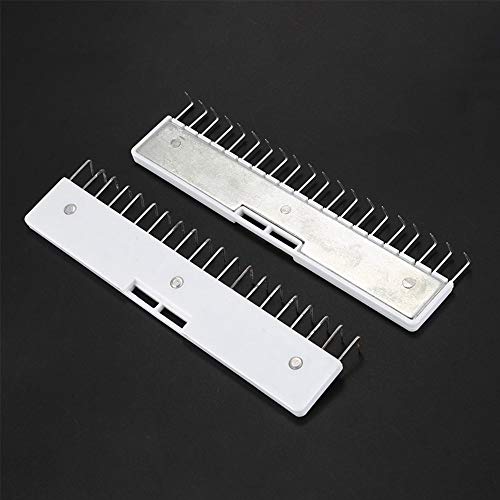
Prym has refined the weight system by focusing on ergonomic ease of use for the hobbyist. Their weights are often shaped to be more comfortable to handle during long sessions, which matters when you are constantly repositioning them every few rows.
These weights are generally heavier and more compact than standard DIY solutions. This added density is perfect for projects involving heavier weight yarns like worsted or aran, which require more force to pull through the needle bed.
However, because they are heavier, you must be careful not to over-tension your fabric. If you pull too hard, you risk distorting your gauge or even stretching your yarn beyond its natural elasticity, leading to a finished piece that loses its shape after a single wash.
Custom 3D Printed Claw Weight Attachments
The 3D printing community has revolutionized machine knitting by allowing users to create custom-weighted attachments tailored to their specific needs. You can now find designs that are perfectly balanced for your machine’s unique needle spacing.
The beauty of this approach is the ability to choose your material and weight distribution. If you find standard weights are too light for your heavy-weight cotton projects, you can print a housing that holds additional metal washers or ball bearings.
The downside is the finish of the plastic. Always ensure your 3D printed weights are sanded perfectly smooth, as any rough edges or burrs can catch on your yarn and cause pilling or snapped fibers.
Weighted Fabric Clips for Circular Machines
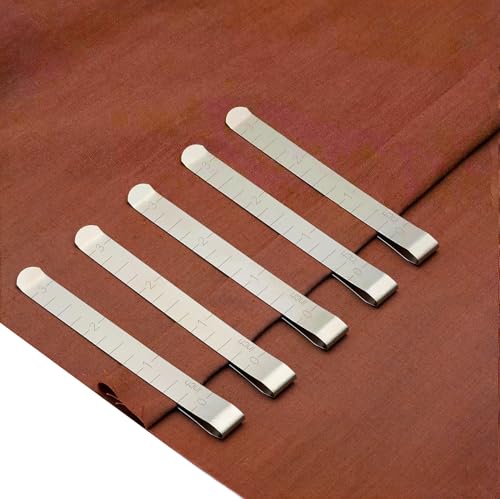
Sometimes, you don’t need a heavy, complex system; you just need a reliable way to keep the fabric edge from curling. Weighted fabric clips are simple, effective, and incredibly versatile for smaller projects like socks or fingerless mitts.
These clips act as a "dead weight" that hangs from the bottom of your work. By keeping the fabric taut, they ensure that every stitch is formed at the same depth, which is the secret to achieving a professional-looking, uniform gauge.
They are particularly useful when you are knitting in the round and reach the point where the fabric is long enough to hang below the machine. Moving these clips upward as you knit ensures that the tension remains consistent from the first row to the last.
Universal Metal Hook Weights for Knitters

Universal metal hooks are the "old school" method that has stood the test of time for a reason. These rugged, utilitarian weights are essentially heavy metal hooks that can be moved and adjusted with minimal effort.
Because they are made of solid metal, they provide a very stable, non-bouncing tension. This is ideal for high-speed machine knitting where a lighter weight might vibrate or swing, causing the stitch tension to fluctuate unevenly.
They are, however, the most likely to leave marks or "distortions" in your fabric if left in one spot for too long. Always remember to shift these weights every few inches of knitting to maintain a consistent look across the entire garment.
Why Consistent Tension Matters for Machine Work
Consistent tension is the bedrock of professional-looking machine knitting. When your tension fluctuates, your stitches change in size, creating visible "bars" or stripes in your fabric that no amount of blocking can fully correct.
Think of your machine as a partnership; the carriage handles the movement, but the weights handle the consistency. Without that downward pull, the needles cannot effectively "knit off" the old stitch, leading to uneven loops and potential dropped stitches.
If you notice your gauge is tighter at the start of a project and looser at the end, your weight management is likely the culprit. Consistent weight application ensures that the yarn is fed into the needles at a uniform rate, resulting in a beautiful, even fabric.
How to Properly Balance Weights on Your Machine
Balancing weights is an art form that requires you to "listen" to your machine. If the carriage feels heavy to push, you likely have too much weight; if the yarn is skipping, you need more.
Start by placing your weights symmetrically around the machine. If you are knitting a circular piece, distribute your weight evenly across the entire circumference to prevent the fabric from pulling to one side and causing dropped stitches on the opposite side.
Always increase your weight gradually as your project grows. A good rule of thumb is to add a little more weight as the fabric gets longer, as the weight of the fabric itself will eventually help, but the initial tension remains the most critical factor.
Troubleshooting Dropped Stitches Using Weights
Dropped stitches are the most common headache in machine knitting, and they almost always stem from poor tension. When a needle fails to pull the yarn through, it’s usually because the fabric wasn’t held down firmly enough to allow the needle hook to clear the previous loop.
If you find yourself losing stitches in the same spot, check your weight distribution. You may need to add a specialized weight or a claw directly under that specific section of the needle bed to ensure it stays anchored.
Remember, also, to check your yarn path. Sometimes, what looks like a tension issue is actually a snag in the yarn feeder or a knot in the skein, so ensure your yarn is flowing freely before blaming the weights.
Essential Maintenance Tips for Machine Weights
Weights are tools, and like any tool, they require a bit of care to perform their best. Keep your weights clean and free of dust or lint, which can accumulate and eventually transfer onto your clean yarn.
If you are using metal weights, periodically check them for rust or rough patches that could snag your fiber. A light sanding or a quick wipe with a silicone-free lubricant can keep them sliding smoothly and prevent fabric damage.
Finally, store your weights in a dedicated container when not in use. Dropping a heavy metal weight on your machine bed can cause permanent damage to the needle tracks, which is a much more expensive repair than replacing a set of weights.
Investing in the right weight system is a game-changer for anyone serious about machine knitting. By understanding how to apply and balance these tools, you move from simply "operating" a machine to truly mastering your craft. Start with the basics, experiment with different weights for different fibers, and watch as your stitch quality transforms. Happy knitting, and may your carriage always slide smoothly across the bed.