
6 Best Rivet Kits For Leather Bag Straps To Use
Discover the top 6 rivet kits for durable leather bag straps. This guide explores essential tools, material quality, and ease of use for professional results.
Just as choosing the right needle material can transform your tension, selecting the correct hardware for your leather bag straps determines the longevity of your handcrafted work. A beautiful hand-knit bag deserves a strap that won’t fail under the weight of your fiber stash or daily essentials. These rivet kits offer varying levels of security and finish, ensuring your strap stays firmly attached to your project. Understanding the mechanics of these fasteners is as vital as mastering a perfect kitchener stitch.
Tandy Leather Double Cap Rivets: Best for Beginners


When you are first starting to incorporate leatherwork into your fiber projects, you don’t want to wrestle with complex hardware. These double-cap rivets are the gold standard for those new to the craft because they look finished on both sides.
They are incredibly forgiving for someone used to the tactile nature of yarn. If you have ever struggled with a finicky cable needle, you will appreciate how straightforward these are to set with a simple hand-setter and a mallet.
The main trade-off here is that they aren’t meant for heavy, load-bearing stress. Use these for decorative accents or light-duty straps where aesthetic appeal is the priority over structural integrity.
Buckleguy Solid Brass Rivets: Best for Durability

If you are crafting a heavy-duty project, like a project bag meant to hold bulky wool sweaters or multiple cones of yarn, you need hardware that won’t give out. Solid brass is the professional choice for a reason.
Unlike plated metals that might chip or wear away over time, solid brass develops a beautiful patina, much like the way certain wool fibers bloom after washing. It ages gracefully alongside your handmade bag.
These require a bit more precision to install, but the peace of mind they provide is worth the extra effort. If you are investing hours into a project, don’t skimp on the hardware that holds it all together.
Goldstar Tool Rapid Rivets: Best Value for Crafters

When you are working through a high volume of projects, such as making custom straps for every bag in your collection, cost-efficiency becomes a factor. Goldstar Tool offers a consistent, reliable product that won’t break the bank.
They function similarly to other rapid rivets but provide a level of uniformity that is hard to beat for the price. Think of them as your "workhorse" yarn—perfect for everyday projects where you need a reliable result every single time.
Be aware that these are often plated, so they may show wear faster than solid brass. However, for a bag that sees moderate use, they are a fantastic, practical solution.
Amazon Basics Leather Rivet Set: Best Budget Pick

Sometimes you just need a quick solution for a small repair or a simple strap attachment. This set provides a variety of sizes and finishes, which is helpful if you aren’t sure exactly what your project demands yet.
Think of this like a beginner’s needle set—it’s not the highest quality, but it gets you started without a massive investment. It’s perfect for testing out different rivet lengths before committing to a more expensive, specialized hardware brand.
Just remember that you get what you pay for in terms of metal density. Don’t use these for your most precious, heirloom-quality bags that you expect to last for decades.
Craftool Co. Copper Rivets: Best for Heavy Duty Use

Copper rivets are the heavy-duty, "superwash" equivalent of the hardware world; they are essentially indestructible. These are what you use when you need a permanent, structural bond that will never pull through your leather.
The installation process involves a burr and a setter, which is a bit more involved than a standard rivet. It feels a bit like learning to master stranded colorwork—it takes a moment to get the rhythm, but once you do, the results are impeccable.
These are ideal for thick, vegetable-tanned leather straps. If your bag is destined to carry heavy items, this is the only hardware choice that provides absolute security.
Weaver Leather Chicago Screws: Best Versatile Option
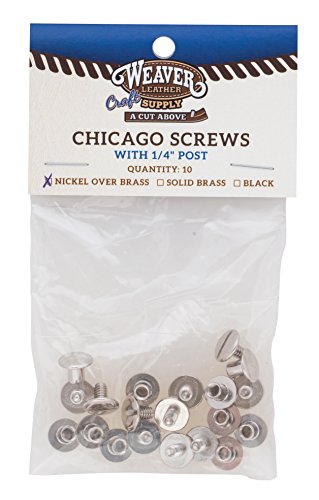
Chicago screws are a brilliant choice if you want the ability to swap your straps or adjust their length. They function like a screw-post, meaning you can take them apart and put them back together without damaging the leather.
This versatility is perfect if you are still deciding on the final length of your strap or want to switch between a crossbody and a shoulder-length strap. It’s the hardware equivalent of a swatch—flexible, adjustable, and forgiving.
Always use a tiny dab of thread locker to ensure they don’t unscrew over time. It’s a small step that prevents the frustration of losing a fastener in the middle of your day.
How to Select the Correct Rivet Size for Your Strap
The golden rule here is to ensure the rivet post is just slightly longer than the combined thickness of your materials. If the post is too short, the rivet won’t close properly; if it’s too long, it will spin and feel loose.
Measure your leather thickness accurately before choosing your hardware. Just as you wouldn’t use a lace-weight yarn for a heavy winter coat, you shouldn’t use a tiny, delicate rivet for a thick, multi-layered strap.
Always account for the thickness of the bag material plus the strap itself. A good fit ensures the rivet sits flush and tight, preventing any annoying "wobble" during use.
Essential Tools Required for Setting Leather Rivets
To set rivets properly, you need more than just a hammer. You will need a hole punch, a setting base, and a specific setter tool that matches the cap of your rivet.
Think of these as your essential knitting toolkit—you wouldn’t try to knit a sweater with just one needle, and you shouldn’t try to set rivets with just a household hammer. Using the wrong tools will mar the finish of the metal.
Invest in a quality hole punch, as a clean hole makes for a much stronger connection. A solid surface, like a granite block or a heavy-duty rubber mat, is also crucial for a clean, professional set.
Step-by-Step Guide to Installing Rivets Properly
First, punch your hole cleanly through both layers of leather. Ensure the hole is just large enough for the post to pass through snugly, as a loose hole will weaken the connection over time.
Place the rivet post through the hole, then cap it with the top piece. Using your setting tool and a firm, steady strike with your mallet, compress the two halves together.
Check the rivet to ensure it is centered and tight. If it spins easily, you may need to give it one more firm tap, but be careful not to crush the dome of the rivet.
Common Mistakes to Avoid When Attaching Bag Straps
The most common error is using a surface that is too soft, which absorbs the energy of your hammer strike and results in a loose rivet. Always use a hard, non-yielding surface to ensure the rivet sets in one clean motion.
Another mistake is failing to align the holes perfectly before punching. Even a slight misalignment can cause the leather to buckle, creating a weak point that could tear under tension.
Finally, don’t over-hammer the rivet. Just like you can over-process wool, you can over-work metal; excessive force will flatten the dome and weaken the structural integrity of the fastener.
Taking the time to select and install the right rivets will ensure your handmade bags remain functional for years to come. Whether you opt for the simplicity of double-cap rivets or the strength of copper, the right choice depends on your project’s specific needs. Treat your hardware with the same care you give your tension and fiber, and your finished bag will be a true testament to your craftsmanship. Happy making, and may your straps always hold strong.