7 Best Steam Irons For Final Blocking To Use
Achieve professional results with our top 7 steam irons for blocking. Discover key features like steam output and soleplate quality for perfect fabric finish.
Achieving a professional finish on your hand-knits depends entirely on how you treat the fabric after the final bind-off. Steam blocking is the secret bridge between a handmade item and a garment that looks truly polished and store-bought. While many knitters focus on needles and yarn, the right iron is the unsung hero that evens out tension and blooms your stitches. Choosing the right tool ensures your hard work doesn’t collapse under too much heat or insufficient moisture.
Rowenta Focus Excel: Best Overall Steam Power


When you are blocking a large lace shawl or a heavy wool sweater, consistency is everything. The Rowenta Focus Excel offers a high-pressure steam distribution that penetrates thick, multi-ply yarns without requiring you to press down hard.
This iron is built for those who need a heavy-duty workhorse that doesn’t sputter. Its precision tip is surprisingly adept at navigating cables and intricate stitch patterns where you need steam to hit the fabric without flattening the texture.
Be mindful that this iron is on the heavier side, which is a double-edged sword. While the weight helps smooth out stubborn creases in dense fabrics, it can be fatiguing during long blocking sessions.
Bottom line: If you prioritize deep steam penetration for heavy sweaters and blankets, this is your go-to.
Oliso M3 Pro: Best for Precision Detail Work
The Oliso M3 Pro is a game-changer for knitters who focus on small-scale projects like socks, mittens, or delicate baby garments. Its unique "iTouch" technology lifts the iron off the board when you let go, saving your wrists from the constant up-and-down motion.
The size of this iron makes it incredibly maneuverable when you are working on a small blocking mat. You can easily navigate around intricate lace edges or delicate picot bind-offs without accidentally steaming parts of the garment you aren’t ready to set yet.
Some knitters find the smaller water tank a bit limiting, requiring frequent refills during larger projects. However, the trade-off for that level of control and the ergonomic design is usually worth it for the precision-focused maker.
Bottom line: Choose this if you specialize in small, intricate items and value ergonomic comfort above all else.
CHI Electronic Retractable: Best for Even Heat

Consistency in temperature is vital when working with animal fibers like alpaca or mohair, which can scorch if the iron plate has hot spots. The CHI iron uses a titanium-infused ceramic soleplate that distributes heat remarkably evenly across the entire surface.
The retractable cord is a practical feature for those of us with cluttered craft rooms. It prevents the cord from snagging on your blocking pins or accidentally dragging across your damp, just-blocked fabric.
While it lacks some of the heavy-duty industrial steam power of larger units, the temperature stability makes it a safer bet for beginners. You are far less likely to accidentally melt a synthetic blend or singe a delicate fiber with this model.
Bottom line: This is the safest choice for knitters who are nervous about heat damage and want consistent, reliable performance.
Black+Decker Vitafan: Best Budget Choice
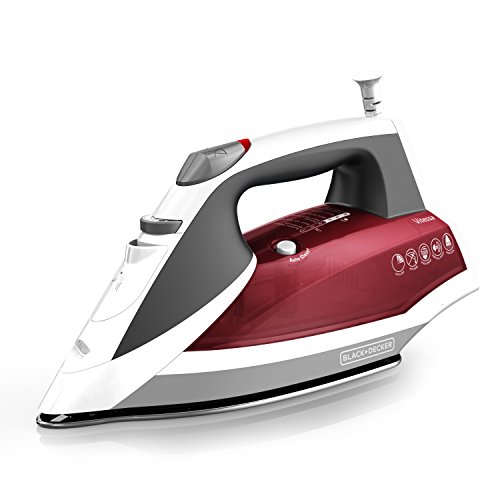
You don’t need a professional-grade appliance to get a decent block on a standard cotton or wool project. The Black+Decker Vitafan is a straightforward, no-nonsense tool that gets the job done without the extra bells and whistles.
It provides enough steam to relax the fibers and even out your gauge, which is often all you need for a simple scarf or a basic hat. It’s lightweight and easy to store, making it a perfect fit for a knitter who doesn’t have a dedicated studio space.
The trade-off here is durability and steam longevity; you will notice it doesn’t hold as much water or produce as dense a cloud as the premium models. For occasional blocking, however, it performs exactly as expected.
Bottom line: An excellent, reliable entry-level iron for knitters who don’t want to overspend on their first blocking setup.
Panasonic NI-W950A: Best Multi-Directional Iron

The unique curved soleplate of the Panasonic NI-W950A allows you to move the iron in any direction without catching the fabric. This is incredibly helpful when you are blocking complex garments like sweaters with set-in sleeves or garments with multiple seams.
Because you can glide it sideways or backward, you can reach into tight corners of a garment’s construction without bunching up the fabric. This movement helps prevent the dreaded "iron marks" that occur when you stop and start on a flat surface.
It is a slightly larger unit, so it requires a bit of practice to handle comfortably. Once you master the fluid motion of the curved plate, you will find it significantly speeds up the blocking process for complex shapes.
Bottom line: Ideal for the garment knitter who regularly works on complex, multi-piece construction projects.
Reliable Velocity 230IR: Best for Steam Flow

When you are dealing with dense, felted-style wools or heavy cottons that refuse to lay flat, steam volume is your best friend. The Reliable Velocity 230IR is designed to produce high-pressure steam on demand without the typical waiting time or dripping.
The steam flow is consistent, which is crucial for uniform blocking. If you have an uneven steam output, you risk having some areas of your garment "bloom" more than others, leading to an inconsistent fabric texture.
It is a more significant investment, but for those who produce many garments a year, the efficiency is unmatched. You will spend less time hovering over your board and more time wearing your finished pieces.
Bottom line: If you are a high-volume knitter, the steam output of this iron will save you hours of labor.
Sunbeam Steammaster: Best for Large Projects
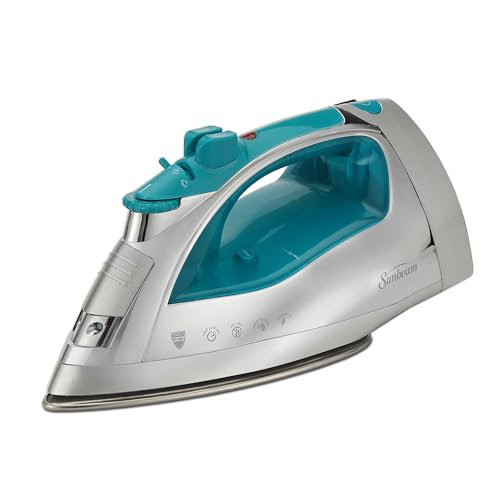
The Sunbeam Steammaster is a classic for a reason: it features a large water reservoir and a wide soleplate that covers a lot of ground. If you are blocking a massive lace tablecloth or a king-sized blanket, this iron is a lifesaver.
The sheer size of the plate means you aren’t spending all day moving the iron back and forth over a wide surface area. It holds enough water to get through a large project without constant trips to the sink.
It is a very basic, utilitarian tool, so don’t expect the sophisticated temperature controls of more expensive models. Keep it on a lower setting for delicate fibers to ensure you don’t over-process the yarn.
Bottom line: The best value for knitters who tackle large-scale home decor projects where surface area coverage is the priority.
Why Steam Blocking Matters for Fiber Integrity
Steam blocking is not just about making a garment look flat; it is about relaxing the fibers to their intended state. During the knitting process, yarn is pulled tight and manipulated, which creates tension that can make stitches look uneven or "tight."
When you apply steam, you are essentially allowing the fibers to reset. This is especially important for natural fibers like wool, which have a "memory" and will expand and settle into their final shape once the tension of the knitting process is released.
Without this step, your garment might look stiff or misshapen. Steam blocking smooths out the surface of the fabric and ensures that your gauge is consistent across the entire piece, which is vital for the correct fit of a sweater or cardigan.
Essential Safety Tips for Steam Blocking Knits
Always test your iron on a swatch before going near your finished garment. It is better to ruin a 4×4 inch square of yarn than to ruin a sweater that took you three months to knit.
Never press the iron directly onto the fabric, especially if you are working with acrylic or wool blends. Hover the iron about an inch above the surface and let the steam do the work; direct contact can crush the loft of the yarn and create a permanent, shiny "ironing" mark.
Be aware of your pins. If you are using metal T-pins to hold your work in place, they will conduct heat from the steam, so be careful when you start unpinning your project immediately after steaming.
How to Properly Steam Block Delicate Fibers
For delicate fibers like silk, mohair, or alpaca, use the lowest steam setting possible. These fibers are incredibly sensitive to heat and can lose their structure or "halo" if they are subjected to too much moisture and temperature.
Lay your piece out on a blocking mat and use a pressing cloth—a thin piece of cotton or a specialized mesh cloth—between the iron and the yarn. This acts as a protective barrier that diffuses the heat and prevents the iron from directly touching the delicate fibers.
Remember that patience is your greatest tool. Let the piece sit and cool completely before you remove the pins, as the fibers are at their most vulnerable state while they are warm and damp.
Selecting the right iron for your blocking needs is an investment in the long-term quality of your hand-knits. Whether you choose a compact model for delicate lace or a high-steam workhorse for heavy sweaters, the goal remains the same: to give your stitches the space they need to shine. Take your time, test your fibers, and always prioritize the safety of your hard work. With the right tool in hand, you will find that the final blocking step becomes the most rewarding part of your knitting journey.