7 Best Thread Stands For Smooth Stitching To Try
Enhance your sewing precision with our guide to the 7 best thread stands. Discover how these essential tools prevent tangles and ensure smooth, even stitching.
Even the most luxurious hand-dyed merino can lose its luster if your tension is erratic because your thread or yarn is snagging on the spool. A high-quality thread stand acts as the silent partner in your craft, ensuring a consistent feed that translates directly into even stitches. Whether you are working with delicate lace weight or robust worsted, controlling the delivery of your fiber is the secret to professional-looking results. Let’s look at the best tools to help you achieve that elusive, perfectly uniform gauge.
YLI Corporation Universal Thread Stand: Best Overall


This stand is a staple in many sewing rooms because it balances simplicity with reliable performance. It sits firmly on your table without taking up excessive space, which is vital when your workspace is already crowded with patterns and circular needles.
The design features a tall, slender rod that allows the thread to unwind smoothly without catching on the spool’s edge. This is particularly beneficial when you are working with slippery synthetic threads or delicate silk, where even a tiny snag can cause a visible loop in your fabric.
The base is weighted just enough to prevent tipping, even when you are pulling thread at a faster pace. While it doesn’t have the bells and whistles of industrial-grade gear, its universal compatibility makes it the most practical choice for the widest variety of projects.
Hemline Gold Metal Thread Stand: Best Heavy Duty

When you are working with heavy-duty upholstery thread or large cones of cotton, plastic stands often struggle with the weight. The Hemline Gold Metal stand is built to handle the stress of constant, high-tension feeding without wobbling or bending.
Because it is constructed from metal, it offers a level of durability that plastic alternatives simply cannot match. If you are a prolific maker who spends hours at the machine or the loom, this investment will pay for itself in longevity.
The added weight of the metal base also provides a lower center of gravity. This translates to vibration dampening, which is essential if your machine has a powerful motor that tends to shake your table during long sessions.
SewTech Single Spool Holder: Best Budget Choice
You don’t need to break the bank to improve your stitch quality, and the SewTech holder proves that basic functionality is often enough. This stand is incredibly lightweight and easy to tuck away into a project bag when you are traveling to a knitting group.
It excels at handling standard-sized spools, making it a great entry point for those just starting to experiment with thread stands. It keeps the spool upright, which prevents the "jerking" motion that occurs when a spool rolls around on the desk.
The trade-off here is the plastic construction, which is less stable than metal options. However, if you are careful with your setup, it provides flawless thread delivery at a fraction of the cost of premium models.
Dritz Deluxe Thread Stand: Best for Large Spools

Large cones are a dream for volume, but they can be a nightmare if your machine isn’t designed to hold them. The Dritz Deluxe stand features an extended arm that ensures the thread comes off the cone at the perfect angle for your machine’s tension discs.
This is a game-changer for those who buy thread in bulk to save costs on long-term projects. By keeping the spool at a distance, you reduce the drag that often happens when thread has to travel at an awkward angle from the machine’s built-in pin.
The design is intuitive and easy to assemble, even for those who aren’t mechanically inclined. It is a versatile workhorse that bridges the gap between home sewing and professional production setups.
Brother Multi-Spool Stand: Best for Colorwork
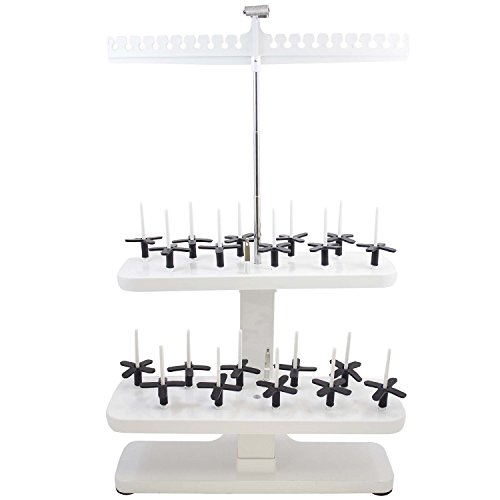
If you are diving into intricate colorwork or multi-thread techniques, you need a way to manage several spools simultaneously. This stand allows you to set up your color palette in advance, ensuring that each strand feeds into the machine with identical tension.
Managing multiple threads by hand is a recipe for tangles and uneven tension. By using a multi-spool stand, you ensure that each color is ready to go, which is essential when you are switching between strands frequently.
It is particularly useful for projects involving metallic threads or decorative yarns that require a specific path to avoid fraying. While it takes up more desk space, the organized workflow it provides is unmatched for complex designs.
Janome Universal Thread Stand: Best for Stability
Stability is the hallmark of the Janome stand, which is engineered to stay put regardless of the speed at which you are working. Its footprint is wide, and the materials used are high-quality, ensuring that the stand doesn’t shift during intensive tasks.
This is the stand I recommend to those who have a tendency to pull thread quickly or who work in environments where the table might be bumped. A stable stand means fewer dropped stitches and a more consistent, professional tension throughout your fabric.
While it is slightly more expensive, the durability and structural integrity mean you won’t be replacing it anytime soon. It is a classic example of "buy once, cry once" quality.
Singer Universal Spool Stand: Best for Beginners
The Singer stand is designed with the novice in mind, focusing on ease of use and foolproof setup. If you are intimidated by complicated equipment, this stand offers a straightforward, no-nonsense approach to thread management.
It fits almost any machine brand, making it a safe choice if you aren’t sure which specific accessories are compatible with your setup. It provides just enough height to ensure a smooth feed, helping beginners avoid the common pitfalls of uneven tension.
It is a reliable, entry-level tool that helps you build good habits from day one. You can always upgrade later, but for learning the ropes, this stand is perfectly adequate.
How to Choose the Right Stand for Your Yarn Weight
Selecting a stand depends largely on the "drag" of your fiber. Fine, slick threads like silk or rayon need a stand that offers minimal resistance, while heavier, fuzzier yarns might benefit from a stand that provides a bit of gentle tension.
Consider the following factors when making your choice:
- Spool Size: Ensure the spindle fits your core diameter.
- Weight of the Stand: Heavier is better for high-speed work.
- Thread Path: The stand should allow for a vertical pull to the machine.
If you are working with high-twist yarns, look for a stand that allows the spool to rotate freely. A spool that catches or twists will introduce unwanted torque into your work, leading to skewed stitches.
Why Thread Stands Improve Your Tension Consistency
Tension consistency is the holy grail of knitting and sewing. When a thread pulls directly from the top of a spool rather than sliding off the side, the tension remains constant from the first stitch to the last.
Without a stand, the angle of the thread changes as the spool empties, which naturally alters the tension. This is why you might notice your gauge changing slightly toward the end of a project.
A stand eliminates this variable by keeping the feed point static. By standardizing your delivery system, you remove one of the most common sources of human error in fiber arts.
Essential Maintenance Tips for Your Thread Stand
Even the best stand needs a little care to keep it performing at its peak. Dust and lint are the enemies of smooth thread delivery, so make it a habit to wipe down the rod and base after every major project.
If your stand uses a spring-loaded tension disc, ensure it is free of debris. A tiny bit of lint caught in the mechanism can cause the thread to snag, leading to a sudden, frustrating break in your rhythm.
Finally, check the stability of the base periodically. If you notice any wobbling, tighten the screws or adjust the rubber feet to ensure a level, secure platform for your thread.
Investing in a reliable thread stand is one of the most effective ways to elevate your craft and minimize frustration during long sessions. By choosing a tool that matches your specific machine and project needs, you ensure a smooth, consistent flow of fiber every time. Remember, the best tools are the ones that disappear into the background, allowing you to focus entirely on the beauty of your creation. Happy making, and may your tension always be perfectly balanced.