6 Best Orifice Flyers For Art Yarn Worth Trying
Explore the top 6 orifice flyers for art yarn. This guide details essential tools to help spinners manage bulky textures and unique fibers with ease and control.
Creating art yarn is an exercise in controlled chaos, where texture, color, and inclusion take center stage over traditional uniformity. When you are spinning locks, beads, or thick slubs, a standard lace-weight flyer will simply choke on the volume of fiber. Upgrading to a specialized orifice flyer is the single most important technical step you can take to expand your creative horizons. These tools are designed to handle the bulk, ensuring your unique yarns flow smoothly from the drafting zone to the bobbin.
Ashford Jumbo Flyer: Best for Thick Art Yarns
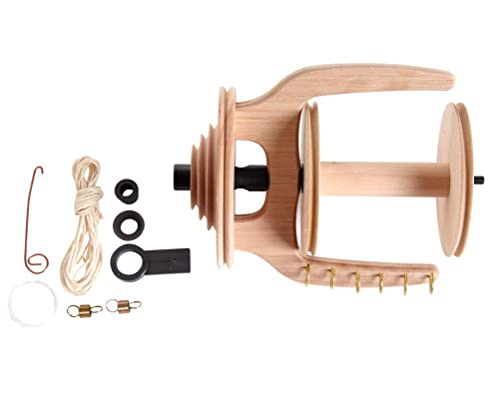

The Ashford Jumbo Flyer is the workhorse of the art yarn world, prized for its massive orifice that swallows bulky textures with ease. It is designed to fit seamlessly onto most Ashford wheels, making it a natural upgrade for those already familiar with the brand’s mechanics.
When you are working with chunky wool roving or incorporating thick silk ribbons, the wide opening prevents the yarn from snagging or breaking. It effectively reduces the friction that occurs when bulky yarn passes through a narrow tube, which is essential for maintaining the loft of your art yarn.
Because this flyer is relatively heavy, it creates a slightly different momentum for your spinning rhythm. You will find that it carries the spin well, but it may require a bit more effort to start and stop compared to a standard flyer.
Bottom line: If you want a reliable, no-nonsense tool that can handle almost any fiber inclusion you throw at it, this is your go-to choice.
SpinOlution Large Orifice Flyer: Top Versatility
SpinOlution wheels are engineered specifically for the art yarn spinner, and their large orifice flyers reflect that focus on high-volume production. These flyers are exceptionally open, allowing you to feed in everything from core-spun coils to heavy bulky-ply yarns without hesitation.
One of the standout features here is the design of the hooks, which are often open or easily accessible. This makes the process of moving your yarn during the spinning process much faster, especially when you are building a complex, textured yarn.
The trade-off for this versatility is the footprint of the flyer itself, which is quite large. It is not the most portable setup, but for the studio spinner who prioritizes speed and volume, it is an industry favorite.
Bottom line: Choose this if you are a production-oriented spinner who needs to switch between different textures without changing your entire setup.
Schacht Bulky Flyer: Best for High-Volume Spinning

The Schacht Bulky Flyer is a masterpiece of engineering that feels incredibly smooth during operation. It is built to handle the heavy tension required for core spinning, where you are wrapping fiber around a strong, thin base thread to create a stable, thick yarn.
The orifice size is generous, but the real magic is in the flyer’s balance. Even when spinning at higher speeds, it remains stable, which is critical when you are dealing with the weight of a full, bulky bobbin.
Keep in mind that this flyer requires the corresponding large-capacity bobbin to be effective. Without the right bobbin, you will find yourself filling up and stopping to change yarn far too often, which disrupts your creative flow.
Bottom line: If you value a smooth, vibration-free spinning experience while working with large volumes of fiber, this is an investment worth making.
Majacraft High Speed Flyer: Precision Art Spinning
Majacraft is known for its exquisite craftsmanship, and the High Speed Flyer is no exception for the detail-oriented art spinner. While the name suggests speed, its true strength lies in its precision control over fiber intake.
This flyer is ideal for spinners who want to create "art yarn" that still maintains a degree of structural integrity. If you are spinning fine, textured yarns—like a lace-weight core with delicate, spaced-out locks—this tool allows for a level of delicacy that bulkier flyers cannot match.
The orifice is designed to be gentle on the fiber, minimizing the risk of tearing or over-twisting delicate inclusions. It is a more refined tool, best suited for those who treat their yarn like a sculpture.
Bottom line: Opt for this flyer if your art yarn style is more about intricate, fine-tuned textures than raw, heavy-duty bulk.
Kromski Jumbo Flyer: Best Value for Art Yarners
The Kromski Jumbo Flyer offers an excellent balance between cost and performance, making it highly accessible for the intermediate spinner. It fits onto the Kromski wheels with ease and provides a significant boost in capacity over the standard flyer.
Many spinners appreciate the aesthetic of the Kromski wood, which matches the rest of the wheel perfectly. Beyond looks, the flyer is sturdy and handles thick, slubby yarns with confidence, providing enough clearance for even the most erratic fiber additions.
It is worth noting that the tensioning system on Kromski wheels can be a bit more "fiddly" than others. You may need to spend a little extra time dialing in your tension to ensure the flyer doesn’t drag when spinning very heavy yarns.
Bottom line: This is the best choice for the budget-conscious artist who refuses to sacrifice quality for a lower price point.
Hansen MiniSpinner Jumbo Flyer: Compact Powerhouse
The Hansen MiniSpinner is a marvel of modern design, and its Jumbo Flyer attachment is surprisingly capable for its size. It is perfect for the spinner who has limited studio space but still wants to produce serious art yarn.
Despite its compact appearance, the orifice is wide enough to handle significant bulk. Because the MiniSpinner is electronic, the flyer benefits from consistent, motor-driven torque, which is a massive advantage when spinning heavy, uneven art yarns.
The main tradeoff is that you are locked into the Hansen ecosystem. While the performance is top-tier, you cannot use this flyer on a traditional treadle wheel, which might be a limiting factor for some.
Bottom line: If you are short on space or prefer the consistency of an electric spinner, this is the most efficient way to produce large-scale art yarns.
Why Large Orifice Flyers Matter for Art Yarners
The orifice is the gateway to your bobbin, and for art yarn, it is the most common point of failure. If the opening is too small, your yarn will snag, the twist will back up, and your beautiful, textured yarn will become a tangled, broken mess.
A large orifice allows you to feed in "inclusions"—those bits of silk, beads, or locks—without them catching on the edges. This physical clearance is the difference between a relaxing spinning session and one filled with frustration and constant stops.
Think of it like knitting with a bulky yarn on tiny needles; you simply cannot force the material through the space provided. By increasing the orifice size, you are giving your fiber the room it needs to maintain its intended structure and loft.
Essential Features to Look for in Art Yarn Flyers
When shopping for a flyer, look beyond just the width of the hole. You need to consider how the hooks or sliding guides are positioned, as these dictate how evenly your yarn will fill the bobbin.
- Orifice Diameter: Look for at least 1/2 inch to 3/4 inch for true art yarn.
- Hook Style: Open hooks make it much easier to move your yarn while spinning, especially when your hands are full of fiber.
- Bobbin Capacity: A large orifice is useless if your bobbin fills up in five minutes; ensure the flyer matches a high-capacity bobbin.
- Material: Wood is classic, but plastic or metal can sometimes offer a smoother surface that prevents snagging.
Understanding Orifice Size and Fiber Diameter
It is a common misconception that a larger orifice is always better. While it is necessary for bulky art yarns, using a massive orifice for fine spinning can actually lead to uneven twist distribution.
When you spin, the yarn travels from your hands through the orifice to the bobbin. If the orifice is too large, the yarn can "wander" inside the tube, which can cause the twist to become inconsistent if you aren’t careful with your hand position.
Always match your flyer to your project. Use your standard flyer for fine, consistent yarns and save your jumbo flyer for those projects where you are intentionally breaking the rules of traditional spinning.
Tips for Maintaining Your Flyer for Smooth Spins
Art yarn can be messy, and the bits of fiber, dust, and finish from your inclusions can build up inside the orifice. Over time, this creates friction, which will cause your yarn to drag or snap unexpectedly.
Use a soft pipe cleaner or a piece of silk thread to gently clean the inside of the orifice after every major project. Check the hooks for burrs or rough spots that might snag your yarn, and lightly sand them with a very fine-grit paper if necessary.

Finally, keep your flyer well-lubricated at the points of rotation. A flyer that spins freely requires less tension, which is the secret to keeping those delicate art yarn textures intact.
Investing in the right flyer is an investment in your creative freedom as a spinner. By understanding the mechanical requirements of your specific fiber style, you can eliminate the technical hurdles that stand between you and your vision. Choose a tool that matches your volume and texture needs, and you will find that your spinning becomes as fluid as the yarn you create. Happy spinning, and may your bobbins always be full of beautiful, inspired textures.