6 Best Twines For Pompom Garlands To Elevate Decor
Discover the 6 best twines for pompom garlands. Learn which materials offer the perfect balance of durability and style to elevate your next craft project.
Creating a pompom garland is the perfect palate cleanser between intensive knitting projects, offering a tactile way to showcase your yarn scraps. Choosing the right twine is just as critical as selecting the perfect wool for a sweater, as it dictates the drape and structural integrity of your finished piece. Whether you are aiming for a rustic mantel display or a polished nursery accent, the foundation of your garland matters. Let’s explore the best materials to ensure your handmade poms hang beautifully for years to come.
West Coast Jute Twine: Best Natural Aesthetic


Jute is the quintessential fiber for makers who want that raw, earthy, "farmhouse" look. Its coarse, fibrous texture provides a fantastic grip, which is essential for keeping your pompoms from sliding around once you have spaced them out.
Because jute is a natural bast fiber, it carries a distinct scent and a slightly fuzzy halo that complements wool poms perfectly. However, keep in mind that it can be a bit scratchy on the hands during the assembly process.
If you are working on a large-scale project, ensure you check the ply consistency before you start. Jute is ideal for rustic, textured decor, but it isn’t the best choice if you want a sleek, modern finish.
Hemptique Hemp Cord: Best For Durability

When you need a garland that will survive being packed away in a holiday bin or hung in a high-traffic area, hemp is your best friend. It is incredibly strong and resistant to stretching, meaning your spacing will remain consistent over time.
Unlike some natural fibers that might fray or snap under tension, hemp holds its own. It has a matte finish that looks sophisticated rather than crafty, making it a great base for high-end, hand-dyed wool poms.
The trade-off here is the stiffness of the cord. It can be a little stubborn to knot, so ensure you leave yourself extra length for tying secure double knots at each pompom station.
Darice Cotton Baker’s Twine: Best Color Variety

Baker’s twine is the go-to for many makers because of its whimsical, multi-colored aesthetic. It is soft, easy to handle, and comes in nearly every color palette imaginable, which is perfect for matching specific room decor.
Because it is a multi-ply cotton, it is quite flexible and drapes beautifully across a fireplace or bookshelf. It feels much like a fingering-weight yarn, making it very comfortable to work with for long sessions.
The downside is that it lacks the structural rigidity of hemp or jute. If your pompoms are heavy or oversized, this twine may sag slightly under the weight, so keep your pompom size moderate.
Divine Twine Solid Cord: Best Eco-Friendly Pick
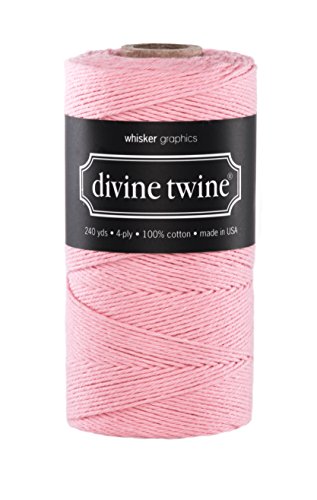
If you are conscious of your environmental footprint, Divine Twine offers a fantastic, biodegradable option. It is made from 100% cotton and is manufactured in a way that prioritizes sustainable practices, which resonates with many fiber artists.
The solid, non-twisted construction gives it a clean, minimalist look that doesn’t compete with the texture of your pompoms. It is smooth to the touch, making the assembly process much kinder to your fingertips.
This cord is thinner than traditional jute, so it works best for delicate or smaller-scale garlands. It is a refined choice for a polished, professional finish.
Pepperell Braided Nylon: Best For Heavy Garlands

Sometimes you need a workhorse, especially if you are creating a massive garland with heavy, dense wool poms. Braided nylon provides the tensile strength required to support weight without any risk of snapping.
Because it is synthetic, it is virtually indestructible and won’t rot or degrade if exposed to humidity. It has a slight sheen that can look quite modern, especially in neutral colors like black or silver.
Be aware that nylon is slick. You will need to use a strong knot—like a surgeon’s knot—to ensure your pompoms stay locked in place, as they will slide easily along the smooth surface.
Beadsmith Waxed Linen: Best For Tangle Resistance

Waxed linen is a dream to work with because the wax coating keeps the cord from fraying and prevents those pesky tangles that often plague cotton twines. It is smooth, strong, and has a lovely, professional weight to it.
This is the preferred choice for makers who want a high-end, heirloom-quality garland. The wax makes the cord slightly stiff, which actually makes it easier to thread through a needle or the center of your pompoms.
The main consideration is that the wax can sometimes leave a very faint residue on your fingers, though it is rarely noticeable. It is the ultimate choice for precision spacing and durability.
How To Select The Right Twine For Your Pom Garland
Choosing the right twine is about balancing the weight of your poms with the desired aesthetic. If your poms are made from heavy, bulky-weight wool, you need a cord with high tensile strength, like nylon or hemp.
Consider the environment where the garland will hang. If it is a temporary holiday decoration, cotton baker’s twine is perfect; for a permanent nursery fixture, look for the durability of waxed linen.
Always match the "hand" of your twine to the "hand" of your yarn. A rustic, hairy jute looks best with wool, while a smooth, waxed linen pairs beautifully with polished, synthetic, or superwash yarns.
Understanding Weight And Texture For Your Project
Think of your twine as the "needle" of your project—it dictates the outcome. A thicker, more textured twine will naturally grip the poms, while a thinner, smoother twine allows for easy adjustment.
If you are struggling with poms sliding, try a "hitch" knot rather than a simple overhand knot. This uses the friction of the twine against itself to lock the pompom firmly in place.
Don’t be afraid to mix fibers if you are feeling adventurous. A smooth cotton cord with a metallic thread can add a subtle, sophisticated sparkle to your decor.
Essential Tips For Attaching Poms To Your Twine
The most secure way to attach a pompom is to leave long tails when tying off your pompom maker. Use these tails to tie a secure knot directly onto the garland twine.
For extra security, you can use a tapestry needle to thread the pompom tails through the center of the twine itself. This creates a "locked" position that prevents the pompom from rotating or sliding.
Always test your spacing with a few poms before committing to the full length of the garland. It is much easier to adjust your measurements when you have only attached three poms than when you have finished twenty.
How To Store Your Garland To Prevent Tangling
The best way to store a pompom garland is to wrap it around a piece of sturdy cardboard or a dedicated spool. This prevents the twine from kinking and keeps the poms from matting against each other.
If you don’t have a spool, gently coil the garland into a box, placing a piece of tissue paper between layers to prevent the poms from catching on one another. Never leave a garland in a tangled ball; the friction will cause the poms to pill and the twine to weaken.
Taking five minutes to store your project properly will save you an hour of detangling next season. Treat your garland with the same care you would a hand-knit heirloom, and it will remain a staple in your home for years.
Building a pompom garland is a meditative process that rewards patience and careful material selection. By understanding the unique properties of these six twines, you can ensure your project is both beautiful and structurally sound. Remember that the best garland is one that reflects your personal style while holding up to the demands of your space. Happy crafting, and enjoy the process of turning simple supplies into a lasting piece of home decor.