7 Best Knitting Books For Sock Construction To Master
Master sock knitting with these 7 essential guides. Learn expert techniques, heel variations, and fit adjustments to elevate your craft from beginner to pro.
Knitting socks is often considered the ultimate rite of passage for any dedicated fiber artist. While the small circumference can feel intimidating at first, mastering the math and mechanics behind these garments opens up a world of creative freedom. These seven books provide the technical roadmap you need to move from basic tubes to perfectly fitted, heirloom-quality footwear. Whether you are struggling with heel tension or curious about custom sizing, this collection covers the essential techniques for every skill level.
Sensational Knitted Socks by Charlene Schurch
This book is widely regarded as the "bible" for sock knitters who want to understand the relationship between stitch patterns and fabric structure. Schurch excels at explaining how different textures—like cables or lace—impact the overall stretch and fit of the finished sock.
If you have ever knitted a pair of socks that felt too tight around the calf or sagged at the ankle, this book provides the necessary math to adjust your stitch counts. It moves beyond simple patterns, teaching you how to manipulate stitch repeats to ensure your chosen design actually fits a human foot.
The bottom line here is versatility. If you want to take a basic pattern and customize it with your own aesthetic, this is the definitive guide to making that happen without sacrificing structural integrity.
Custom Socks: Knit to Fit Your Feet by Kate Atherley


Kate Atherley is a master of the technical side of knitting, and this book is her magnum opus on sizing. Instead of relying on a "one size fits most" approach, she teaches you how to take precise measurements of your own foot and translate those into a custom blueprint.
For those of us with high insteps or narrow heels, standard patterns are often a source of frustration. Atherley’s method removes the guesswork, ensuring that your hard work results in a sock that stays up and hugs the foot comfortably.
This book isn’t just about patterns; it’s a masterclass in garment engineering. If you find yourself constantly ripping out work because the fit isn’t quite right, this text will save you hours of wasted effort.
The Sock Knitter’s Handbook by Beth Parrott

When you hit a snag—a dropped stitch in a complex heel or a confusing instruction—this is the book you want on your coffee table. It functions as a comprehensive reference guide, focusing on problem-solving rather than just providing a list of projects.
The authors address common mistakes with clear, illustrated solutions that are easy to follow even when you’re mid-row. It covers everything from picking up stitches along a heel flap to grafting the toe with a seamless finish.
It is an essential resource for those who want to understand why a technique works, not just how. Keep this on hand for those late-night knitting sessions when you need a quick, reliable answer to a construction question.
Sock Architecture by Lara Neel for Perfect Heels
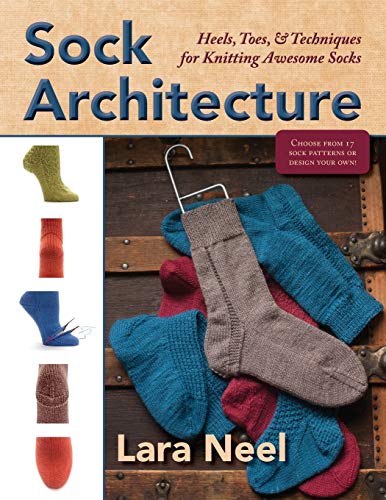
Heels are the most intimidating part of sock knitting for most beginners, and this book tackles that fear head-on. Neel breaks down the geometry of the heel, explaining how different shapes interact with the anatomy of the foot.
You will learn the differences between the traditional heel flap and gusset, the short-row heel, and the afterthought heel. Understanding these differences allows you to choose the right construction method based on the yarn you’ve chosen or the specific fit you desire.
If you are tired of the same old heel and want to expand your repertoire, this book provides the structural knowledge to experiment confidently. It turns the heel from a daunting hurdle into a design feature.
Getting Started Knitting Socks by Ann Budd Basics

If you are picking up your double-pointed needles for the first time, start here. Ann Budd is known for her incredibly clear, no-nonsense instructions that strip away the fluff and focus on the mechanics of the stitch.
The book walks you through the anatomy of a sock in a way that is logical and easy to digest. It focuses on the classic top-down method, which is the gold standard for learning the fundamentals of turning a heel and working a gusset.
This is the perfect starting point for anyone who feels overwhelmed by the complexity of modern sock patterns. It provides a solid, reliable foundation that you can build upon for years to come.
More Sensational Knitted Socks by Charlene Schurch

Building on the success of her first volume, Schurch dives deeper into more complex stitch patterns and construction variations in this follow-up. It is perfect for the knitter who has mastered the basics and is ready to push their creative boundaries.
The patterns here are more intricate, focusing on how to integrate complex lace and cables into the sock without compromising the elasticity of the fabric. It encourages you to think about how your yarn choice—such as a high-twist merino versus a rustic wool blend—will affect the final drape.
This book is for the intermediate knitter looking to level up. It bridges the gap between functional socks and wearable art.
Knitting Socks with Handpainted Yarns by Carol Sulcoski

Handpainted yarns are beautiful in the skein, but they can create "pooling" or "flashing" that ruins the look of a complex pattern. Sulcoski teaches you how to pair the right yarn with the right stitch to ensure your hard work shines through.
She explains how to manage color transitions and when to choose a simple stockinette stitch over a busy cable. This is a critical skill for any knitter who loves indie-dyed yarn but struggles to make it look cohesive in a finished project.
If you find yourself buying beautiful yarn only to leave it in your stash because you don’t know how to use it, this book is your solution. It turns color management into a straightforward, predictable process.
Essential Tips for Choosing the Best Sock Patterns
- Check the gauge: Socks require a tight gauge to prevent wear and tear; if the fabric feels loose or "holey," go down a needle size.
- Consider the fiber: Always look for a yarn with a bit of nylon or high-twist wool for durability; 100% alpaca or single-ply yarns will likely felt or wear through quickly at the heel.
- Analyze the stitch count: Ensure the pattern’s stitch count aligns with your foot circumference, not just the "medium" or "large" label.
- Evaluate the cuff: If you have larger calves, look for patterns with adjustable ribbing or top-down construction that allows for easy increases.
Understanding Different Sock Construction Methods
The most common debate in the knitting world is top-down versus toe-up. Top-down is generally easier for beginners to learn the classic heel flap, while toe-up is fantastic for using every last bit of a precious skein of yarn.
- Top-Down: Allows you to try the sock on as you go, but requires you to graft the toe at the end.
- Toe-Up: Great for custom fit around the toes and allows for easy length adjustments, though the heels can be trickier for some.
- Afterthought Heels: These allow you to knit the entire sock as a tube and insert the heel later; it’s a brilliant way to incorporate stripes or colorwork without breaking the pattern flow.
How to Master Heel Flaps and Gussets for Comfort
The heel flap and gusset is the most durable construction method, making it ideal for everyday socks. The key to success is picking up the correct number of stitches along the edge of the flap; too few will create holes, while too many will make the heel bulky.
Always use a smaller needle size for the heel flap if you find your stitches are loose, as this area experiences the most friction. Don’t be afraid to use a "slipped stitch" pattern on the flap, as this creates a double-thick fabric that significantly extends the life of the heel.
Finally, remember that blocking is your best friend. A heel that looks slightly puckered or uneven on the needles will often settle into a perfectly smooth shape once it has been washed and dried on a sock blocker.
Mastering sock construction is a journey that rewards patience and attention to detail. By utilizing these resources, you will move past the frustration of trial and error and gain the confidence to create custom-fitted, durable socks. Remember that every knitter has a unique tension and anatomy, so embrace the process of making these patterns your own. Happy knitting, and may your heels always be sturdy and your toes perfectly shaped.