7 Best Knitting Instruction Manuals for Beginners
Master knitting with our top 7 beginner manuals. These guides simplify complex techniques and essential patterns, ensuring a smooth start to your fiber journey.
Picking up your first pair of needles is a transformative moment that bridges the gap between raw fiber and functional art. However, the sheer volume of instructional literature can feel as overwhelming as a tangled skein of mohair. Finding a reliable guide is the difference between a lifelong passion and a frustrating hobby abandoned in a drawer. Here are the seven essential manuals that will help you navigate your journey from cast-on to binding off.
Vogue Knitting: The Ultimate Knitting Book
This is the definitive encyclopedia for any serious maker’s library. It functions less like a casual tutorial and more like a structural blueprint for everything from basic garter stitch to complex intarsia.
If you are the type of knitter who wants to understand the "why" behind the "how," this book is your best friend. It excels at explaining the physics of stitch formation, which is vital when you eventually move from simple scarves to fitted garments.
The downside is its sheer density; it is not a "quick start" guide. Use this as a reference manual to troubleshoot your work rather than trying to read it cover-to-cover during your first week.
Stitch ‘n Bitch: The Knitter’s Handbook


Debbie Stoller revolutionized the craft by making it accessible, cool, and undeniably modern. This book strips away the dusty, traditional vibe of old-school knitting manuals and replaces it with a fun, conversational tone.
It is perfect for the absolute beginner who is intimidated by technical jargon. Stoller breaks down the essential steps—casting on, the knit stitch, and purling—with a clarity that feels like having a friend sitting on your couch.
Keep in mind that the patterns are dated, but the foundational instruction remains rock solid. Focus on the technique chapters to build your muscle memory before moving on to more contemporary designs.
Knitting Without Tears by Elizabeth Zimmermann

Elizabeth Zimmermann is the patron saint of the "knitting is thinking" philosophy. This book is not a pattern collection, but a manifesto on how to be a self-reliant, confident knitter.
She teaches you to trust your own hands and measurements rather than blindly following a set of rigid instructions. If you find yourself constantly worrying about gauge or being afraid to make a mistake, this is the book that will cure your perfectionism.
Her approach encourages you to embrace the "unventing" process. It is the ultimate guide for those who want to understand the architecture of a sweater rather than just following a recipe.
The Principles of Knitting by June Hemmons Hiatt
This is the gold standard for technical precision. If you are the type of person who needs to know exactly how a stitch interacts with the needle and the yarn tension, this is your bible.
Hiatt covers everything, including the nuances of different fiber types and how they behave under tension. When you are ready to understand why your wool yarn behaves differently than your cotton or silk, turn to these pages.
It is a heavy, academic-style volume. Don’t expect light bedtime reading; expect a masterclass that will elevate your craft to a professional level.
Reader’s Digest: The Knitting Answer Book
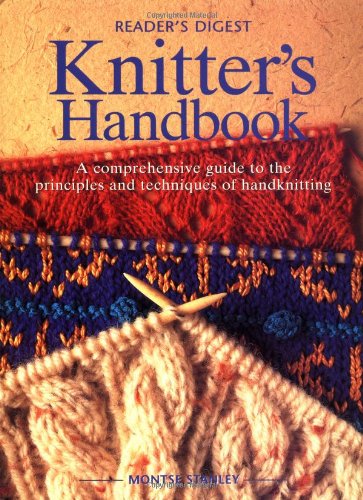
Sometimes you just need a quick, reliable answer when you are stuck in the middle of a row at midnight. This book is designed for exactly that scenario, offering concise solutions to common problems.
It is organized by topic, making it incredibly easy to flip to the section on "fixing dropped stitches" or "understanding yarn labels." It is a practical tool for your project bag rather than a decorative coffee table book.
It doesn’t go deep into design theory, but it is excellent for troubleshooting. Keep it nearby when you are working on your first complex project and inevitably run into a snag.
Debbie Stoller’s Stitch ‘n Bitch Nation

This sequel expands on the original’s approachable style with a focus on more advanced techniques and interesting construction methods. It is a natural step up once you have mastered the basic knit and purl stitches.
The book introduces the reader to working in the round and basic shaping, which are essential for making hats and socks. It bridges the gap between "beginner" and "intermediate" without making the transition feel like a chore.
The projects are a bit more ambitious, which is great for building confidence. Use this to push your boundaries once you have finished your first few simple accessories.
The Knitter’s Bible by Claire Crompton
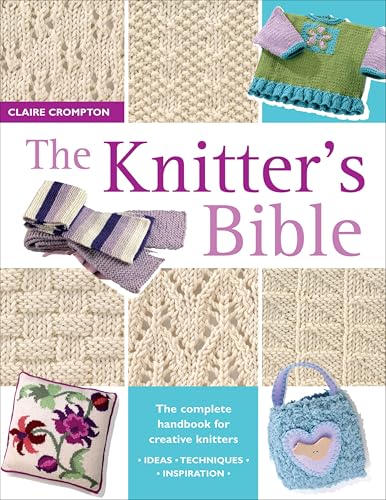
This book acts as a visual dictionary of stitches, which is invaluable once you get bored of basic stockinette. It provides clear, step-by-step instructions for a massive variety of textures and patterns.
If you are a visual learner, you will appreciate the clear photography accompanying each stitch pattern. It helps you visualize how different stitches will look once they are blocked and settled on your needles.
It is less of a "how-to" for construction and more of a "what-can-I-do" for design. Use it to customize your projects and add personal flair to your hand-knits.
Choosing the Right Manual for Your Learning Style
Not every knitter learns the same way, and that is perfectly fine. Some of us need to read the theory before we touch the needles, while others need to dive in and learn by failing forward.
- For the Visual Learner: Look for books with high-quality, close-up photography of the needle and yarn interaction.
- For the Analytical Learner: Seek out encyclopedic texts that explain the math and physics behind stitch construction.
- For the Creative Learner: Focus on books that emphasize design, "unventing," and color theory.
Be honest about your frustration threshold. If a book feels too dry, switch to one with a more conversational tone, or vice versa.
Why Visual Illustrations Matter in Instruction
Knitting is fundamentally a tactile, spatial art. A written description of a "yarn over" can be confusing, but seeing the loop form on the needle makes the concept click instantly.
Look for manuals that show the movement of the hands, not just the finished stitch. If the illustrations are blurry or confusing, your hands will struggle to replicate the motion, leading to unnecessary tension and dropped stitches.
Never be afraid to supplement your book with online video tutorials. Sometimes, seeing the motion in real-time is the missing link that turns a static diagram into a fluid movement.
Essential Skills Every New Knitter Must Master
Regardless of which book you choose, focus on mastering the "Big Three": consistent tension, reading your stitches, and understanding your yarn. Tension comes with time, so don’t be discouraged by uneven stitches in your first project.
Learn to "read" your knitting—recognizing the difference between a knit stitch and a purl stitch—as early as possible. This simple skill will save you hours of frustration when you need to fix a mistake or count your rows.
Finally, always swatch. It might feel like a waste of time, but understanding how a specific yarn behaves on a specific needle size is the most important lesson you will ever learn.
The journey of a thousand stitches begins with a single cast-on, and the right manual will be your most loyal companion along the way. Remember that even the most expert knitters were once beginners struggling with tangled yarn and uneven tension. Choose the book that speaks to your learning style, keep your needles moving, and don’t be afraid to unravel your mistakes—they are simply lessons in disguise. Happy knitting.