6 Best Wool Spinning Kits For Gift Giving
Discover the top 6 wool spinning kits perfect for gifting. This guide highlights essential tools and beginner-friendly sets to start your fiber arts journey.
Spinning your own yarn is the ultimate way to customize your knitting projects, allowing you to control everything from twist angle to fiber blend. Whether you dream of creating a rustic, woolen-spun sweater or a smooth, worsted-spun lace shawl, the right equipment makes all the difference. Choosing a spinning kit is a significant investment in your craft that pays off in the unique character of your finished garments. This guide breaks down the best options to help you find the perfect match for your fiber journey.
Ashford Traditional Spinning Wheel Kit


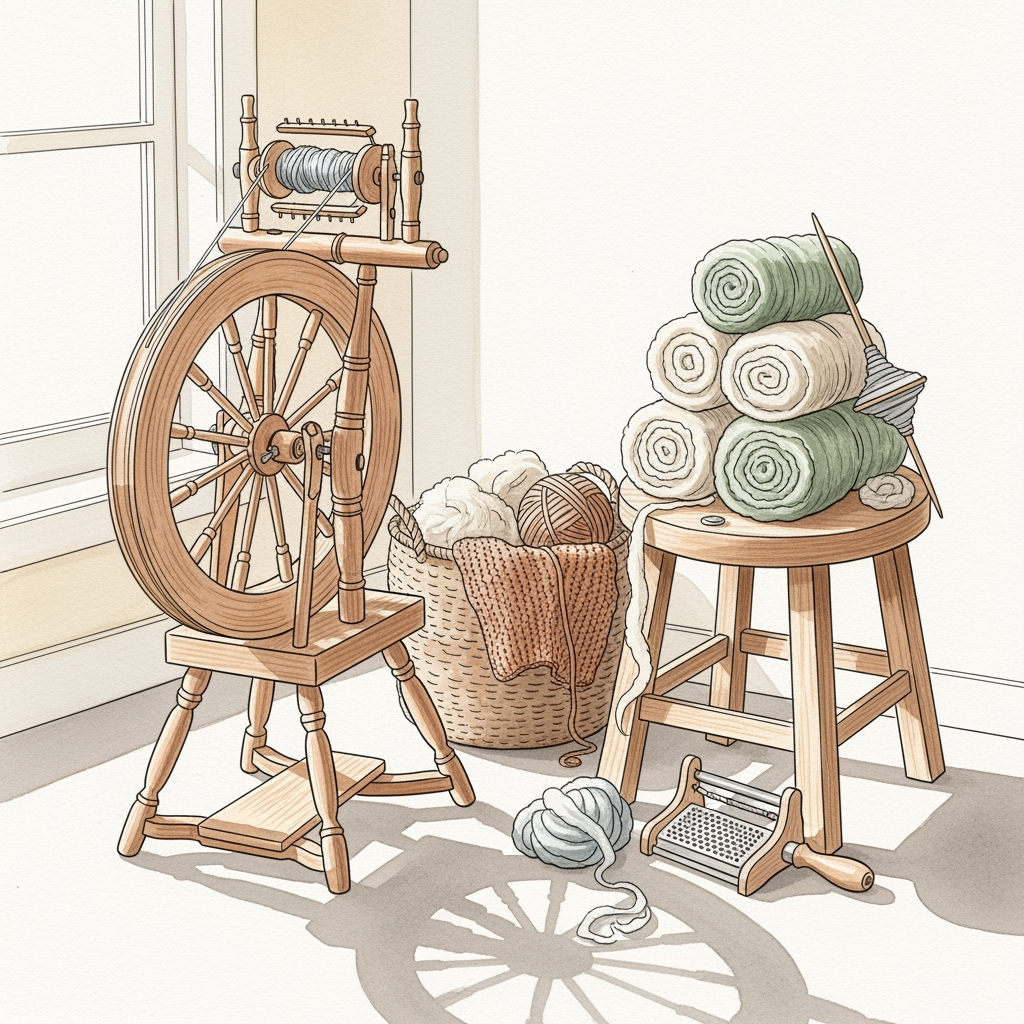
The Ashford Traditional is the quintessential "farmhouse" wheel, often the first one a new spinner touches. Its iconic castle design and large drive wheel provide a steady, rhythmic momentum that is incredibly forgiving for beginners learning to draft fiber.
Because it is a classic scotch-tension wheel, it is remarkably easy to adjust as your skills progress from thick, singles-heavy art yarns to finer, multi-ply yarns. You will find that the wood construction is sturdy enough to last decades, though it does require occasional waxing to keep the flyer running smoothly.
The biggest trade-off is its footprint; this is not a wheel you tuck away in a closet. If you have a dedicated fiber corner, this wheel becomes a beautiful piece of furniture that invites you to sit and spin every single day.
Kromski Sonata Portable Spinning Wheel
If you live in a small apartment or frequently travel to knitting retreats, the Kromski Sonata is a masterclass in engineering. It folds down into its own carrying bag, yet it performs with the stability of a much larger, stationary wheel.
The Sonata uses a double-drive system, which gives you incredible control over the twist, making it a favorite for those who want to spin very fine, consistent lace-weight yarns. It feels responsive under the treadle, meaning you can stop and start your drafting with precision.
Be aware that the compact design means the bobbins are slightly smaller than those on a traditional wheel. You will be stopping to swap bobbins more often, which is a minor inconvenience for the luxury of having a high-performance wheel that fits under your bed.
Schacht Matchless Spinning Wheel Set

The Schacht Matchless lives up to its name, offering a level of mechanical refinement that most spinners find addictive. It is widely considered the "gold standard" for those who want a wheel that can handle everything from cobweb-thin mohair to heavy, textured spinning.
The treadling action is exceptionally smooth, which reduces fatigue during long sessions of spinning for a sweater’s worth of yarn. It features a versatile tensioning system that allows you to switch between scotch and double-drive modes, effectively giving you two wheels in one.
While the price tag is steep, you are paying for precision engineering that eliminates the "chatter" or vibration found in cheaper wheels. If you are a serious knitter who plans to spin the majority of your own yarn, this is a "buy it once" tool.
SpinOlution Echo Spinning Wheel Kit
SpinOlution wheels are famous for their "no-fuss" approach to maintenance and their massive bobbins. The Echo is a fantastic choice if you hate the frequent stopping and starting required to change bobbins when spinning large quantities of yarn.
The mechanics are incredibly intuitive, making it a dream for those who find the technical adjustments of older wheel designs frustrating. It handles a wide range of fibers, from slippery silk to sticky, raw wool, with very little adjustment to the tension.
The trade-off here is the aesthetic; it has a very modern, industrial look compared to the classic wooden wheels. If you prefer the look of a traditional heirloom piece, this might not be for you, but for pure functionality, it is hard to beat.
Louet S10 Concept Spinning Wheel

The Louet S10 is a modular system that grows with your spinning ability. You start with the basic model, but you can add different flyer ratios or bobbin sizes as your preferences shift from bulky, quick-to-spin wools to fine, intricate blends.
Its design is based on a "bobbin-led" system, which is inherently easy to use because it pulls the yarn onto the bobbin automatically. This makes it an excellent choice for beginners who struggle with the coordination required to balance spinning and winding-on.
Because it is made of high-quality, laminated birch, it is incredibly durable and resistant to the warping that can affect solid wood wheels in humid climates. It is a workhorse that doesn’t demand constant pampering or fine-tuning.
HansenCrafts MiniSpinner Pro Kit
The MiniSpinner Pro is an electric wheel that completely removes the need for physical treadling. For knitters with knee or hip issues, or those who simply want to focus entirely on their hands, this is a game-changer.
Despite its tiny size, it is a powerhouse capable of spinning at very high speeds. It is whisper-quiet, making it perfect for spinning in the living room while watching a movie or listening to an audiobook.
The learning curve involves mastering the foot pedal for speed control, which takes a bit of practice to sync with your hands. However, once you get the rhythm, you can produce yards of yarn in a fraction of the time it takes on a manual wheel.
Understanding Drop Spindles vs Wheels
Before investing in a wheel, many beginners start with a drop spindle. A spindle is a simple, weighted stick that acts as a portable, low-cost introduction to the physics of twist.
- Drop Spindles: Great for learning the fundamentals of drafting and twist control without a large financial commitment.
- Spinning Wheels: Necessary for production; if you want to spin enough yarn for a full-sized adult sweater, a wheel is significantly faster and more ergonomic.
The biggest mistake is thinking a spindle is "lesser" than a wheel. Many expert spinners continue to use spindles for spinning small amounts of precious fibers like cashmere or angora while they travel.
Essential Fiber Types for New Spinners
The fiber you choose will dictate how easy your first spinning experience is. Avoid slippery, long-staple fibers like mohair or silk at first, as they can be frustrating to control.
- Corriedale: The "goldilocks" wool. It has a medium crimp and is very forgiving, making it perfect for learning to draft.
- Bluefaced Leicester (BFL): A longer staple that is soft and has a beautiful luster, ideal for creating smooth, durable yarns.
- Merino: Very soft, but often short-stapled and prone to pilling; it can be tricky for beginners to keep the yarn from breaking.
Start with a "prepared top" or "roving," where the fibers are already aligned in the same direction. This allows you to focus on the drafting motion rather than wrestling with tangled locks.
How to Choose Your First Spinning Kit
When choosing a kit, consider your physical space and your ultimate goal. If you have limited room, prioritize a folding or compact model like the Sonata.
If your goal is to spin yarn for a specific project, consider the "ratios" of the wheel. A high ratio is better for fine, thin yarns, while a lower ratio is better for thick, chunky yarns.
Don’t ignore the "feel" of the wheel. If you have the chance, attend a fiber festival and sit at different wheels; you will immediately feel which one suits your natural treadling rhythm.
Tips for Maintaining Your Spinning Gear
Spinning wheels are mechanical devices that require regular care to keep them spinning smoothly. Keep a small kit with sewing machine oil and a soft cloth for wiping down the flyer and bobbins.
Always check your drive band tension before you start a session; if it is too loose, your yarn will be uneven, and if it is too tight, you will struggle to treadle. A little bit of maintenance goes a long way in preventing frustration.
Finally, keep your wheel in a stable environment. Extreme changes in temperature or humidity can cause wooden parts to expand or contract, which can throw off your alignment.
Investing in a spinning kit is the beginning of a lifelong relationship with your yarn. By selecting a wheel that matches your physical needs and your creative goals, you ensure that spinning remains a joy rather than a chore. Take your time to research, test if possible, and choose a tool that inspires you to sit down and create. Happy spinning, and may your bobbins always be full of beautiful, hand-spun yarn.