6 Best Blocking Mats For Portability To Pack Away
Discover the 6 best portable blocking mats for crafters. Learn which lightweight, foldable options save space while keeping your knitting projects precise.
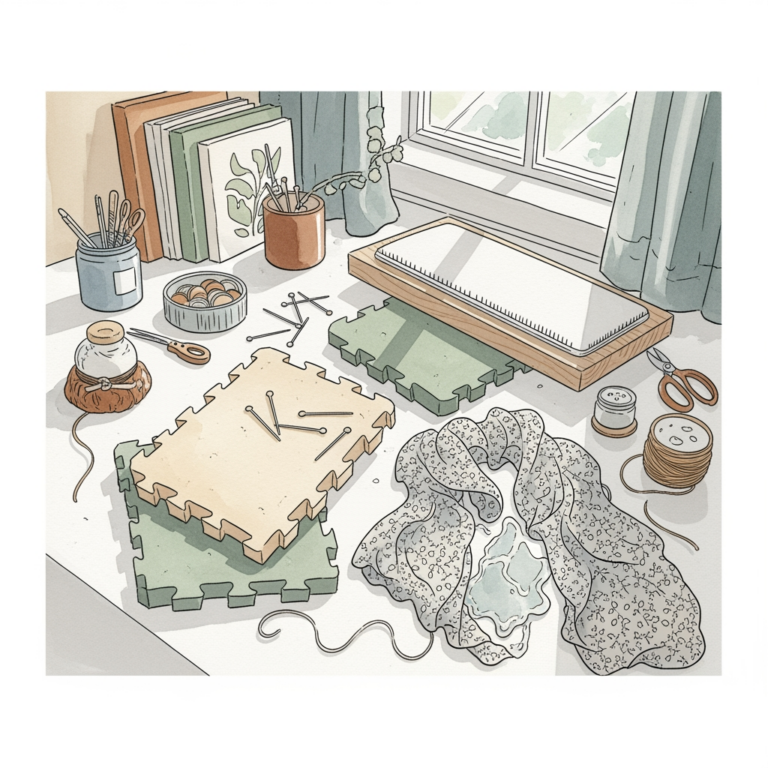
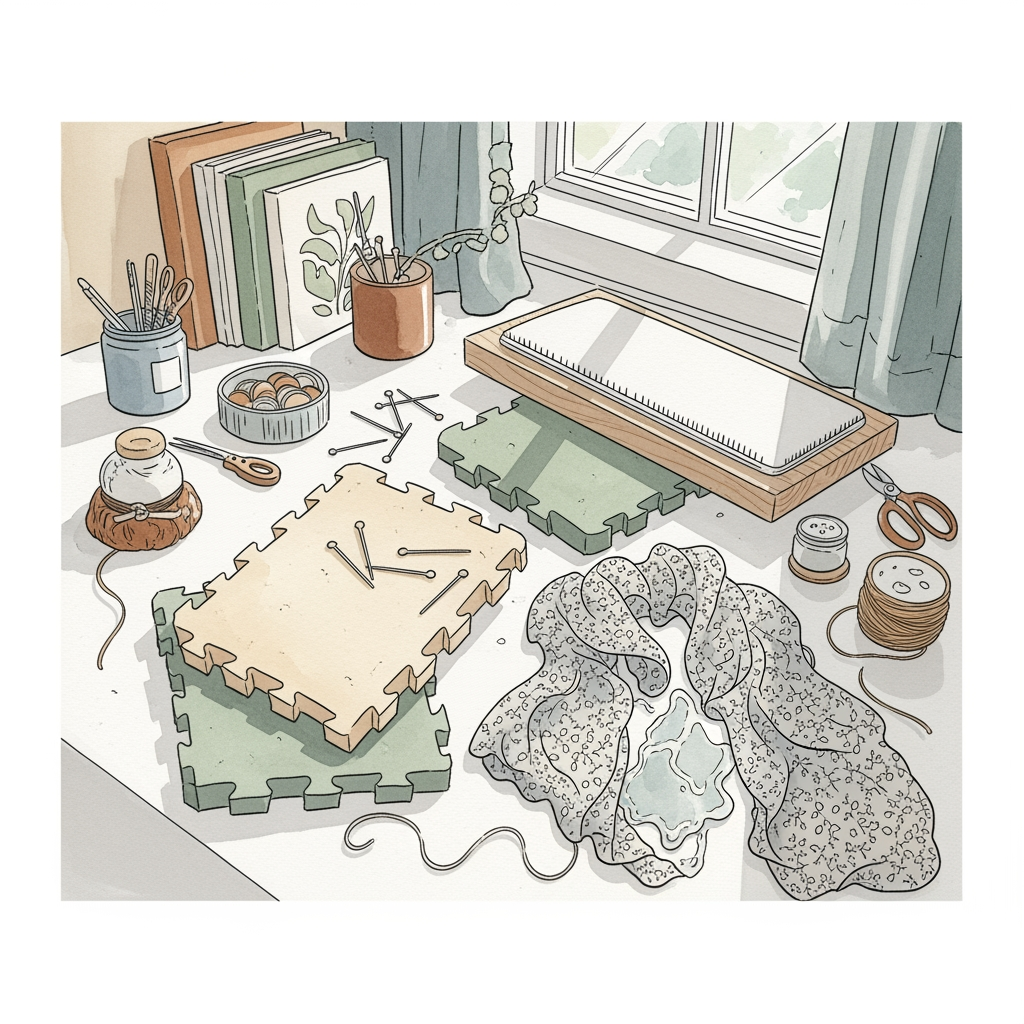
Finding the right blocking mats is often the difference between a project that looks handmade and one that looks truly professional. When you spend weeks on a complex lace shawl or a fitted sweater, you need a stable, reliable surface to set your stitches. Portability is the unsung hero here, allowing you to reclaim your living room floor once the blocking is complete. These six options offer the best balance of function and stow-away convenience for the modern knitter.
KnitIQ Blocking Mats: Best Overall for Portability
These mats are a favorite in my circle because they strike the perfect balance between thickness and firmness. The dense foam ensures your T-pins stay exactly where you put them, even when you’re applying tension to a stubborn wool project.
What sets them apart is the inclusion of a specialized storage bag. Being able to slide the tiles into a sleek carrier makes them ideal for knitters who don’t have a dedicated craft room.
The grid lines are printed with excellent precision, which is a lifesaver when you are trying to ensure a lace scarf is perfectly symmetrical. If you value a clean, organized workspace, these are your best bet.
Acorn & Oak Interlocking Foam Blocking Tiles Set
These tiles are remarkably lightweight, which makes them a dream if you often travel to knitting retreats or workshops. Because they are so easy to transport, you won’t hesitate to bring your blocking gear along to finish a project on the go.
The interlocking mechanism is tight and secure, preventing the dreaded "gap" that can sometimes occur between cheaper tiles. When you are pinning out a delicate mohair piece, you don’t want your mat shifting under the weight of the pins.
While they are slightly thinner than heavy-duty professional mats, they perform beautifully for light-to-medium weight projects. They are a solid, no-nonsense choice for the knitter who wants functionality without a bulky footprint.
Knitter’s Pride Lace Blocking Mats With Grid


If you spend your time working with fine lace weights or intricate fingering yarns, these mats are designed with your specific needs in mind. The grid is bold and easy to read, which helps immensely when you are counting repeats on a complex chart.
The material is specifically formulated to withstand the repeated insertion of blocking wires and pins. This is crucial; if your mat starts to degrade after a few uses, you’ll find your pins popping out at the worst possible moment.
These mats are also quite compact when disassembled, sliding easily into a project bag or under a bed. They are a reliable workhorse for the dedicated lace knitter.
Boye Interlocking Foam Blocking Board System

The Boye system is a classic for a reason, offering a straightforward, modular approach to blocking. It is particularly helpful for those who knit scarves or shawls of varying lengths, as you can configure the tiles into a long, narrow strip.
This modularity is the key to their portability. You don’t have to set up a massive square if you are only blocking a pair of socks or a small baby bonnet.
The foam density is moderate, meaning it is gentle on your hands during the pinning process. If you have any joint sensitivity, you’ll appreciate how easily the pins slide into these tiles.
Cocoknits Knitter’s Block Modular Tile System
Cocoknits has a reputation for thoughtful design, and these mats are no exception. They feature a unique, heat-resistant surface that allows you to steam-block your projects directly on the mat without worry.
The portability factor here is bolstered by the fact that they are designed to be used with the Cocoknits accessory collection. Everything packs away into a tidy, professional-looking kit that fits neatly on a shelf.
These mats are on the firmer side, which is excellent for maintaining sharp points on lace or crisp edges on a sweater. If you are a perfectionist about your finishing work, these are worth the investment.
Hephaestus Extra Thick Portable Blocking Mats

Sometimes you need extra depth to accommodate long T-pins, especially when working with heavy, rustic wools that require significant tension. The Hephaestus mats provide that extra cushion, ensuring your pins are anchored deep and won’t wobble.
Despite the added thickness, they remain surprisingly portable. They stack neatly, and because they are durable, you won’t have to worry about them getting dinged up during storage.
These are the "heavy-duty" option for the knitter who works with bulky yarns or heavy blankets. When the project weight is substantial, having that extra thickness provides much-needed stability.
Key Factors for Choosing Portable Blocking Mats
When shopping for mats, look closely at the interlocking edges. A loose connection will cause your project to warp if the mats shift while the piece is damp.
Consider the grid printing. While some prefer a plain surface, a grid is essential for beginners learning to measure their gauge and dimensions.
Finally, think about storage space. If you live in a small apartment, prioritize sets that include a dedicated carrying case or a slim profile for vertical storage.
Foam Density and Its Impact on Pin Retention
Foam density is the most critical technical aspect of a blocking mat. If the foam is too soft, your pins will tilt, causing your edges to become uneven or wavy.
Conversely, if the foam is too hard, you’ll struggle to push your pins in, which can lead to hand fatigue or bent pins. Look for a "medium-firm" density that offers resistance but allows for a smooth, consistent insertion.
Remember that after a few years of heavy use, even the best foam will start to show wear. That is why choosing a modular system is smart—you can replace individual tiles rather than the whole set.
Essential Tips for Blocking Delicate Knitwear
Always ensure your mats are on a level surface before you start. If your floor is uneven, your finished garment will be, too.
When working with delicate fibers like silk or alpaca, use rust-proof pins. There is nothing more heartbreaking than finishing a project only to find tiny orange rust spots on your beautiful handiwork.
If you are blocking a sweater, start by pinning the shoulders and the center line. This establishes your symmetry before you begin stretching the side seams.
How to Properly Store Your Blocking Mat Sets
Never store your mats while they are still damp. Even if the material is water-resistant, trapping moisture between the tiles can lead to mold or mildew.
Give them a quick wipe with a dry cloth and let them air dry completely before stacking them away. If you have the original packaging, use it—it’s designed to keep the tiles flat and prevent warping over time.
Store them flat whenever possible. If you must store them vertically, ensure they are braced so they don’t develop a permanent curve, which can make your future blocking sessions much more frustrating.
Investing in a quality set of blocking mats is an investment in the longevity and beauty of your knitting. By choosing a system that fits your storage reality, you ensure that blocking remains a satisfying part of your process rather than a chore. Take your time, select the density that suits your projects, and enjoy the professional finish that proper blocking provides. Your stitches deserve nothing less.