7 Best Ergonomic Stools For Long Dyeing Sessions
Discover the 7 best ergonomic stools for long dyeing sessions. Improve your posture and comfort with these top-rated picks designed for studio professionals.
Dyeing yarn for hours requires as much physical stamina as it does creative vision. If your setup forces you to hunch over dye pots or strain your back while stirring heavy skeins, your process will suffer. The right stool transforms your studio from a place of physical fatigue into a sanctuary for color development. Investing in proper seating is just as vital as choosing the right mordant or fiber base.
HAG Capisco 8106: Best Ergonomic Dyeing Stool


The HAG Capisco 8106 is the gold standard for anyone who moves as much as I do when working with fiber. Its unique saddle-shaped seat encourages an open hip angle, which is essential when you are leaning over a dye vat for an entire afternoon of immersion dyeing.
This stool allows you to sit forward, sideways, or even backward, supporting your body while you reach for dye stock solutions or prep your fiber. It prevents that dreaded "knitter’s slouch" that happens when you’ve been standing over a workspace for too long.
The saddle design is the true game-changer here, as it naturally aligns your spine. While the price point is steep, consider it an investment in your long-term studio health. If you are serious about dyeing large batches, this is the stool that will keep your back happy for years.
Flash Furniture Mid-Back: Best Budget Choice

Sometimes the budget needs to go toward high-quality wool bases and professional-grade dyes rather than furniture. The Flash Furniture Mid-Back offers a reliable entry point without sacrificing the basic support needed for shorter dyeing sessions.
It features a simple pneumatic height adjustment, which is critical when you switch between different pot sizes or counter heights. While it lacks the advanced ergonomic bells and whistles of high-end chairs, it provides a stable base for standard studio tasks.
Be mindful that the padding isn’t designed for twelve-hour marathons, so it is best suited for quick color mixing or small-batch experiments. It’s a solid, no-nonsense choice for a new studio setup.
Varier Move Stool: Best for Active Posture

If you find yourself constantly shifting your weight while monitoring a simmering dye pot, the Varier Move is your best friend. This stool is designed for "active sitting," meaning it follows your body’s micro-movements rather than locking you into a static, rigid position.
The base is slightly rounded, which forces your core muscles to engage just enough to keep you balanced. This constant, subtle movement helps keep your circulation flowing, which is vital when you are standing or sitting for long periods in a warm, humid dyeing environment.
It doesn’t have a backrest, which might feel strange at first if you are used to traditional office chairs. However, once you adjust, you’ll find that your posture improves naturally because you aren’t relying on a chair to hold you up.
Boss Office Products Stool: Best Back Support

When you are spending hours carefully painting fiber or meticulously measuring out powder dyes, you need a chair that provides consistent lumbar support. The Boss Office Products stool offers a sturdy backrest that keeps you upright and focused.
The inclusion of a foot ring is a significant benefit for dyeing studios where floor surfaces can sometimes be slick or uneven. Having a place to rest your feet helps you maintain a stable center of gravity while you are stirring or manipulating wet fiber.
It is a more traditional design, which works well if you prefer a familiar, structured seating experience. Just ensure you check the height range to confirm it aligns with your specific workspace counter, as it is a bit bulkier than the saddle-style options.
Seville Classics Airlift: Best Height Range
Dyeing studios often utilize various workspaces, from low tables for fiber prep to high counters for large-scale dye vats. The Seville Classics Airlift excels because of its impressive height range, allowing you to transition seamlessly between these tasks.
The stool is built with a sturdy hydraulic lift that feels smooth and reliable even after repeated adjustments. Its compact footprint is also a major plus, especially if your studio space is shared with knitting supplies, drying racks, and yarn storage.
While it is a stool, it provides enough support to keep you comfortable during mid-length dyeing sessions. It’s a versatile, functional piece of equipment that respects the limited space of a home studio.
Drafting Chair by Modway: Best for Durability
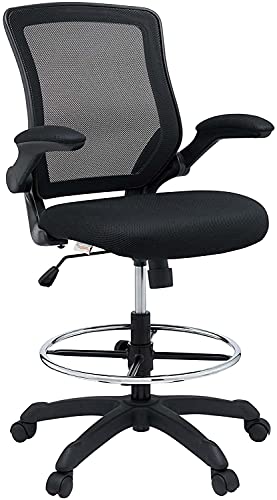
Fiber artists know that a studio is a messy place, often filled with water splashes, dye drips, and stray fibers. The Drafting Chair by Modway is built to withstand this environment, featuring materials that are easy to wipe down and a frame that resists wear.
The high-back design provides excellent support for your shoulder blades, which often tighten up after you’ve spent hours hand-painting intricate colorways. It feels substantial and stable, which is exactly what you want when you are leaning in to check a color saturation.
Durability is key here; you don’t want a chair that wobbles or squeaks when you are trying to concentrate on a delicate dye strike. This chair is a workhorse that will handle the daily rigors of a busy studio with ease.
Songmics Swivel Stool: Best Compact Design

If your "studio" is actually a corner of your living room or a small spare bedroom, the Songmics Swivel Stool is an excellent space-saving solution. It is small enough to tuck away under a desk, yet comfortable enough for focused dyeing work.
The swivel function is surprisingly useful when you have your dye stock, water supply, and fiber prep station arranged in a circle around you. You can rotate between your tools without having to stand up or strain your torso, keeping your workflow fluid.
It’s a simple, minimalist design that won’t overwhelm your space visually. While it lacks the ergonomic complexity of the HAG Capisco, it is a massive upgrade over a standard kitchen chair or a makeshift stool.
Essential Features for Dyeing Studio Seating
- Adjustable Height: Must match your specific dye vat or workspace height to prevent neck strain.
- Easy-to-Clean Materials: Dye spills happen; look for vinyl or high-quality, treated fabrics that won’t absorb color.
- Stability and Weight Capacity: You need a base that won’t tip when you are reaching for heavy pots or supplies.
- Foot Support: A foot ring or adjustable footrest helps maintain circulation in your legs during long sessions.
- Mobility: Casters (wheels) are helpful, but ensure they are smooth-rolling and won’t get stuck on stray yarn or fiber scraps.
How to Maintain Proper Posture While Dyeing
- Keep your elbows at a 90-degree angle when working on your workspace surface to avoid shoulder tension.
- Position your dye pots so that you aren’t reaching forward, which pulls your shoulders out of alignment.
- Take "micro-breaks" every 30 minutes to stand up, stretch your hip flexors, and reset your spinal alignment.
- Engage your core while sitting; even on a high-end ergonomic stool, a slumped posture will eventually lead to back pain.
Ergonomics for Fiber Artists: A Quick Guide
Ergonomics isn’t just about the chair; it is about how your body interacts with your tools throughout the entire creative process. Whether you are carding fiber, spinning, or dyeing, you are performing repetitive motions that can cause cumulative strain.
Always aim for a "neutral" body position where your joints are stacked and not under undue tension. If you find yourself holding your breath or tensing your jaw while dyeing, it is a sign that your workspace setup is forcing you into an unnatural position.
Remember that comfort equals consistency. When your body is relaxed and supported, your focus remains on the fiber, the color, and the process, leading to better creative results and less physical burnout.
Choosing the right stool for your dyeing studio is a deeply personal decision that depends on your height, your workspace, and your unique physical needs. Do not settle for a chair that forces you into an uncomfortable position, as your body is your most important tool in the fiber arts. Prioritize support, adjustability, and durability to ensure your dyeing sessions remain a source of joy rather than physical strain. Take the time to find the piece that fits your process, and your back will thank you for years to come.