6 Best Spinning Wheels For Beginner Fiber Prep
Mastering fiber prep is essential for spinners. We evaluate six beginner-friendly wheels that balance ease of use, durability, and value for your craft.
Choosing your first spinning wheel is a pivotal moment that transforms how you perceive the yarn you knit with every day. While many beginners feel overwhelmed by the sheer variety of wheels on the market, the right choice depends entirely on your personal ergonomics and the types of yarn you dream of creating. This guide cuts through the noise to help you find a machine that supports your growth as a fiber artist. Let’s explore the wheels that offer the best balance of ease, reliability, and long-term value.
Ashford Kiwi 3: The Best Wheel for Beginners


The Ashford Kiwi 3 is often the first wheel a new spinner encounters, and for good reason. It is designed with a straightforward mechanical simplicity that removes the intimidation factor of learning to coordinate your feet and hands.
Because it features a generous orifice, you can easily spin a wide range of yarn weights, from delicate lace-weight singles to bulky, textured art yarns. If you are a knitter who loves working with thick, rustic wools, this wheel will handle those fibers without constant clogging.
The folding design is a standout feature for those with limited space. When you finish your spinning session, it tucks away neatly into a closet, keeping your workspace clutter-free until your next project.
Kromski Sonata: The Ideal Portable Choice
If you are the type of knitter who loves taking your projects to guild meetings or retreats, the Kromski Sonata is a dream. It is a full-sized wheel that folds down into its own custom carrying bag, making it exceptionally travel-friendly.
Despite its portability, it does not sacrifice performance for size. The wheel is remarkably stable, which is critical when you are learning to maintain a consistent treadling rhythm.
Because it comes with a variety of whorls, you can experiment with different ratios to see how twist affects your final yarn structure. It is an excellent choice if you want a professional-grade wheel that can travel as easily as your knitting bag.
Schacht Ladybug: A Sturdy, Reliable Option

The Schacht Ladybug is renowned for its iconic design and, more importantly, its smooth, quiet operation. It is a workhorse that feels incredibly sturdy underfoot, giving you the confidence to spin for hours without mechanical fatigue.
One of its best features is the ease of changing bobbins. For a knitter who is used to swapping needles or cables mid-project, this wheel’s intuitive design makes the transition between spinning and plying feel like second nature.
It is a great investment for someone who wants a "forever wheel." While it is compact, it offers the precision needed to spin consistent, high-quality yarn that will elevate your finished sweaters and shawls.
Louet S10 Concept: Built for Longevity
The Louet S10 is a modular system that grows alongside your skills. You can start with a basic setup and add accessories like different flyers or bobbins as your spinning needs evolve from fine lace to heavy-duty wool.
This wheel uses a scotch tension system that is very forgiving for beginners. If you find yourself over-twisting your yarn, the simple drag adjustment helps you dial in the perfect amount of tension to keep your fibers smooth and even.
Because it is built with high-quality materials and simple mechanics, it requires very little maintenance. It is the perfect choice for the knitter who wants a "set it and forget it" tool that will last for decades.
SpinOlution Echo: Versatile and Easy Use
The SpinOlution Echo is designed for those who want to jump straight into production spinning. It is incredibly easy to treadle, making it ideal if you struggle with the coordination required for traditional spinning wheels.
The open hook flyer design is a game-changer for beginners. Instead of threading your yarn through a small orifice, you simply loop it over the hooks, which significantly speeds up the process of spinning and plying.
If you are a knitter who wants to spin enough yarn for a full-sized sweater quickly, this wheel is your best friend. Its high-speed capability allows you to build your stash without feeling like you are spending an eternity at the wheel.
Majacraft Rose: Precision for New Spinners
The Majacraft Rose is a beautiful, highly adjustable wheel that is perfect for the detail-oriented knitter. It features a wide range of adjustments, allowing you to fine-tune the wheel to match your specific spinning style.
Whether you prefer a light touch for delicate mohair or a heavier feel for spinning sturdy Corriedale, the Rose adapts to you. This level of customization is invaluable as you learn what kind of yarn you actually enjoy spinning.
While it is a premium investment, the precision engineering ensures that you won’t outgrow this wheel. It is designed to provide a consistent, high-quality experience whether you are spinning your first bobbin or your hundredth.
Understanding Drive Types: Scotch vs. Double
The drive type determines how your wheel delivers twist to the fiber. Scotch tension uses a brake band on the bobbin, which is generally easier for beginners to manage as they learn to control tension.
Double drive wheels use a single band that drives both the flyer and the bobbin simultaneously. This provides a very consistent, rhythmic spin but requires a bit more technical setup to get the tension balanced correctly.
- Scotch Tension: Best for those who want a simple, "set it and pull" experience.
- Double Drive: Best for those who enjoy the mechanical nuances of their tools and want a very steady, predictable yarn.
Why Ratios Matter for Your Spinning Progress
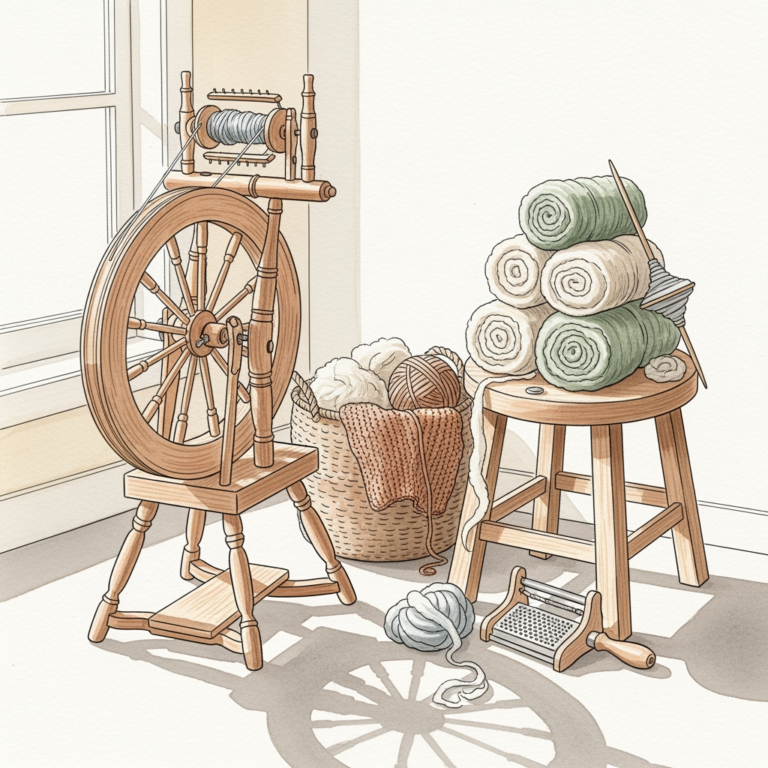
The ratio of a wheel refers to how many times the flyer rotates for every single rotation of the wheel. A lower ratio is ideal for spinning thick, bulky yarns, while a higher ratio is necessary for fine, delicate spinning.
If you are spinning a fine wool for a lace shawl, you need high twist, which requires a higher ratio. If you are spinning a thick, soft yarn for a hat, a lower ratio will help you avoid over-twisting your fiber.
Most beginner wheels allow you to change ratios by swapping whorls. Always check that your wheel offers at least two or three ratio options so you aren’t limited to spinning only one type of yarn.
Evaluating Portability and Storage Needs
Before you buy, be honest about your living space. If you live in a small apartment, a folding wheel like the Sonata or Kiwi 3 is non-negotiable.
Consider how often you will actually move the wheel. If it stays in a dedicated corner of your craft room, a heavier, stationary wheel like the S10 might provide better stability and comfort.
- Weight: Can you lift it comfortably to move it?
- Foldability: Does it lock into a secure position for transport?
- Footprint: Will it fit in your designated spinning nook?
Essential Maintenance for Your New Wheel
Spinning wheels are mechanical devices that require occasional care to keep them running smoothly. The most important task is keeping the moving parts lubricated with a light oil, which prevents friction and noise.
Check your drive band periodically for signs of wear or stretching. A loose band will cause the wheel to slip and result in inconsistent yarn, while a band that is too tight can strain the bearings.
- Oil: Use a high-quality sewing machine oil on all metal-on-metal contact points.
- Clean: Remove stray fibers from the flyer and bobbin shafts to prevent drag.
- Inspect: Ensure all knobs and screws are tightened before every session.
Finding the right spinning wheel is just like finding the perfect pair of needles; it’s about what feels right in your hands and supports your unique creative process. By focusing on tension systems, portability, and your long-term goals, you can select a tool that makes every spinning session a joy. Remember that the best wheel is the one you feel excited to sit down at after a long day. Happy spinning, and may your bobbins always be full of beautiful, hand-spun yarn.