7 Best Warm Tone Bulbs For Cozy Knitting Corners
Find the perfect glow for your craft. We review 7 warm-tone bulbs that reduce eye strain, improve stitch visibility, and enhance your cozy knitting nook.
Finding the perfect light for your knitting nook is just as critical as choosing the right needle material for your yarn. A harsh, clinical light can make even the most luxurious merino wool look flat and uninspiring while straining your eyes during long sessions. The right warm-toned bulb transforms your space into a sanctuary where you can focus on your stitches without fatigue. These seven picks are curated to help you maintain your gauge and enjoy every row of your next project.
Philips Hue White Ambiance: Best Smart Bulb Choice


If you find yourself switching between complex cable patterns and mindless garter stitch, the Philips Hue White Ambiance is a game-changer. It allows you to shift the color temperature from a crisp, cool white for identifying dark-colored yarns to a deep, warm glow for evening relaxation.
This smart functionality is particularly useful when you are working with black or dark navy mohair, where stitch definition is notoriously difficult to see. You can dial in a higher color temperature to reveal the texture of your stitches, then dim it down as you settle into your rhythm.
The trade-off here is the initial setup cost and the reliance on an app or hub. However, for the knitter who demands versatility, the ability to control your lighting environment without leaving your favorite armchair is a luxury worth the investment.
GE Relax HD Soft White: Best for Color Accuracy

When you are working on a stranded colorwork project, you need to be certain that the contrast between your main color and your contrast color is exactly what you intend. The GE Relax HD Soft White bulbs are specifically engineered for high color rendering, meaning they show your yarn’s true hues without the yellow tint that plagues cheaper bulbs.
Poor lighting often leads to "color blindness" in your projects, where two shades look identical under a lamp but clash once you step into natural daylight. Using a high-CRI (Color Rendering Index) bulb like this one ensures that your color transitions are intentional and visually harmonious.
While these bulbs don’t have the bells and whistles of smart tech, they provide a consistent, reliable light quality. They are the "workhorse" needles of the lighting world—simple, effective, and dependable for every project in your queue.
Cree Lighting 2700K LED: Best for Cozy Evenings
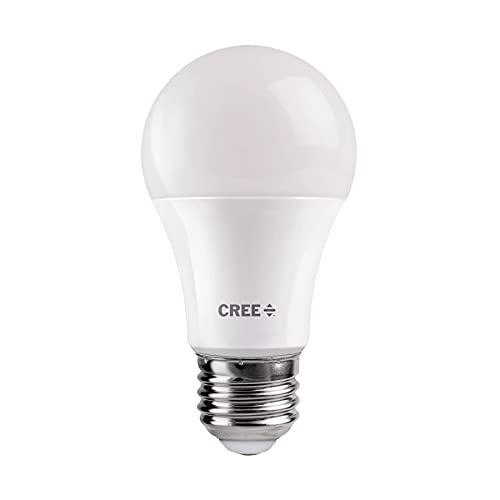
There is something inherently soothing about a 2700K bulb when you are knitting with chunky, rustic wools by the fire. The Cree Lighting 2700K LED provides that quintessential "warm white" glow that makes a yarn stash look inviting rather than clinical.
This temperature is ideal for long sessions of stockinette stitch where you don’t need to scrutinize every tiny detail. It creates a soft, diffused light that minimizes the harsh shadows often cast by overhead fixtures, helping to prevent eye strain during marathon knitting weekends.
Be aware that 2700K light can sometimes mask subtle differences in similar shades of yarn. If you are doing intricate lace work or precise grafting, you might find yourself needing a secondary task light to see your live stitches clearly.
Sylvania LED A19 Soft White: Best Budget Option
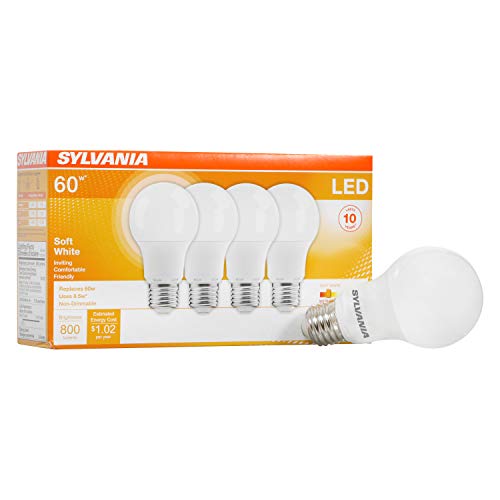
Not every knitter wants to spend a fortune on lighting when that money could be better spent on hand-dyed silk or high-quality needles. The Sylvania LED A19 Soft White offers a reliable, warm light that gets the job done without breaking the bank.
These bulbs are perfect for the knitter who keeps a lamp at every station—the bedside table, the living room side chair, and the craft room desk. They provide a steady, flicker-free light that is essential for maintaining a consistent gauge over long periods.
While they lack advanced dimming features or smart connectivity, their simplicity is their strength. They are plug-and-play, allowing you to focus your energy on your tension and pattern rather than configuring your home environment.
LIFX Color A19: Best for Dynamic Tone Control

The LIFX Color A19 is for the knitter who loves to experiment with their environment as much as their fiber. With a massive spectrum of colors and tunable whites, you can sync your light to match the mood of your project, whether it’s a vibrant summer cotton or a moody winter wool.
The real advantage here is the intensity of the light, which can be dialed up to help you see fine-gauge lace stitches clearly. When you are working with a 2.00mm needle, having a bright, focused light source is the difference between a relaxing evening and a frustrating one.
The complexity of the LIFX app can be a learning curve, and the bulbs themselves are quite bright even at lower settings. If you prefer a very dim, candle-like ambiance, you may need to spend extra time configuring the brightness levels to find your "sweet spot."
EcoSmart 2700K LED: Best for Long-Term Durability
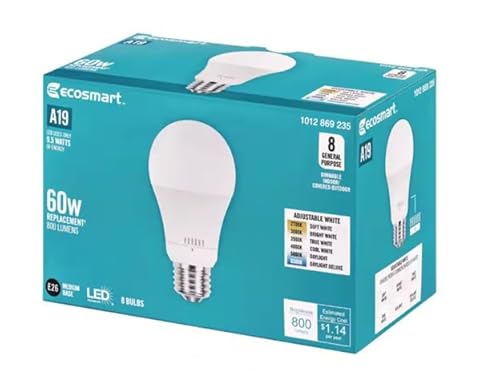
Knitting is a hobby of endurance, and you want lighting that matches that longevity. The EcoSmart 2700K LED is known for its impressive lifespan, meaning you won’t be scrambling to replace a bulb in the middle of a complex row-by-row lace chart.
These bulbs offer a very stable light output, which is crucial for preventing the subconscious squinting that causes headaches. When you are working with dark, fuzzy fibers like alpaca or angora, the consistent light helps you track your stitches without the distraction of flickering or dimming.
They are a straightforward, no-nonsense choice that prioritizes reliability over fancy features. They are the bamboo needles of the lighting world: comfortable, long-lasting, and perfectly suited for the long haul.
Feit Electric Enhance: Best for Gentle Dimming
The Feit Electric Enhance series excels in its ability to dim smoothly, providing a range of light levels that adapt to your specific project needs. Whether you are doing detailed setup rows or relaxing with a simple scarf, you can adjust the intensity to suit your eyes.
Dimming is a highly underrated feature for knitters, as it allows you to reduce glare when working with lighter-colored yarns or metallic threads. It keeps your eyes fresh and prevents the fatigue that often sets in after a few hours of intensive work.
The key is to pair these with a compatible dimmer switch to ensure you don’t get any annoying buzzing sounds. Once you have the right setup, the ability to control the brightness of your knitting corner will become an essential part of your creative process.
Understanding Color Temperature for Fiber Arts
Color temperature, measured in Kelvins (K), dictates the "mood" and clarity of your light. For knitting, you generally want to stay between 2700K (warm/yellow) and 4000K (cool/neutral).
- 2700K-3000K: Warm, cozy, and relaxing; best for evening knitting and darker yarns.
- 3500K-4000K: Neutral, clear, and crisp; best for colorwork, lace, and identifying subtle shade variations.
Avoid going above 5000K, as this "daylight" spectrum can be harsh and create too much contrast, which actually makes it harder to see the individual fibers of your yarn. Always consider the color of your project; a warm light might make a yellow yarn disappear, while a cool light could make a blue yarn look dull.
Why Warm Lighting Improves Your Stitch Clarity
Warm lighting reduces the harsh glare that reflects off your needles, particularly if you prefer slick metal needles. When light hits a polished nickel or aluminum needle, it can create a "hot spot" that blinds you momentarily, causing you to lose your place in a complex pattern.
By choosing a warmer bulb, you soften the reflection, making it easier to see the loop of the stitch clearly. This is especially important for beginners who are still learning to read their knitting and need to identify the difference between a knit and a purl stitch.
Furthermore, warm light is easier on the eyes for extended periods. Knitting is a rhythmic, meditative practice, and having a light source that mimics a soft sunset helps you maintain that flow state without the visual "noise" of a cold, sterile office light.
How to Position Lamps to Reduce Knitting Strain
The best bulb in the world won’t help if your lamp is in the wrong place. For right-handed knitters, your primary light source should ideally come from over your left shoulder to prevent your hands from casting shadows directly onto your needles.
If you are a continental knitter, you might find that a light positioned slightly to your front-right works better, as your hands move differently. The goal is to illuminate the "work zone"—the space where your needles meet the yarn—without creating a glare on your work.
Consider using an adjustable floor lamp with a swing arm so you can shift the light as you change your seating position. Remember that as you age or if you have specific vision needs, you may need to bring your light closer to your work rather than simply increasing the wattage of the bulb.
Investing in the right lighting is an investment in your craft and your physical well-being. By choosing a bulb that balances warmth, color accuracy, and dimmability, you ensure that your knitting time remains a source of joy rather than strain. Take the time to adjust your lamp position and experiment with these color temperatures to find what works best for your eyes. Your hands and your project will thank you for the extra clarity and comfort during those long, peaceful hours of stitching.