7 Best Lighting Lamps For Fine Detail To Try
Discover the 7 best lamps for fine detail. Our guide compares brightness, magnification, and adjustability to help you improve precision in your craft work.
Finding the right light is just as critical to a successful project as choosing the perfect needle size or fiber blend. When you are working with dark, high-twist wool or intricate lace patterns, poor lighting can lead to missed stitches and unnecessary fatigue. This guide breaks down the best lighting solutions to ensure every loop is crisp and every stitch is perfectly formed. Investing in your workspace is the best way to extend your knitting career and keep your eyes sharp for years to come.
Daylight Company Wafer 3: Best for Fine Detail Work


The Wafer 3 is essentially a ultra-thin light box that provides an incredibly even, shadow-free surface. For knitters working on black yarn or complex cables, this is a game-changer because it illuminates the fabric from beneath or at a very low angle.
It is particularly useful when you need to inspect your work for dropped stitches or verify the tension of a tricky cable cross. Because the light is so diffuse, it doesn’t create the harsh glare that often bounces off metallic needles.
The tradeoff here is the footprint; it takes up a significant amount of table space. However, if you are a lace knitter who needs to count rows on a chart while simultaneously checking your progress, this level of clarity is unmatched.
OttLite Wellness Series: Best for Eye Comfort
OttLite has built its reputation on mimicking the natural spectrum of sunlight, which is vital for color accuracy. When you are working on a stranded colorwork project, you need to be certain that the contrast between your main color and contrast color is exactly what you intended.
The "wellness" aspect refers to the reduction of flicker and harsh blue light, which are the primary culprits for headaches during long marathon knitting sessions. If you find yourself rubbing your eyes after an hour of knitting, this is likely the upgrade you need.
Be aware that these lamps are usually fixed-position, so they aren’t as flexible as an architect-style lamp. They are best suited for a dedicated knitting chair where you can position your work directly under the light source.
Brightech LightView Pro: Best Magnifying Lamp
Magnification is not just for those with aging eyes; it is an essential tool for anyone working with lace-weight yarn or tiny sock needles. The LightView Pro combines a high-quality glass lens with a bright LED ring, allowing you to inspect individual plys of your yarn.

When you are working with a delicate mohair or a high-twist silk, seeing the structure of the yarn helps you avoid splitting the ply with your needle tip. This prevents that "fuzzy" look that can ruin the stitch definition of a finished garment.
The arm is highly adjustable, which is great for moving the lens in and out as you transition from knitting to reading your pattern. Just remember that you must keep the lens clean, as dust or yarn lint can easily distort your view.
Neatfi XL 2,200 Lumens: Best for Large Projects
If you are knitting a heavy wool blanket or a large-scale cabled sweater, you need a wide beam of light that covers your entire lap. The Neatfi XL is a powerhouse that provides a massive, consistent pool of light across your knitting work.
The sheer brightness of 2,200 lumens means you won’t have to constantly readjust your lamp as your project grows. It is built for heavy-duty use, making it ideal for those who spend hours every evening working on large-scale heirloom pieces.
It is a large, industrial-looking piece of equipment, so it might not fit the aesthetic of a cozy living room. However, for sheer performance and coverage, it stands in a class of its own.
Lepower Architect Desk Lamp: Best Budget Choice
Sometimes you don’t need a high-tech solution; you just need a reliable, adjustable light that puts the beam exactly where your needles are moving. The Lepower Architect lamp is a classic design that remains a staple for a reason.
Its swing-arm functionality allows you to pivot the light over your shoulder or directly above your hands. This is perfect for knitters who switch between different seating arrangements or need to tuck their lamp away when not in use.
Because it is an open-bulb design, you should choose a high-quality LED bulb with a warm or neutral color temperature. It is a simple, no-nonsense tool that gets the job done without breaking the bank.
Globe Electric 56963: Best for Tabletop Utility
This lamp is perfect for the knitter who keeps their tools and patterns organized on a side table. It is compact, sturdy, and features a weighted base that won’t tip over when you bump it with your yarn bowl.
It provides a focused, directional beam that is excellent for reading charts or checking your gauge swatch. If you are knitting in a small apartment or a shared space, this lamp provides enough light for your needs without lighting up the entire room.
It lacks the reach of larger floor lamps, so it is best used when you are sitting very close to your table. It is a reliable workhorse for the minimalist knitter.
TaoTronics LED Desk Lamp: Best for Versatility
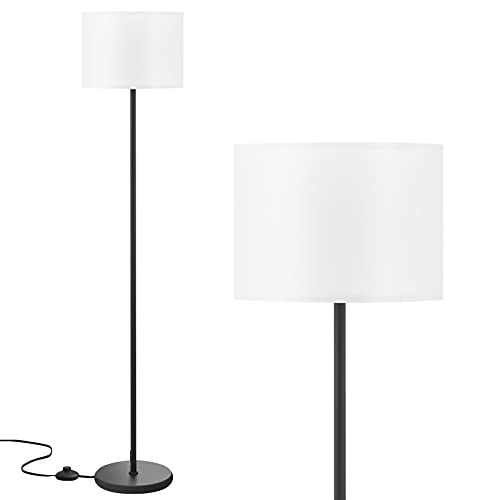
The TaoTronics lamp offers multiple color modes and brightness levels, which is a massive advantage for different types of fiber. You can toggle to a cooler light for white or light-colored yarns, and a warmer tone for darker, richer wools.
The touch-sensitive controls are smooth, and the folding design makes it incredibly portable. If you take your knitting to workshops or local guild meetings, this is the easiest lamp to pack in your project bag.
While it is highly versatile, it is not as bright as the specialized "craft" lamps like the Neatfi. It is a fantastic all-rounder, but it may not be enough for those who require extreme brightness for very fine, dark-colored detail work.
Essential Lighting Features for Detailed Knitting
When shopping for a lamp, don’t just look at the wattage; look at the Color Rendering Index (CRI). A high CRI (90+) ensures that the colors you see in your yarn are the colors they will be in natural daylight.
- Adjustability: Can the arm reach your lap from behind your chair?
- Dimmability: Can you soften the light for late-night sessions to avoid eye fatigue?
- Flicker-Free Technology: Essential for preventing the "strobe" effect that causes migraines.
- Heat Output: Ensure the lamp uses LEDs; incandescent bulbs can dry out natural fibers like wool and silk.
Avoid the trap of thinking "brighter is always better." A light that is too bright can bounce off your needles and create a glare that is just as blinding as working in the dark.
How Color Temperature Affects Your Stitch Clarity
Color temperature is measured in Kelvins (K), and it dictates the "mood" and clarity of your light. For knitting, a range between 3000K (warm) and 5000K (daylight) is the sweet spot.
Use a cooler, 5000K light when working with high-contrast patterns or when you need to see the individual stitch definition in a dark yarn. The blue-shifted light helps your eyes distinguish between the loops and the background.
Conversely, a warmer 3000K light is much softer on the eyes for long-term evening knitting. It mimics a cozy lamp and prevents the "clinical" feeling that some high-powered craft lights can create in a home environment.
Tips for Reducing Eye Strain During Night Knitting
Even with the best lamp, your eyes need a break. Follow the "20-20-20 rule": every 20 minutes, look at something 20 feet away for 20 seconds to reset your focus.
Position your light so that it illuminates your work, not your eyes. If you see a reflection of the bulb on your needles, you are creating unnecessary glare that will tire your eyes out faster than the actual knitting.
Finally, consider the contrast of your environment. If you are knitting with dark yarn, place a light-colored towel or a "knitting mat" on your lap to create a high-contrast background. This makes it much easier for your eyes to pick up the stitches without straining.
Choosing the right lighting is an investment in your comfort, your accuracy, and the longevity of your craft. Whether you opt for a high-powered magnifying lamp or a simple, adjustable architect light, the goal is to make your knitting time as effortless as possible. Don’t settle for squinting through your rows; find a setup that lets you enjoy the process of creating. With the right light, you will find that even the most complex patterns become a joy to execute.