7 Best Metal Yarn Bobbins For Intarsia Colorwork
Master intarsia with our top 7 metal yarn bobbins. Discover durable, tangle-free tools that keep your colorwork organized, efficient, and snag-free today.
Intarsia knitting is an art form that transforms simple yarn into complex, painterly tapestries, but it often descends into a tangled mess without the right tools. Managing dozens of individual color blocks requires bobbins that stay secure, unwind smoothly, and don’t add unnecessary weight to your fabric. Choosing the right bobbin can be the difference between a meditative colorwork session and a frustrating afternoon of detangling. Here are the top metal and specialized bobbins to help you master your next intarsia masterpiece.
Clover Knitting Bobbins: Best Overall Choice


Clover bobbins are the gold standard for many intarsia knitters because they balance weight and functionality perfectly. They feature a unique locking mechanism that keeps your yarn from unraveling while the bobbin hangs from your work.
If you are working on a large-scale project with high-contrast colors, these bobbins provide the consistency you need. They are lightweight enough that they won’t distort your gauge, even when you have twenty of them dangling from a single row.
The plastic construction is sturdy, but the design mimics the reliability of traditional metal tools. The bottom line? These are the most versatile choice for knitters who want a "set it and forget it" experience with their yarn management.
Lacis Metal Spring-Loaded Bobbins: Top Pick
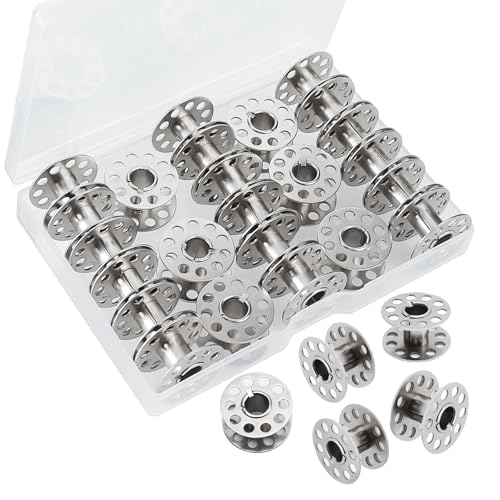
When precision is the priority, the Lacis spring-loaded metal bobbins are unparalleled. The spring mechanism allows you to control the tension of the yarn release with incredible accuracy.
For knitters working with fine-gauge wool or delicate silk blends, these bobbins prevent the dreaded "yarn dump" where too much yarn spills out at once. They are slightly heavier than plastic alternatives, which helps anchor your tension if you tend to have a loose hand.
However, be mindful that the weight can pull on very delicate lace-weight fibers. Use these when you need absolute control over tension during complex color transitions.
Susan Bates Split-Ring Bobbins: Best Value

Susan Bates split-ring bobbins are a classic for a reason—they are simple, affordable, and incredibly effective. They operate on a basic tension principle that keeps your yarn securely in place until you manually pull for more.
These are perfect for beginners who are just starting to experiment with intarsia and don’t want to invest heavily in specialized gear. Because they lack complex moving parts, there is very little that can break or fail mid-project.
If you find yourself losing your bobbins often or working on multiple projects at once, buying these in bulk is the smartest move. They provide reliable performance without the premium price tag.
Boye Aluminum Bobbins: Most Durable Option

Boye aluminum bobbins offer a level of durability that plastic simply cannot match. They are resistant to bending, snapping, or cracking, even if you accidentally sit on your project bag.
The smooth metal finish ensures that your yarn glides off without catching or snagging, which is essential when working with fuzzy mohair or high-twist merino. They are built to last for decades, making them a sustainable choice for your knitting kit.
The only trade-off is the weight; they are heavier than most modern alternatives. Use these for sturdier, heavier-weight yarns where a little extra weight won’t negatively impact the drape of your fabric.
Brittany Birch Bobbins: Best Wood Alternative
While not metal, Brittany Birch bobbins are the preferred choice for knitters who find metal bobbins too slick or cold to the touch. They provide a gentle grip on the yarn, preventing slippage during long knitting sessions.
Wood bobbins are significantly lighter than their metal counterparts, making them ideal for delicate garments where you don’t want to stretch the stitches. They also have a beautiful, tactile quality that makes the process feel more artisanal.
If you are working with slippery fibers like bamboo or tencel, the natural friction of the wood is a huge advantage. They are the best choice for delicate, lightweight projects where tension sensitivity is key.
Pony Metal Bobbins: Best for Fine Yarns
Pony metal bobbins are designed with a slim profile that is perfect for fine-gauge knitting. If you are working on a project with 2.0mm or 2.25mm needles, these bobbins won’t feel bulky or obstructive.
Their compact size makes it easier to keep multiple bobbins organized without them getting tangled in each other. They are a "minimalist" tool that stays out of your way, allowing you to focus entirely on your color changes.
They are particularly effective for intricate, small-scale colorwork where space is at a premium. Keep a stash of these on hand for when your project requires high-density color changes.
Yarnology Metal Bobbins: Best for Beginners
Yarnology bobbins are widely available and extremely user-friendly for those new to colorwork. They feature a straightforward design that is easy to wind and even easier to use during the knitting process.
The tension is consistent, and the metal construction is robust enough to handle the occasional fumble. They offer a great middle-ground for knitters who aren’t sure which style they prefer yet.
If you are overwhelmed by the options, start here. They provide a solid, no-nonsense introduction to managing multiple yarn ends without the complexity of spring-loaded mechanisms.
How to Choose the Right Bobbin for Intarsia
Choosing a bobbin is about balancing the weight of the tool against the weight of your yarn. A heavy metal bobbin on a cobweb-weight yarn will create uneven tension and potential holes in your work.
Consider the "tangle factor" of your project. If your pattern requires frequent color changes, choose a bobbin with a secure locking mechanism to prevent the yarn from unwinding while it hangs.
- For heavy wool: Use durable metal or aluminum bobbins.
- For delicate lace: Use lightweight wood or small, slim metal bobbins.
- For beginners: Use simple, split-ring designs.
Always test your tension with a small swatch before committing to a large project. Your personal knitting style—whether you are a "thrower" or a "picker"—will dictate which bobbin feels most natural in your hands.
Tips for Managing Multiple Yarn Colors Easily
The biggest challenge in intarsia isn’t the knitting itself—it’s the organization. Keep your bobbins organized in a box or a dedicated tray when you aren’t working to prevent them from becoming a bird’s nest.
When you switch colors, always twist the new yarn around the old yarn to close the gap between color blocks. This prevents holes from forming at the junction where colors meet.
- Keep your bobbins hanging at the same length to prevent uneven tension.
- Use a "bobbin rack" or a simple cardboard box with holes punched in it to keep ends separated.
- Don’t wind too much yarn on a single bobbin; it makes the bobbin heavy and prone to tangling.
If you find yourself constantly untangling, you likely have too much yarn wound on your bobbins. Keep your yarn lengths manageable, and you will spend significantly less time fixing mistakes.
Essential Techniques for Tangle-Free Knitting
The secret to tangle-free intarsia is keeping your work flat. Never let your project sit in a heap; lay it out on a table or a large knitting tray whenever you take a break.
When you turn your work, always turn it in the same direction to keep the yarn ends from twisting around each other. If you turn clockwise one row and counter-clockwise the next, your bobbins will naturally untwist themselves.
- The "Twist" Rule: Always cross your yarns on the wrong side to secure the join.
- The "Turn" Rule: Be consistent with your turning direction to prevent cable-like tangles.
- The "Clean" Rule: Spend two minutes at the end of every session organizing your bobbins.
Intarsia is a slow, meditative process. Embrace the rhythm of the color changes, and don’t rush the setup; a well-organized workspace is the foundation of a beautiful finished garment.
Mastering intarsia colorwork is a journey that rewards patience and the right choice of tools. Whether you prefer the weight of a classic aluminum bobbin or the tactile grip of wood, the best tool is the one that makes your knitting flow. Experiment with these different styles to see how they affect your tension and speed. With a little practice and organization, you will be creating complex, vibrant patterns with ease.