7 Best Knitting Thimbles For Fair Isle To Try
Mastering Fair Isle requires precision. We review the 7 best knitting thimbles to help you manage multiple yarn strands and improve your colorwork tension.
Mastering Fair Isle knitting requires a delicate balance of tension that can often leave your hands feeling cramped and your yarn strands tangled. A quality knitting thimble acts as a dedicated guide, keeping your two colors separated and consistent throughout the length of your project. Whether you are a continental knitter or a thrower, finding the right tool can transform your colorwork from a frustrating chore into a meditative rhythm. Here are seven of the most reliable options to help you achieve that professional, even stitch definition.
Clover Adjustable Metal Knitting Thimble


This classic metal thimble is a staple in many knitting bags for good reason. Its adjustable band allows you to customize the fit to your finger, which is essential when your hands swell during long knitting sessions.
The open-top design is particularly helpful if you prefer to feel the yarn directly against your skin for better control. However, because it is made of metal, the yarn may occasionally snag if there are any tiny burrs on the edges.
If you find that your yarn is "sticking" to the metal, a quick buffing with a fine emery board usually solves the problem. It is an excellent, affordable entry point for anyone just starting their colorwork journey.
Pony Plastic Two-Color Yarn Guide
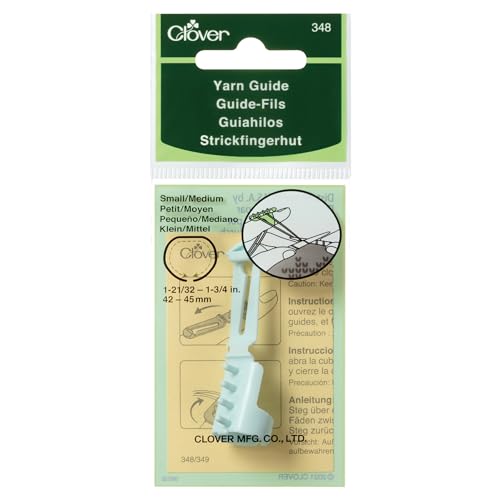
The Pony plastic guide is lightweight and unobtrusive, making it a favorite for those who find metal thimbles too heavy or cold. The plastic construction ensures that yarn glides through the eyelets without the risk of metallic snags.
Because it is made of molded plastic, it does not offer the same adjustability as the metal versions. It is best suited for knitters with average finger sizes who don’t mind a slightly looser fit.
If you are working with sticky wool fibers, this guide provides a smooth surface that helps maintain consistent tension. It is a no-fuss tool that gets the job done without any complex setup.
ChiaoGoo Stainless Steel Yarn Guide

ChiaoGoo is well-known for precision, and their stainless steel yarn guide is no exception. It features a sleek, durable design that holds two strands of yarn securely in place with minimal friction.
The stainless steel is incredibly smooth, which is ideal if you are working with high-twist yarns that tend to kink. The wire-loop style is often more comfortable than solid metal bands, as it allows for better airflow around your finger.
Keep in mind that this guide is quite rigid. If you have very slim or very large fingers, you may find the fit challenging to adjust over time.
Clover Quick-Lock Knitting Thimble

The Quick-Lock system from Clover is designed for knitters who want to switch between colors or projects without removing the thimble. It features a unique hinge mechanism that makes securing the yarn a breeze.
This tool is particularly useful for complex Fair Isle patterns where you might need to drop one color frequently. It keeps your yarn separated, preventing the dreaded "tangled ball" syndrome that plagues many beginners.
Be aware that the plastic hinge can be a weak point if handled roughly. Treat it with care, and it will serve as a reliable partner for your most intricate stranded designs.
Susan Bates Yarn Feeder Ring Tool

The Susan Bates feeder ring takes a different approach by utilizing a ring-style guide that sits closer to the knuckle. This can be more ergonomic for knitters who experience hand fatigue when holding yarn in the traditional way.
The design forces you to maintain a specific tension, which is a double-edged sword. If you are a naturally tight knitter, this tool might make your fabric too stiff, so consider going up a needle size to compensate.
It works best with smooth, worsted-weight yarns. If you are using fuzzy mohair or delicate lace-weight silk, the small eyes of the feeder ring may cause too much friction.
Namaste Bamboo Yarn Tension Guide

For those who prefer natural materials, the Namaste bamboo guide offers a warm, grippy texture. Bamboo is naturally snag-resistant, making it a great choice for delicate fibers like alpaca or cashmere.
The lightweight nature of bamboo means you will barely notice it on your finger after a few minutes of knitting. It provides a gentle tension that is perfect for knitters who struggle with "strangling" their yarn.
Because it is wood, it is not adjustable. If it feels too loose, a small piece of moleskin tape inside the band can help it stay in place comfortably.
Tulip Etimo Yarn Tensioner Ring
The Tulip Etimo tensioner is the luxury option of the bunch, featuring a beautiful design and an incredibly smooth finish. It is designed to sit comfortably on the finger while providing precise control over your yarn strands.
The tensioner is highly polished, ensuring that even the most delicate hand-dyed yarns glide through without friction. It is an investment piece, but for those who spend hours on colorwork, the comfort is unmatched.
If you are a perfectionist about your gauge, this tool provides the consistency you need for a professional look. It is especially effective for stranded colorwork where keeping your floats even is paramount.
Why Use a Thimble for Fair Isle Knitting
Using a thimble is all about managing the "float" — the length of yarn carried across the back of your work. Without a guide, the two strands often twist around each other, leading to uneven tension and puckered fabric.
A thimble forces the yarn to travel in parallel lines, which keeps the floats consistent. This is vital when you are working with different fiber types, such as a superwash wool paired with a non-superwash, as they have different elasticity levels.
Ultimately, a thimble is a tool for consistency. By removing the manual labor of separating yarn strands with your fingers, you can focus entirely on your rhythm and the pattern at hand.
How to Properly Tension Two Color Strands
Proper tension in Fair Isle is achieved when the floats are long enough to allow the fabric to stretch, but short enough to prevent snagging. Always aim to hold your two strands so they never cross one another behind the work.
If you are a continental knitter, you might hold one color in each hand, but a thimble allows you to hold both in one hand effectively. This is a game-changer for maintaining a uniform gauge across both colors.
Remember that the tension you apply with your thimble should feel light. If you feel you are pulling the yarn taut, you are likely working too tightly, which will result in a stiff, board-like fabric after blocking.
Troubleshooting Common Yarn Guide Issues
The most common issue with yarn guides is friction buildup, especially when working with sticky, woolen-spun yarns. If you notice your yarn dragging, check the eyelets for any small bits of fiber or lint that may have accumulated.
If your yarn keeps slipping out of the guide, your tension might be too loose. Ensure you are wrapping the yarn around the guide consistently, and try to keep your hand position stable as you move across the needles.
Finally, don’t be afraid to stop and adjust. If the thimble is causing a groove in your finger, it is too tight; if it is spinning around your finger, it is too loose. A well-fitted guide is a silent partner that should feel like an extension of your hand.
Finding the perfect knitting thimble is a personal journey that depends as much on your finger size as it does on your unique tensioning style. Don’t be discouraged if your first attempt with a guide feels awkward; it usually takes a few rows for your hands to find a new, efficient rhythm. Once you master the art of using these tools, you will find your Fair Isle projects becoming faster, neater, and far more enjoyable. Happy knitting, and may your floats always be perfectly even.