
6 Best Umbrella Swifts For Winding Skeins To Own
Finding the right umbrella swift is essential for yarn lovers. We review the six best models to ensure tangle-free winding and smooth skein preparation.
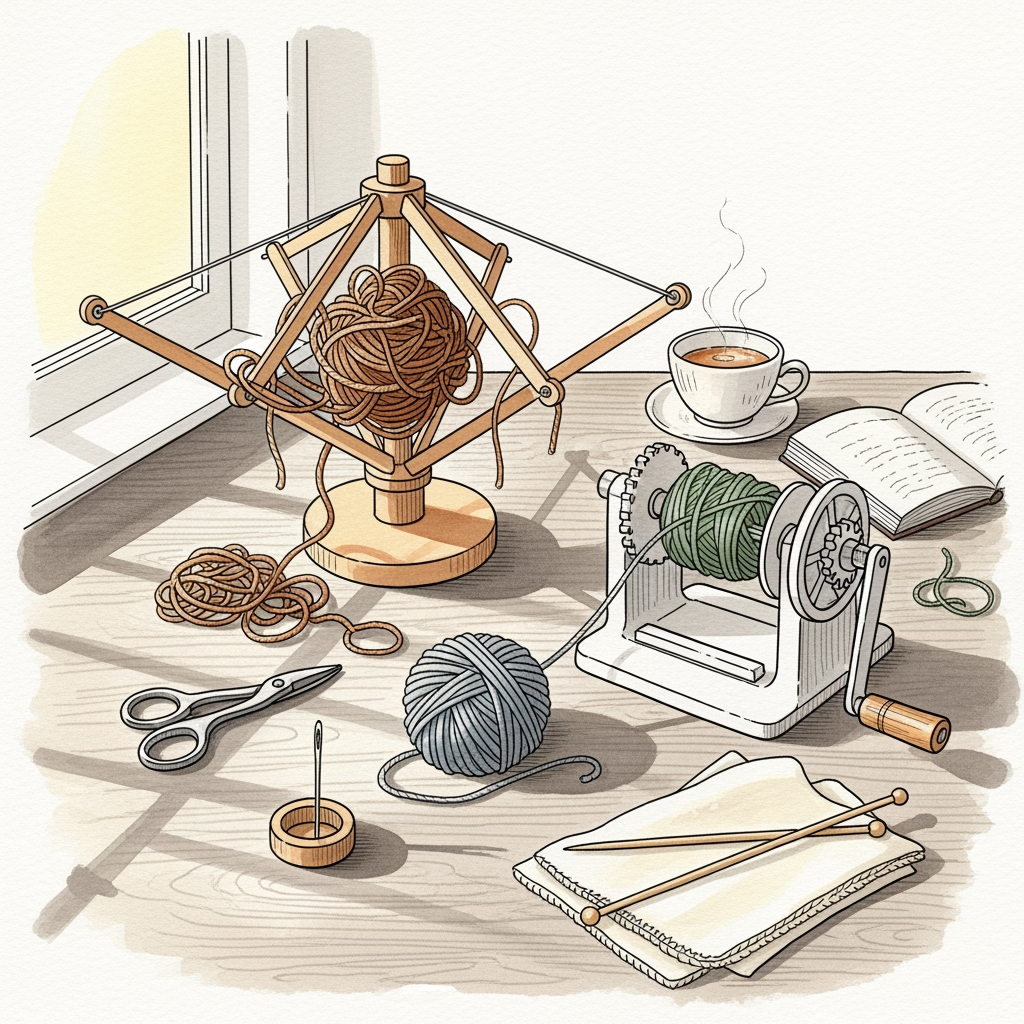
There is no sound more disheartening to a knitter than the sudden, frantic tangle of a yarn skein collapsing mid-wind. A high-quality umbrella swift is the essential bridge between a beautiful hank of hand-dyed wool and the perfectly wound center-pull ball ready for your needles. Investing in the right tool saves you hours of tedious detangling and preserves the structural integrity of your delicate fibers. Here are the top six swifts that will transform your yarn preparation process from a chore into a seamless ritual.
Stanwood Needlecraft Tabletop Swift: Best Overall
The Stanwood Tabletop Swift is the gold standard for most home knitters, balancing sturdy construction with smooth, effortless rotation. Its metal clamp mechanism is remarkably secure, ensuring it stays put on even the most slippery dining room tables while you wind.


What sets this model apart is the precision of its ball-bearing rotation. When you are winding a delicate lace-weight mohair or a springy superwash merino, you need a swift that responds to the slightest pull without jerking the yarn.
This swift handles a wide range of skein sizes, from tiny 50-gram fingering hanks to massive 200-gram sweater quantities. It is the reliable "workhorse" that rarely fails, making it the safest bet for anyone building a permanent fiber studio.
Amish-Style Wooden Swift: Best Non-Rotating Pick
If you prefer a more tactile, low-tech approach, the Amish-style wooden swift is a classic choice that doesn’t rely on complex moving parts. Unlike umbrella swifts that spin on a central axis, these sit horizontally and allow the yarn to slide around a wooden frame.

Because there are no ball bearings to wear out or tighten, these swifts are virtually indestructible. They are excellent for knitters who work with heavier, rustic wools that might otherwise cause a lightweight umbrella swift to wobble or tip.
The trade-off is that they take up a significantly larger footprint on your table. However, for those who find the whirring of a spinning swift distracting, the silent, stationary nature of this design is a welcome relief.
KnitPicks Yarn Swift: The Best Budget Selection
The KnitPicks umbrella swift is the quintessential starter tool for the knitter moving from pre-wound cakes to buying beautiful, hand-dyed hanks. It is lightweight, compact, and folds down into a slim profile that fits easily into a project bag or drawer.
While it lacks the heavy-duty metal components of more expensive models, it performs admirably for the casual user. It is perfectly capable of handling standard worsted or DK weight yarns without a hitch.
Be mindful that it requires a bit of gentle handling compared to professional-grade tools. If you are winding massive, heavy skeins daily, you may eventually notice some wear, but for the occasional project, it offers unbeatable value.
Lacis Wooden Umbrella Swift: The Professional Choice
The Lacis wooden swift is a beautiful piece of equipment that feels like a professional instrument in your hands. Crafted from high-quality wood, it offers a level of stability and aesthetic charm that plastic or metal alternatives simply cannot match.
Beyond its looks, the mechanics are exceptionally smooth, providing a consistent tension that is vital when winding luxury fibers like silk or cashmere. A consistent wind ensures that you don’t overstretch the yarn, which could otherwise alter your gauge once you start knitting.
This is an investment piece for the dedicated maker who views their knitting tools as an extension of their craft. It is built to last for decades, provided you treat the wood with the care it deserves.
Strauch Jumbo Swift: Best for Large Skein Loads
When you move into the realm of sweater-quantity hanks or bulky, artisan-spun yarns, a standard swift often feels undersized. The Strauch Jumbo Swift is specifically engineered to handle the widest, heaviest skeins without bowing or collapsing under the pressure.
The build quality here is industrial-grade, designed to withstand the torque of high-speed winding. If you use a ball winder frequently, you know that the faster you wind, the more stress you put on the swift; this model handles that stress with ease.
It is admittedly an expensive purchase, but it prevents the frustration of "skein sag" where the yarn slips off the arms. For the serious knitter who buys yarn in bulk, this is the ultimate solution for stress-free winding.
Nancy’s Knit Knacks Swift: Best Durable Design
Nancy’s Knit Knacks is renowned for creating tools that solve the specific, annoying problems knitters face every day. Their swift design focuses on high-quality materials and a robust clamp system that can attach to almost any surface thickness.
The design is incredibly intuitive, with arms that move fluidly and lock into place securely. You won’t find yourself constantly adjusting the arms mid-wind, which is a common complaint with cheaper, mass-produced plastic swifts.
This is the swift for the knitter who wants to buy once and never worry about replacements. It balances durability with a user-friendly design that makes the winding process feel deliberate and professional.
Factors to Consider When Buying a Yarn Swift
When shopping for a swift, the most critical factor is the clamping mechanism. You need a swift that grips your table firmly; if the swift shifts while you are winding, you risk tangles and inconsistent ball tension.
- Skein Capacity: Ensure the swift can expand wide enough for your largest skeins.
- Material: Wood is beautiful and sturdy but can be sensitive to humidity; metal is durable but can be noisy.
- Portability: Consider whether you need to store it away or if it will have a permanent home on your crafting desk.
- Rotation Smoothness: Test how easily it spins; a jerky swift is the fastest way to ruin a delicate hand-dyed yarn.
Wood vs. Metal Swifts: Which One Should You Buy?
Choosing between wood and metal is often a matter of personal aesthetic and the environment of your home. Wooden swifts offer a classic, warm feel, but they can sometimes develop "burrs" or rough spots over time that might catch on fine yarns.
Metal swifts, particularly those with powder-coated finishes, are generally smoother and less prone to environmental changes. They are often the preferred choice for those living in very humid climates where wood might warp or swell.
Ultimately, look at the quality of the finish regardless of the material. A well-sanded wooden swift is just as gentle on your yarn as a high-quality metal one.
Essential Tips for Winding Skeins Without Snags
Always take a moment to "shake out" your skein before placing it on the swift. Yarn often settles in the twist during shipping, and a quick, gentle shake helps ensure the strands are lying in their natural order.
When placing the skein on the swift, make sure the yarn is centered and the arms are expanded just enough to hold the skein taut, but not stretched. Over-stretching can cause the yarn to lose its natural elasticity, which will negatively impact the drape of your finished garment.
If you are using a ball winder, keep your winding speed moderate. High-speed winding creates friction and can lead to the yarn "jumping" off the swift, resulting in a dreaded tangle that can take hours to fix.
How to Properly Maintain Your Umbrella Swift
To keep your swift in top shape, store it in a dry place away from direct sunlight, which can dry out wooden components over time. If your swift uses screws or hinges, check them periodically to ensure they remain tight and free of debris.
If you notice your swift becoming sluggish, a tiny drop of sewing machine oil on the central pivot point can work wonders. Avoid using heavy lubricants, as these can attract dust and create a gummy residue that will eventually impede movement.
Finally, treat your swift with the same respect you give your needles. It is a precision tool that, when maintained, will serve you faithfully for as long as you continue to knit.
Choosing the right umbrella swift is a pivotal step in elevating your knitting practice from a series of frustrations to a smooth, rhythmic flow. By selecting a tool that matches your specific volume of knitting and the types of fibers you prefer, you ensure that every project starts on the right foot. Take your time to evaluate these options, and you will find that the right swift becomes an indispensable partner in your fiber arts journey. Happy winding and even happier knitting.
