6 Best Wool Roving Kits For Animal Sculptures
Discover the top 6 wool roving kits for needle felting animal sculptures. Our guide compares quality, tools, and ease of use for all skill levels.
Needle felting is the sculptural cousin to knitting, transforming loose, airy roving into dense, three-dimensional forms through the rhythmic repetition of barbed needles. Just as choosing the wrong yarn weight can ruin a sweater’s drape, selecting the right felting kit determines whether your project becomes a masterpiece or a frustrating pile of fuzz. This guide explores the best kits on the market to help you bridge the gap between raw fiber and polished art. Whether you are a seasoned fiber artist or a newcomer to the craft, these tools provide the foundation for success.
Dimensions Needle Felting Starter Kit: Best Overall


If you have ever spent hours swatching to hit a specific gauge, you know that having the right tools from the start is non-negotiable. The Dimensions kit is the gold standard for those who want a predictable, high-quality experience without the guesswork.
It includes everything from the foam block to the specific needle sizes required to build structural integrity. For a knitter, this is the equivalent of buying a high-quality circular needle set; it just works, and the components don’t fight you while you’re trying to create.
The included instructions are exceptionally clear, which is a rare find in the world of craft kits. If you are looking for a reliable entry point that won’t leave you stranded halfway through a project, this is your best bet.
Woolbuddy Animal Felting Kit: Best for Beginners

When you are first learning to manipulate fiber, you don’t want to be fighting with complex, multi-part patterns. Woolbuddy kits are designed with a "less is more" approach that focuses on basic shapes, much like learning to knit a simple garter stitch scarf before attempting cables.
The wool provided is exceptionally easy to felt, meaning it catches and locks together quickly under the needle. This is vital for beginners because it provides immediate positive feedback, preventing the discouragement that comes from "stabbing" a project for hours with no result.
The tradeoff here is that the designs are relatively simplistic. However, they serve as the perfect canvas for learning how to control density and shape, which are the essential building blocks for any advanced fiber sculpture.
Craft It Yourself Felted Pet Kit: Best for Realism
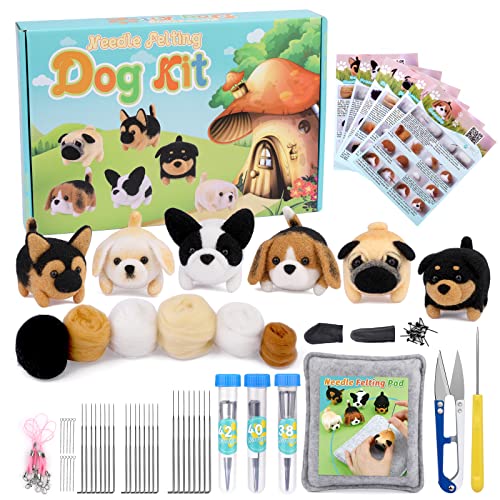
If you are the type of knitter who obsesses over the perfect stitch definition in a complex colorwork yoke, you will appreciate the detail in these kits. They are geared toward those who want to capture the subtle anatomy and personality of a specific animal.
These kits provide a wider variety of wool colors and textures, allowing for the kind of "shading" that makes a sculpture look lifelike. It is comparable to choosing a high-twist wool yarn for a project where you want the texture to pop rather than a soft, fuzzy roving that obscures your work.
Be prepared for a steeper learning curve, as these kits require more patience and precision. If you are willing to put in the time, the results are remarkably sophisticated and display-worthy.
Hamanaka Felt Wool Kits: Best Japanese Quality

Japanese fiber arts tools are renowned for their incredible precision and material quality, and Hamanaka is no exception. The wool in these kits is exceptionally fine, feeling almost like high-end merino top that you might use for a delicate lace shawl.
The needles included are incredibly sharp and durable, which makes a massive difference when you are working on fine details. Just as using a dull needle tip can lead to split stitches in your knitting, a low-quality felting needle can cause uneven, jagged surfaces in your sculpture.
These kits are perfect for the advanced maker who values a premium tactile experience. You are paying for the quality of the fiber, which makes the entire process smoother and more enjoyable.
Bear Creek Felting Animal Kit: Best Sustainable

For the knitter who prioritizes ethically sourced materials, Bear Creek offers a transparent look at their fiber origins. Using high-quality, sustainably raised wool isn’t just a moral choice; it also impacts how the fiber behaves under the needle.
Natural, well-processed wool has a better "crimp" and elasticity, which allows it to hold its shape longer. This is similar to how a high-quality breed-specific wool will hold a block much better than a generic, mystery-fiber acrylic blend.
These kits are a fantastic way to support small-scale fiber producers while honing your craft. The quality of the wool alone makes these kits a joy to work with, even if the patterns are more rustic in nature.
Felted Sky Wool Sculpting Kit: Best Color Range
Color choice is the soul of any fiber project, whether you are picking shades for a stranded colorwork sweater or a felted creature. Felted Sky offers an unparalleled palette that allows for deep, artistic expression.
Having a wide range of colors is essential if you want to experiment with blending, which is the felting equivalent of mixing yarns to create a custom heathered effect. It allows you to create depth and shadow, moving your sculpture from a flat "toy" look to a nuanced, realistic piece of art.
The kits are thoughtfully curated, ensuring that the fibers are consistent in weight and texture. If you have a specific vision in mind and need a broad spectrum of hues to execute it, this is the collection to choose.
Essential Fiber Types for Needle Felting Projects
Understanding your fiber is just as important as knowing your yarn weights. In felting, the "micron count" (fineness) of the wool dictates how quickly it felts and how smooth the final surface will be.
- Corriedale: The "workhorse" wool. It is sturdy, easy to control, and perfect for the core of your sculpture.
- Merino: Extremely soft and fine. Use this for the outer layers or "top coat" to achieve a smooth, professional finish.
- Jacob or Shetland: These have more texture and character, perfect for rustic animals that need a bit of "fuzz" or realism.
- Batts vs. Roving: Batts are carded and easier to blend; roving is combed and better for structural strength and long, flowing details.
How to Select the Right Gauge Felting Needles
Needle gauges in felting are inversely proportional, much like knitting needle sizes where higher numbers mean thinner needles. A 36-gauge needle is thicker and more aggressive, while a 42-gauge needle is fine and delicate.

- Coarse (32-36 gauge): Use these for the initial "shaping" phase where you need to move a lot of fiber quickly.
- Medium (38 gauge): The standard "all-purpose" needle for most of your sculpting work.
- Fine (40-42 gauge): Essential for surface detailing, adding eyes, or smoothing out stray fibers at the end of the project.
Tips for Achieving Smooth Felted Sculptures
Achieving a smooth finish is all about the density of your work and the precision of your final passes. If your sculpture feels "squishy," it isn’t felted enough; keep working it until it feels firm, like a finished knitted fabric that has been properly blocked.
Use your fine needles to "buff" the surface by making very shallow, frequent stabs. This helps to tuck in the loose flyaways, similar to how you might use a sweater stone to remove pilling from a finished garment.
Always work in a circular motion to avoid leaving visible needle marks. If you find your surface is still uneven, add a very thin "veil" of high-quality wool over the top and felt it in lightly to create a seamless, uniform skin.
Common Mistakes to Avoid in Needle Felting
The most common mistake is impatience, which leads to "under-felting." Just as a loose bind-off can ruin a sweater, an under-felted sculpture will lose its shape and fall apart over time.
Another frequent error is using too thick of a needle for fine details, which creates large, unsightly holes. Always switch to a finer gauge as you move toward the finishing stages of your project.
Finally, don’t ignore your posture. Felting is repetitive, and much like "knitter’s neck," it can lead to strain. Keep your work close to your body and take frequent breaks to stretch your hands and wrists.
Needle felting is a deeply rewarding craft that rewards patience, tactile awareness, and a keen eye for detail. By selecting a kit that matches your current skill level and experimenting with different fiber types, you will quickly develop the confidence to sculpt anything you can imagine. Remember that every "stray" fiber is just an opportunity to refine your technique, much like correcting a dropped stitch in a complex pattern. May your needles stay sharp and your wool stay perfectly matted as you embark on your next sculpture.