6 Best Fabric Shavers For Maintaining Finished Garments
Revive your wardrobe with our top six fabric shaver picks. Learn how these essential tools remove pilling to keep your favorite garments looking brand new.
Every knitter knows the heartbreak of spending weeks on a sweater only to see it bloom with unsightly pills after just a few wears. These tiny, matted balls of fiber are a natural byproduct of friction, but they don’t have to be the end of your garment’s life. Choosing the right tool to restore your hand-knits requires a balance between efficiency and extreme caution. This guide will help you navigate the best shavers on the market to keep your projects looking pristine for years.
Philips Fabric Shaver: The Best Overall Choice
The Philips Fabric Shaver is a workhorse that strikes the perfect balance between power and precision. Its large shaving head covers significant ground, making it ideal for those oversized, chunky-knit cardigans that seem to attract fuzz in every corner.
What sets this model apart is its adjustable height spacer. When dealing with delicate wools or hand-dyed yarns, you can set the guard to keep the blades a safe distance from the stitch structure. This prevents the dreaded "nicking" of your yarn, which can lead to holes or weakened fibers.
It is a reliable, no-nonsense tool that handles both synthetic blends and natural fibers with ease. While it requires batteries, the motor torque remains consistent even as the bin fills up. It is the gold standard for a reason: it simply gets the job done without fuss.
Gleener Ultimate Fuzz Remover: Best for Delicates
Sometimes, you need to step away from the motorized blades entirely. The Gleener is a manual tool that uses three interchangeable edges, each designed for a different weight of fabric.
For your finest lace-weight mohair or hand-spun singles, the gentle edge is a lifesaver. It lifts pills away using physical friction rather than a blade, ensuring that you aren’t accidentally shearing off the precious halo of your yarn. It feels much safer when you are working on a project that took you months to complete.
The trade-off is the time investment; it is a manual process that requires patience. However, for heirloom garments where you cannot risk a single snag, the control provided by the Gleener is unmatched. It is a must-have for the knitter who prioritizes fiber integrity over speed.
Conair Fabric Shaver: Best Budget-Friendly Option


If you are just starting your knitting journey and don’t want to invest heavily in maintenance tools, the Conair is a fantastic entry point. It is compact, inexpensive, and widely available at most local retailers.
Don’t let the low price point fool you; it handles standard worsted-weight wools quite well. It is perfect for those who want to clean up a few store-bought accessories or simple gift projects without breaking the bank. It does the job, though it may take a few more passes than the premium models.
Keep in mind that the motor is less powerful, so it can struggle with very dense, tightly felted pills. If you are cleaning a heavy-gauge coat, you might find yourself clearing the lint bin more frequently. It is an excellent "starter" tool that holds its own in a pinch.
Beautural Fabric Shaver: Best Large Surface Tool
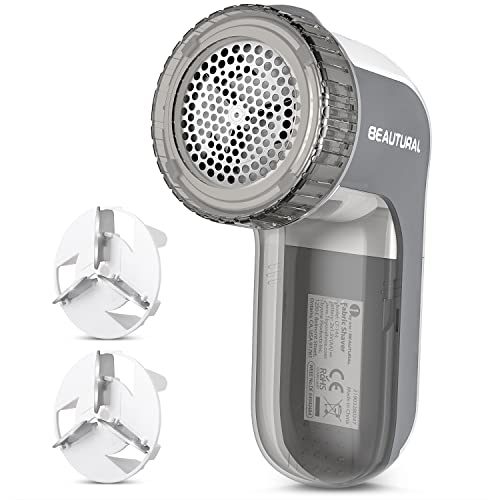
When you have a massive project—like a queen-sized knitted blanket—you need a tool that won’t give up halfway through. The Beautural features a wider head that covers more surface area in a single swipe, saving you hours of tedious work.
The inclusion of an LED light is a surprisingly helpful feature. It illuminates the fabric, allowing you to spot stray pills that might hide against darker yarn colors. When you are working on a midnight-blue sweater, that extra visibility is a game-changer.
Its rechargeable battery is a major plus, as it keeps the motor speed high throughout the entire session. Just be careful on cables or intricate stitch patterns; the sheer size of the head makes it slightly less maneuverable around complex cables or bobbles.
Rowenta Lint Shaver: Best Ergonomic Design Option

If you suffer from hand fatigue or have trouble gripping smaller tools, the Rowenta is designed with comfort in mind. Its handle is shaped to fit naturally in the palm, reducing the strain on your wrist during long de-pilling sessions.
The blade system is impressively sharp, meaning you don’t have to press down hard to see results. In knitting, we are taught that "the tool should do the work," and this shaver embodies that philosophy. A light touch is all it takes to clear the surface.
This model is particularly good for those who maintain a large wardrobe of hand-knits. Because it is comfortable to hold, you are more likely to perform regular maintenance rather than letting the pills accumulate until they become difficult to remove.
Steamery Pilo 2 Fabric Shaver: Best Premium Pick

The Steamery Pilo 2 is as much a design object as it is a utility tool. It features a minimalist aesthetic, but its performance is where it really shines, utilizing high-quality blades that are exceptionally effective on fine-gauge knits.
This is the tool for the knitter who treats their garments like art. It is incredibly quiet and gentle, making it perfect for high-end fibers like cashmere or alpaca blends. It feels sophisticated in the hand and treats your luxury yarns with the respect they deserve.
While it is a higher price point, the build quality suggests it will last for many years. It is an investment in the longevity of your favorite pieces. If your knitting bag is filled with hand-dyed luxury yarns, this is the tool to keep them looking fresh.
Understanding Pilling: Why Your Knits Get Fuzzy
Pilling happens when fiber ends work their way to the surface of the yarn and tangle together due to friction. It is most common in areas of high wear, such as under the arms or where a bag strap rubs against your side.
Not all yarn is created equal. Fibers with shorter staples—the individual length of the fiber—are more prone to pilling because they have more ends that can work loose. Conversely, tightly plied yarns or long-staple fibers like Merino are generally more resistant.
- High-friction areas: Underarms, cuffs, and sides.
- Fiber types: Superwash wools and soft, lofty yarns pill more easily than rustic, high-twist wools.
- The "Halo" effect: Very soft yarns with a fuzzy halo are beautiful but are naturally more susceptible to pilling.
How to Safely De-pill Your Hand-Knit Garments
Always start by laying your garment flat on a hard, stable surface. Never try to de-pill a sweater while you are wearing it, as the fabric needs to be taut to avoid being pulled into the blade.
Before you turn on the shaver, do a "spot test" on an inconspicuous area, like the inside of a hem. This ensures the blade height is appropriate for your specific yarn weight. If you are working with delicate lace or intricate cables, proceed with extreme caution.
- Check for loose ends: If you see a yarn end, tuck it back in with a tapestry needle rather than shaving it.
- Go slow: Use long, sweeping motions rather than pressing the shaver into the fabric.
- Clean the bin: A full bin slows down the motor and can cause the tool to snag.
Fiber Care Tips to Prevent Future Fabric Pilling
The best way to manage pills is to prevent them from forming in the first place. Proper washing is the most critical step; always use a gentle wool wash and avoid harsh agitation.
When you finish a project, a thorough blocking session can help set the fibers. If you are concerned about a particularly fuzzy yarn, consider a very light steam block to help "tame" the fibers, but be careful not to over-steam delicate protein fibers.
- Wash inside out: This protects the outer surface from friction against other clothes.
- Use a mesh bag: This prevents your knits from snagging on zippers or buttons in the wash.
- Rotate your knits: Giving your garments a "rest day" allows the fibers to recover their shape and reduces the buildup of friction.
Essential Maintenance for Your Fabric Shaver
Your shaver is only as good as its blades. Over time, blades will dull, which can lead to tugging rather than cutting. If you notice the shaver catching on your yarn, it is time to replace the blade head.
Keep the lint bin empty and clear any stray fibers from the blade housing after every use. A buildup of fuzz inside the mechanism can cause the motor to overheat or slow down, which compromises the tool’s performance.
- Clean the blades: Use a small brush to remove hidden lint.
- Check for tangles: Sometimes a long strand of yarn can wrap around the blade spindle; remove it immediately.
- Store safely: Keep the protective cap on when not in use to prevent damage to the delicate mesh screen.
Maintaining your hand-knits is just as important as the act of knitting them, as it ensures your hard work remains a staple in your wardrobe for years. By choosing the right tool for your specific fiber type and practicing gentle care, you can effectively manage pilling without compromising the integrity of your stitches. Remember that a little bit of regular maintenance goes a long way in keeping your projects looking as beautiful as the day you bound off. Happy knitting, and may your sweaters stay fuzz-free!