7 Best Ergonomic Grips For Hand Fatigue To Try
Ease hand fatigue with our top 7 ergonomic grip picks. Discover how these comfort-focused designs improve posture and productivity for your daily tasks.
Knitting for hours should be a meditative joy, not a battle against aching knuckles and cramping palms. Many makers mistakenly believe that hand pain is simply the price of admission for completing a complex project. By selecting the right ergonomic tools, you can significantly reduce tension and extend your time at the needles. This guide breaks down the best ergonomic grips on the market to help you find your perfect match.
Clover Amour Crochet Hooks: Best Ergonomic Grip


The Clover Amour is often the first hook recommended to those struggling with tendonitis, and for good reason. The elastomer rubber handle is soft, tacky enough to prevent slipping, and shaped to fit naturally in the palm.
Unlike hard plastic handles, this material has a slight "give" that absorbs the pressure of your grip. If you are a "knife-hold" knitter or crocheter, the flattened thumb rest provides a stable anchor point that prevents your hand from sliding down the shaft during long sessions.
The tradeoff here is the weight distribution. Because the handle is lightweight, some makers find they have to grip slightly harder to maintain control, which can be counterproductive for those with severe arthritis. However, for the vast majority, the ergonomic shape and soft texture make these a reliable gold standard.
Addi Swing Ergonomic Hooks: The Offset Design

The Addi Swing features a distinctive, curved handle that looks more like a surgical instrument than a craft tool. This offset design is engineered to keep your wrist in a neutral position, effectively transferring the tension away from your carpal tunnel.
If you find yourself bending your wrist at an awkward angle while working on a heavy project, like an Aran-weight wool blanket, the Swing can be a game-changer. It forces a more ergonomic posture, which helps prevent the "claw" hand that often sets in after an hour of steady work.
Be aware that the unique shape requires a learning curve. If you are a lifelong "pencil-grip" holder, you may find the handle feels bulky or intrusive at first. Stick with it for a few projects; once your muscle memory adjusts, the reduction in wrist strain is undeniable.
Tulip Etimo Red Hooks: Premium Cushion Comfort

Tulip Etimo Red hooks are widely praised for their incredibly smooth, polished finish and perfectly balanced cushion grip. The surface of the hook is treated to reduce drag, meaning your yarn glides over the metal with almost zero friction.
Reduced friction is a critical, often overlooked factor in hand fatigue. When your yarn snags or drags, you subconsciously increase your grip pressure to compensate, which leads to faster exhaustion. These hooks eliminate that resistance, allowing for a lighter, more relaxed hold.
These are an investment, but the consistent quality and superior finish pay off. If you are working with sticky fibers like cotton or mohair, the smooth glide of the Etimo Red will save your hands from the constant tugging that causes repetitive strain.
Boye Ergonomic Aluminum Hooks: Budget Friendly
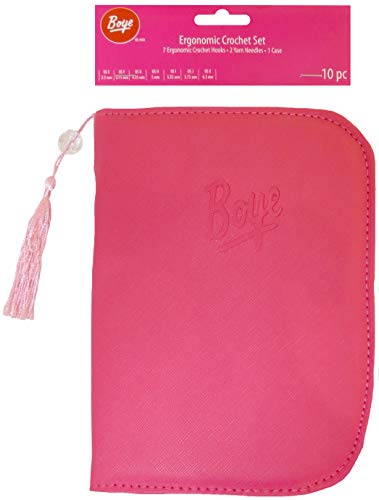
For those who aren’t ready to commit to high-end tools, the Boye Ergonomic series offers a simple, effective solution. These hooks feature a thick, silicone-like sleeve that adds necessary girth to the handle, making it easier to hold without clenching.
The primary benefit of a thicker handle is that it requires less muscular effort to maintain a secure grip. If you have larger hands or struggle with dexterity, the thin metal shafts of traditional hooks can be agonizing; these sleeves provide the surface area your hand craves.
The downside is that the silicone can sometimes become "tacky" or collect lint over time. Still, for the price point, they are an excellent entry-level ergonomic choice that allows you to test whether a thicker grip is the solution to your specific pain points.
Furls Odyssey Metal Hooks: Weighted Balance

Furls Odyssey hooks are heavy, balanced, and undeniably luxurious. The weight of the metal does much of the work for you, providing a momentum that can actually help you maintain a consistent gauge without needing to "fight" the hook through the stitches.
Many knitters find that the heavier weight encourages them to use the tool’s mass rather than their own hand strength. This is particularly helpful if you have a tendency to "death grip" your tools; the weight acts as a physical reminder to let the tool do the heavy lifting.
However, the sheer weight can be a drawback for some. If you have pre-existing shoulder or arm fatigue, the extra ounces might become noticeable after a few hours. Always consider your overall physical comfort, not just your hand strength, when choosing a weighted tool.
Prym Ergonomic Hooks: Lightweight Resin Build

Prym has taken a completely different approach with their high-performance resin hooks. These are incredibly lightweight and feature a unique, flexible handle that is designed to move slightly with your hand, reducing the rigidity that often leads to cramping.
The material is warm to the touch, which is a significant advantage over cold aluminum or steel. If you suffer from cold-sensitive joints, the thermal properties of resin can keep your hands feeling more supple and less prone to stiffness during a long knitting session.
The "click" system for changing sizes is also a clever feature, though it can feel slightly less sturdy than a solid, one-piece hook. For those who prioritize lightness and temperature comfort, the Prym line is a standout option that feels almost weightless in the hand.
Susan Bates Softouch: The Inline Grip Choice
Susan Bates is famous for their "inline" head, which is preferred by many for its ability to produce more uniform stitches. The Softouch version adds a contoured, cushioned handle to this classic design, bridging the gap between traditional utility and modern ergonomics.
If you are a fan of the inline head, you know how much it helps with stitch consistency. Adding the ergonomic grip makes it a viable option for long-term projects where you would otherwise have to switch to a different style of hook to save your hands.
The grip is firm rather than squishy, which provides a stable and predictable feel. If you dislike the "wobble" of softer rubber grips, you will likely appreciate the solid, grounded sensation of the Softouch handle.
Understanding Hand Fatigue and Knitting Strain
Hand fatigue in knitting and crochet is rarely caused by a single factor. It is usually a combination of poor posture, repetitive motion, and a death-like grip on your needles. When you knit for hours, the small muscles in your hands and forearms become overworked, leading to inflammation.
The most common culprit is "over-tensioning." If your yarn is too tight, you are forcing your hands to perform micro-adjustments constantly. This is exacerbated by needles that are too slippery or too blunt, forcing you to use your fingers to "guide" the yarn into place rather than letting the tool do the work.
Recognizing the early signs of strain is vital. If you feel a dull ache in your palm or a tingling sensation in your fingers, stop immediately. Ergonomic tools are a support system, not a cure-all, and they work best when paired with frequent breaks and mindful, relaxed hand movements.
How to Choose the Best Grip for Your Hand Size
Choosing the right grip is a deeply personal process that depends on your hand anatomy and your preferred hold. A person with small, delicate hands may find a bulky, weighted hook cumbersome, while someone with larger hands might find a thin, silicone-sleeved hook to be insufficient.
Start by observing how you hold your hook or needles. If you use a "pencil grip," you need a tool that is balanced toward the front; if you use a "knife grip," you need a handle that fills your palm. The goal is to minimize the distance your fingers have to travel to complete a stitch.
Don’t be afraid to experiment with diameter. A thicker handle is almost always better for reducing grip pressure, but it should never be so large that it forces your fingers into an unnatural, splayed position. If your hand feels "stretched" while holding the tool, it is too big.
Tips for Preventing Repetitive Strain Injuries
The best ergonomic tool in the world cannot compensate for a lack of movement. To keep your hands healthy, incorporate "micro-breaks" into your routine, where you drop your hands to your sides and shake them out every twenty minutes.
Stretching is equally important. Gently pull your fingers back toward your wrist and hold for a few seconds, or press your palms together in a prayer position and lower them until you feel a stretch in your forearms. These simple movements keep the tendons supple and prevent the buildup of tension.
Finally, pay attention to your environment. A chair that supports your back and a light source that prevents you from hunching over your work will do more for your hands than any tool upgrade. Comfort is a holistic practice; keep your body loose, your grip light, and your sessions punctuated by rest.
Finding the right ergonomic grip is a journey of trial and error that pays off in years of pain-free making. Remember that the best tool is the one that allows you to maintain a light, relaxed hold without sacrificing your stitch quality. Listen to your body, prioritize comfort over trends, and never push through sharp pain. With the right adjustments, you can keep your hands happy and your needles clicking for decades to come.