6 Best Spinning Bags For Modular Storage To Try
Maximize your organization with these 6 top-rated spinning bags. Discover modular storage solutions designed to streamline your space and improve accessibility.
Spinning is a craft defined by the tactile nature of fiber, but the logistics of hauling wheels, bobbins, and carded batts can quickly become overwhelming. Finding a dedicated bag that adapts to your specific spinning workflow is the difference between a spontaneous studio session and a cluttered, frustrating experience. These six modular storage solutions prioritize accessibility and protection, ensuring your gear stays organized whether you are spinning at home or traveling to a guild meeting. Investing in the right storage is just as vital as choosing the right fiber preparation for your project.


Namaste Maker’s Backpack: Best Modular Overall

The Namaste Maker’s Backpack excels because it treats your spinning tools like professional equipment rather than loose clutter. It offers a structured interior that keeps your bobbins upright, preventing unwanted tangles or damage to your delicate orifice hooks and whorls.
The modularity here is a game-changer for those who spin on the go. You can easily remove or rearrange internal dividers to accommodate different wheel sizes or extra spinning accessories like a niddy-noddy or a portable scale.
However, the trade-off is the sheer size of the pack. If you are a minimalist spinner who only carries a drop spindle and a small bag of roving, this might feel like overkill.
Bottom line: This is the gold standard for the spinner who needs to transport a full workstation without sacrificing order.
Della Q Maker’s Train Case: Best for Organization
The Della Q Train Case is a masterclass in compartmentalization. Its rigid frame ensures that your delicate tools, such as your spinning oil or spare drive bands, are never crushed under the weight of a heavy project.

I particularly appreciate the dedicated pockets for small items. You can stash your fiber gauge, drafting tools, and measuring tapes in specific slots, meaning you won’t spend ten minutes digging for a small tool while your rhythm is in full swing.

The downside is that it is not designed to hold large volumes of fiber. This case is meant for the "bits and bobs" of spinning, not for storing your entire stash of raw wool.
Bottom line: Use this to house your essential spinning kit and keep your workspace tidy.
Cocoknits Maker’s Portfolio: Best for Accessories
If your spinning habit involves a library of patterns or complex notes on drafting techniques, the Cocoknits Portfolio is an essential companion. It keeps your reference materials crisp and clean, away from the inevitable stray fibers that float around a spinning room.
The magnetic closure and internal pockets are designed for flat items, making it perfect for storing your fiber samples and spinning logs. It brings a sense of professional structure to the often chaotic process of fiber arts research.
Don’t expect this to carry your bobbins or your wheel. It is a specialized tool for the intellectual side of spinning, not the mechanical side.
Bottom line: It is the ultimate organizer for the spinner who keeps meticulous project notes.
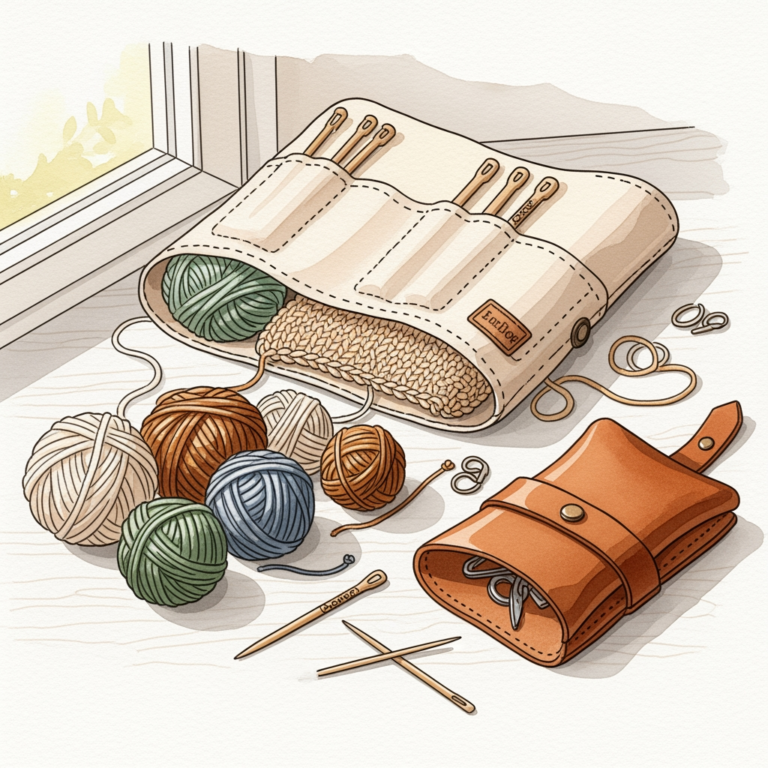
Thread & Maple Needle Binder: Best for Tool Storage
While marketed for knitting needles, the Thread & Maple Binder is surprisingly perfect for the spinner’s small tools. Its high-quality leather and secure slots provide a safe home for your spinning hooks, orifice cleaners, and tension springs.
The organization is tactile and satisfying, allowing you to see exactly what you have at a glance. When you are spinning, knowing your hook is always in the same place prevents the frantic search that can break your flow state.
Keep in mind that the slots are sized for needles and small tools. They will not accommodate bulky items like a lazy kate or a spinning wheel flyer.
Bottom line: This is a beautiful, durable way to secure your most frequently used small tools.
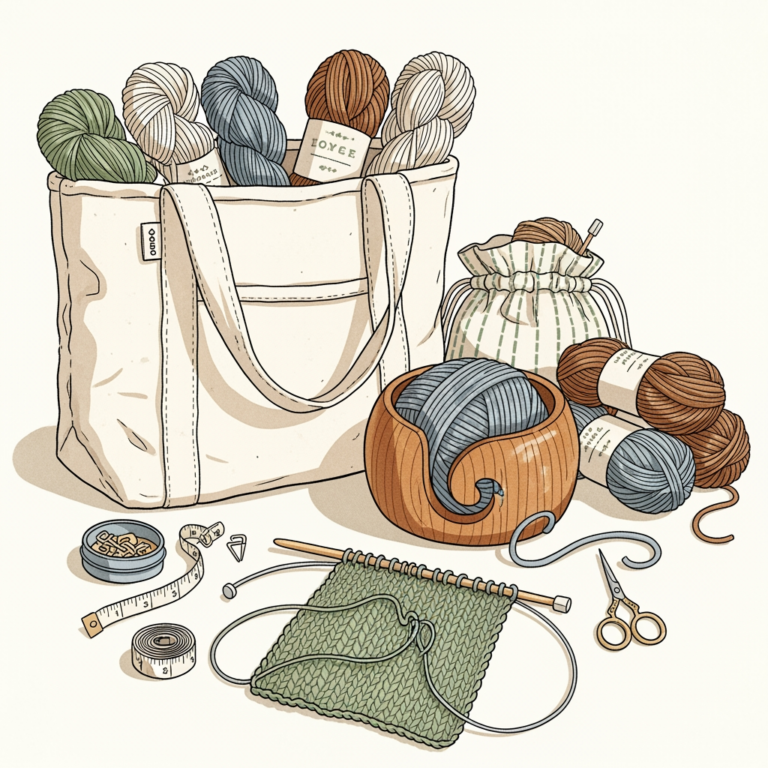
Big Sky Spinner’s Tote: Best for Large Projects

The Big Sky Spinner’s Tote is built for the volume that spinning requires. When you are working with long-staple wool or large, airy batts, you need a bag that doesn’t compress your fiber, as crushing can ruin the loft and make drafting significantly harder.
The wide opening allows you to drop in a large quantity of roving without snagging it on zippers or snaps. It is a utilitarian workhorse that understands the physical properties of wool and alpaca.
The trade-off is that it lacks the fine-tuned internal organization of the smaller cases. If you struggle with keeping small tools separate from your fiber, you may need to supplement this with an additional pouch.
Bottom line: Choose this if your primary concern is maintaining the integrity and loft of your fiber.
Wool & Pine Project Bag: Best for Fiber Portability
The Wool & Pine bag is the spinner’s equivalent of a "grab-and-go" kit. It is lightweight, flexible, and designed to move with you, making it ideal for spinning while sitting in a park or at a workshop.
It is particularly good for maintaining the moisture content of your fiber. Because it is often made of breathable materials, your fiber won’t feel damp or stale if stored for a few days, which is a common issue with non-breathable synthetic bags.
Be aware that it offers less protection against physical impact. If you are traveling on a crowded train, you need to be careful that your bag isn’t crushed by heavier items.
Bottom line: Perfect for the spinner who prefers spontaneity and needs a bag that is as light as the fiber inside it.
Key Features to Seek in Modular Spinning Bags
When evaluating a bag for spinning, look for structural integrity first. Your bag needs to protect your fiber from being crushed, as compressed roving is much harder to draft smoothly.
Look for a bag with breathable materials like canvas or cotton. Natural fibers need to breathe; trapping them in plastic can lead to unwanted odors or changes in the fiber’s natural moisture content.
Finally, prioritize accessibility. You should be able to reach your fiber or your tools without having to dump the entire contents of the bag on the floor.
Essential Storage Tips for Your Spinning Tools
Treat your spinning tools with the same care you give your favorite needles. Always store your orifice hooks in a dedicated, puncture-proof sleeve to prevent them from snagging your fiber or scratching your wheel.
If you use a wheel, keep a small, dedicated tin for spare drive bands and tension springs. These small parts are easily lost, and having a "home" for them within your larger bag is vital.
Never store your spinning oil or lubricants in the same compartment as your fiber. A single drop of oil can ruin a pound of beautiful, hand-dyed wool.
How to Organize Fiber Batts and Roving Safely
Fiber should always be stored in a way that respects its "loft." If you are storing batts, use flat, wide-bottomed containers or bags that allow the fiber to lay horizontally without folding or creasing.
For roving, I recommend loose coils rather than tight balls. Tight balls put unnecessary tension on the fibers, which can introduce a "memory" into the fiber that makes it harder to draft evenly at the wheel.
Always keep your fiber away from direct sunlight, which can fade colors and make the fiber brittle over time. A dark, cool, and dry storage environment is the best way to preserve your stash for years.
Choosing the Right Bag for Your Spinning Style
If you are a traveling spinner, focus on bags with secure, padded compartments to protect your wheel components. If you are a home spinner, focus on bags that offer easy access to your fiber storage and project notes.
Consider your drafting style as well. If you are a long-draw spinner, you need a bag with a large, unobstructed opening to accommodate your arm movements.
Ultimately, the right bag is the one that removes the friction between you and your spinning. If you find yourself avoiding a project because it’s "too much trouble to set up," it is time to rethink your storage strategy.
Selecting a spinning bag is an investment in your creative process, not just a way to carry gear. By prioritizing protection for your fiber and organization for your tools, you create a seamless environment for your spinning practice to thrive. Take the time to assess your specific needs, and don’t be afraid to mix and match solutions to find your perfect setup. Happy spinning, and may your bobbins always be full and your drafting smooth.