7 Best Adjustable Tension Rings For Consistent Wrapping
Master consistent wrapping with our top 7 adjustable tension rings. These tools ensure uniform thread control, enhancing precision for every craft project.
Achieving consistent tension is the single most important factor in elevating your knitting from "homemade" to professional-quality fabric. When your stitches vary in size, your gauge becomes unpredictable, often leading to garments that don’t fit or lace patterns that look uneven after blocking. Adjustable tension rings serve as a vital bridge between your yarn supply and your needles, smoothing out the flow of fiber. These small tools can save your hands from fatigue while ensuring every loop is perfectly uniform.
Clover Adjustable Yarn Guide: Best Overall Choice
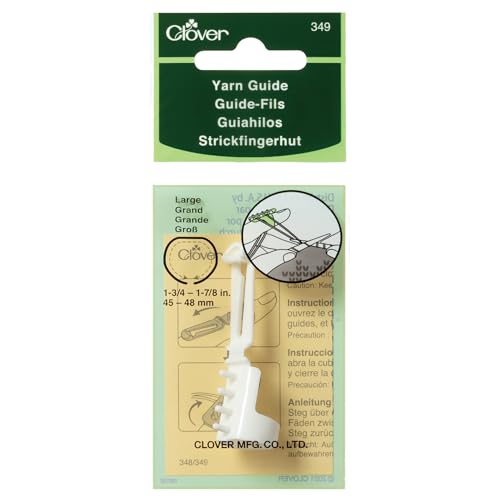

The Clover Adjustable Yarn Guide is the industry standard for a reason. It sits comfortably on the index finger, providing a stable, plastic-coated path for your yarn to travel through.
Because it is made of a lightweight, smooth material, it doesn’t snag delicate fibers like mohair or single-ply merino. It’s particularly effective for knitters who struggle with "tension fatigue," where your grip tightens unconsciously as you reach the end of a long row.
If you are a beginner, this is the safest starting point. It offers a gentle, controlled glide that prevents the yarn from slipping too quickly, which is a common issue when learning to manage two strands at once.
Yarnstar Peacock Tension Ring: Best for Lace Work

Lace knitting requires a level of precision that can be exhausting to maintain manually. The Yarnstar Peacock ring features a distinct, decorative coil that acts as a gatekeeper for your yarn, ensuring it doesn’t slacken during complex yarn-overs.
The design is slightly more rigid than plastic guides, which provides the extra resistance needed for working with slippery silk or bamboo blends. When you are knitting a complex shawl, this stability prevents the dreaded "loose loop" that can ruin a pattern’s symmetry.
Be aware that the metal coils can be slightly abrasive if you have very sensitive skin or are working with highly textured novelty yarns. It is best reserved for smooth, high-twist fibers where you need absolute control over every millimeter of yarn.
Cocoknits Metal Tension Ring: Best Minimalist Pick
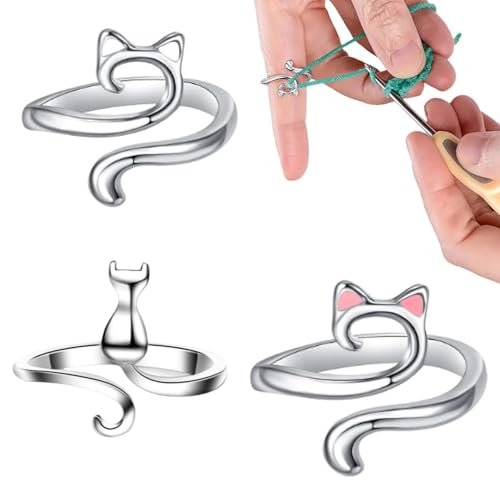
If you prefer a tool that feels like jewelry rather than a piece of plastic hardware, the Cocoknits ring is an elegant solution. It is a simple, open-band design that relies on the natural friction of the metal to guide the yarn.
This is ideal for the "set it and forget it" knitter who doesn’t want to fiddle with complex loops or clasps. It’s low-profile enough that you can keep it on your finger while checking your phone or grabbing a cup of tea without it getting in the way.
The trade-off here is that it offers less "grip" than a closed-loop guide. If you are a loose knitter who needs significant help pulling the yarn taut, you might find this ring doesn’t provide enough resistance to correct your gauge.
Sewtech Open-Loop Ring: Best for Stranded Colorwork
Stranded colorwork, or "Fair Isle," is notoriously difficult because you must manage two different colors with the same hand. The Sewtech Open-Loop ring allows you to stack your yarn strands, keeping them separated and preventing them from tangling.
By maintaining a consistent distance between the two strands, this ring helps you achieve that elusive, even float on the back of your work. It effectively acts as a mechanical separator, allowing you to focus on the pattern chart rather than fighting with snarled yarn.
This tool is a game-changer for those who find "two-handed" knitting (holding one color in each hand) too difficult to learn. It brings both yarns to your dominant hand while keeping them perfectly tensioned and distinct.
KnitPal Silver Tension Ring: Best Value for Money

The KnitPal Silver Tension Ring provides a reliable, adjustable fit at a price point that makes it accessible for every knitter’s notions bag. It is a straightforward, functional tool that does exactly what it promises without unnecessary bells and whistles.
Its adjustability is its greatest strength, as it can be easily squeezed or widened to fit any finger size. This is particularly useful if your hands tend to swell during long knitting sessions or if you move between different seasons where finger size might fluctuate.
While it lacks the specialized features of high-end guides, it is a sturdy workhorse. It is a fantastic "backup" tool to keep in your project bag for when you are working on a simple stockinette sweater and just need a little extra consistency.
Pony Knitting Tension Ring: Best Ergonomic Design

The Pony Tension Ring is designed with the anatomy of the hand in mind. It sits at a slight angle, which helps to reduce the strain on the tendons in your index finger during marathon knitting sessions.
If you suffer from mild arthritis or hand cramping, this ergonomic shape can make a significant difference in how long you can knit comfortably. It encourages a more relaxed hand position, which naturally leads to more consistent, tension-free stitches.
The material is smooth and non-reactive, making it a great choice for those with metal sensitivities. It is a thoughtful, well-engineered tool that prioritizes the health of your hands as much as the quality of your fabric.
Addi Knitting Thimble: Best for Two-Color Knitting
The Addi Knitting Thimble is a classic for a reason, specifically for those who tackle intricate colorwork projects. It features multiple loops that allow you to feed two or even three strands of yarn simultaneously.
This thimble is designed to sit on the pad of your finger, providing a very direct and secure path for the yarn. It is much more robust than a standard ring, making it ideal for heavier wools or thicker worsted-weight yarns that might overwhelm a delicate tension ring.
Because it is a bit bulkier, it may take some time to get used to the feel of it on your finger. However, once you master the rhythm, the ability to control multiple colors with one hand is an unmatched advantage for complex pattern work.
Understanding How Tension Rings Improve Your Gauge
Tension rings work by creating a consistent path of resistance for your yarn before it reaches your needle. By forcing the yarn to travel through a loop or coil, you eliminate the natural variations in how you hold your yarn from stitch to stitch.
This is critical because gauge is not just about the needles you use; it is about how much yarn you feed into each loop. When your tension is inconsistent, your fabric will have "wavy" rows or uneven columns, which become glaringly obvious once the piece is washed and blocked.
Ultimately, these tools act as a physical reminder to maintain a steady rhythm. They don’t do the work for you, but they create a "floor" for your tension, ensuring that even on your tired days, your stitches remain uniform.
How to Properly Size Your Ring for Comfort and Fit
Most adjustable rings are designed to be "one size fits all," but that doesn’t mean you shouldn’t take a moment to fit them properly. A ring that is too loose will spin around your finger, causing more frustration than it saves.
To size your ring, slide it onto your index finger and gently press the sides until it is snug but not restrictive. You should be able to slide it over your knuckle with a bit of effort, ensuring it won’t fall off while you are in the middle of a row.
If you have a ring that is too tight, it can restrict circulation and lead to hand fatigue, which is the exact opposite of what you want. Take the time to adjust it before you cast on; if your finger feels "throbbing" after ten minutes, open the ring by a millimeter or two.
Troubleshooting Common Issues With Tension Guides
If you find that your yarn is snapping or fraying, check the tension guide for any rough edges or burrs. Sometimes, metal rings can develop tiny nicks from constant friction, which will catch on delicate fibers like alpaca or silk.
If the yarn feels too tight, you are likely pulling the yarn too far away from the guide, creating unnecessary drag. Try keeping your finger closer to the needle tips to reduce the distance the yarn has to travel, which will immediately lighten the tension.
Finally, remember that tension is a skill, not just a tool-dependent outcome. Use the ring as a training aid to build muscle memory, but don’t be afraid to take it off once you feel your hands have learned the rhythm of consistent, even stitches.
Investing in a tension ring is one of the most practical upgrades you can make to your knitting toolkit. Whether you are struggling with the uneven stitches of a new hobby or looking to perfect your stranded colorwork, there is a design here to suit your specific needs. Start with a simple, adjustable option and pay close attention to how your hands feel after an hour of work. With the right tool and a bit of practice, you will find that your knitting becomes not only more consistent but also significantly more enjoyable.