6 Best Spinning Wheel Light Attachments For Low Light
Enhance your spinning precision with our top six wheel light picks. Discover how these reliable attachments improve visibility during low-light craft sessions.
Spinning your own yarn requires a keen eye for twist consistency and fiber draft, especially when working with dark or low-contrast rovings. Without proper lighting, it is nearly impossible to spot slubs, neps, or uneven plying before they become permanent parts of your finished yarn. These six lighting solutions bridge the gap between a dim studio and the professional-grade visibility required for high-quality spinning. Investing in the right light will save your eyes from fatigue and elevate the quality of every bobbin you fill.
Mighty Bright LED Floor Lamp for Fiber Artists


This lamp is a staple in many studios because it offers a flexible gooseneck that directs light exactly where the action happens. When you are drafting fine wool or alpaca, you need to see the "triangle" of fiber clearly to ensure your twist isn’t traveling too far up into the roving.
The primary advantage here is the true-color LED technology, which prevents the yellow cast often found in standard household bulbs. This is critical when you are spinning hand-dyed top and need to see how colors are transitioning across the fiber.
The base is weighted well, but it can take up a fair amount of floor space near your treadle. If you have a compact spinning wheel setup, ensure the base fits snugly without interfering with your foot movement.
Daylight Wafer Lightbox for Precision Spinning

A lightbox isn’t just for quilters or tracers; it is a secret weapon for spinners working with dark, moody fibers like charcoal merino or black alpaca. By placing the lightbox behind your wheel, you create a backlight that turns every individual fiber into a glowing silhouette.
This setup makes it incredibly easy to see if you have any "vegetable matter" or debris hiding in your fiber. It also highlights the thickness of your draft, making it easier to maintain a consistent WPI (Wraps Per Inch) throughout your session.
The trade-off is that it requires a flat surface, which might mean adding a small side table next to your wheel. It is an investment, but for those who spin lace-weight singles, the visibility it provides is unparalleled.
OttLite Dual Head LED Task Lamp for Spinning

The dual-head design of this lamp is brilliant for casting light from two different angles simultaneously. This effectively eliminates the harsh shadows that often hide inconsistencies when you are spinning at night.
If you are plying two singles together, this lamp helps you see the twist angle clearly on both sides of the yarn. It removes the guesswork, allowing you to focus on the rhythm of your treadling rather than squinting at the orifice.
Be aware that the heads can be a bit stiff to adjust initially. Once you find the "sweet spot" that illuminates both your hands and the bobbin, leave it there to avoid unnecessary wear on the joints.
Brightech Litespan LED Floor Lamp for Crafters
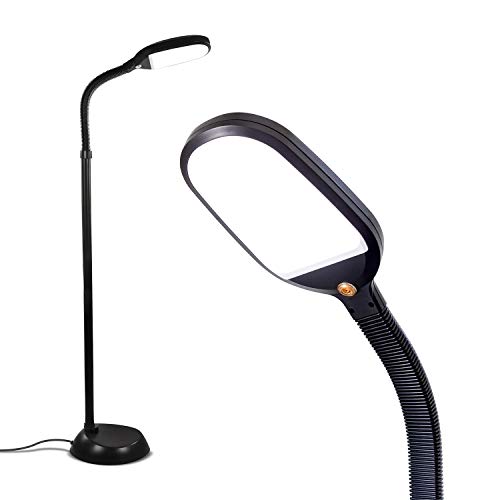
This lamp is perfect for the spinner who needs a high-intensity, focused beam that doesn’t heat up the room. Spinning is a physical activity, and the last thing you want is a hot bulb radiating heat onto your fiber supply, which can sometimes affect the "hand" or oils in natural wool.
The dimmable feature is the standout here, allowing you to adjust the brightness based on the time of day. If you are spinning during the golden hour, you can dial it down; if you are working late at night, you can ramp it up for maximum clarity.
It is a tall, slender lamp that fits well in tight corners. It is a reliable, no-nonsense choice for someone who wants to set it and forget it.
Vekkia Rechargeable LED Neck Light for Wheels

Sometimes the best light is the one that moves with your head. This neck light is a game-changer for spinners who tend to shift their posture or move their wheel around the house.
Because the light source is always pointing where you are looking, you never have to worry about your own hands casting a shadow on your drafting zone. It is particularly helpful if you have a complicated wheel setup where floor lamps struggle to reach the orifice.
While it is lightweight, you will need to charge it periodically. Keep a backup charger nearby so you don’t lose your flow in the middle of a long spinning session.
Lepower Architect Desk Lamp for Spinning Work

If you have a dedicated spinning desk or a sturdy side table, this architect-style lamp offers the most control over positioning. The spring-loaded arm allows you to pull the light close for detailed plying or push it back when you need more room to maneuver your fiber supply.
The industrial aesthetic fits well in a studio, and the clamp-on base saves precious floor space. This is a robust solution that can withstand the vibrations of a spinning wheel without drooping.
The main consideration is the reach; make sure your table is close enough to your wheel to allow the arm to extend fully. It provides a crisp, focused light that is perfect for identifying thin spots in your yarn before they break.
How to Position Lighting for Optimal Drafting
Lighting placement is just as important as the lamp itself. You want to avoid placing the light directly in front of your face, as this causes glare on the bobbin and can lead to eye strain.
Instead, aim for a side-angle position, roughly at a 45-degree angle to your drafting triangle. This creates a soft, side-lit effect that accentuates the texture of the fiber and makes it easier to see the twist propagation.
Always check for reflections on your wheel’s flyer or bobbin. If you see a bright "hot spot" reflecting back at you, shift the lamp slightly until the light illuminates the fiber without blinding you.
Why Color Temperature Matters for Fiber Arts
Color temperature is measured in Kelvins (K), and for fiber arts, you want to aim for the daylight range, typically between 5000K and 6500K. This mimics natural sunlight and provides the most accurate color rendering.
If you use a warm, yellow-toned bulb, your brain will struggle to distinguish between similar shades of wool. This is a nightmare for colorwork projects where you need to ensure your contrast colors are distinct.
Stick to "cool white" or "daylight" bulbs to ensure that the yarn you see on your bobbin is the exact color that will end up in your finished knit. It’s the difference between a project that looks intentional and one that looks like a happy accident.
Reducing Eye Strain During Long Spinning Days
Spinning is a repetitive task that requires intense visual focus. To reduce eye strain, follow the 20-20-20 rule: every 20 minutes, look at something 20 feet away for 20 seconds.
Additionally, ensure your background isn’t too dark or too light compared to your fiber. If you are spinning white wool, a medium-grey background behind your wheel can help reduce the contrast and make the fiber easier to track.
Finally, don’t rely solely on your task light. Keep the ambient light in the room at a moderate level so your eyes aren’t constantly adjusting between a bright spotlight and a dark room.
Essential Lighting Tips for Dark Fiber Work
Spinning black, navy, or deep brown fiber is a true test of a spinner’s skill. The biggest tip here is to increase your contrast by using a light-colored apron or a white towel draped over your lap.
This creates a high-contrast background that makes the dark fiber "pop" against your legs. You will be surprised at how much easier it is to see the draft when you aren’t fighting against the dark fabric of your own clothes.
Lastly, combine a strong overhead light with a secondary, lower-angle light. The combination of two light sources will eliminate the "blind spots" that occur when you only have light coming from one direction.
Finding the right lighting setup is a personal journey that depends on your wheel, your eyesight, and the fibers you love to spin. Whether you choose a high-end lightbox or a simple neck light, the goal is always the same: to make your spinning process more enjoyable and your results more consistent. Don’t be afraid to experiment with different angles and color temperatures until you find the perfect balance for your studio. Happy spinning, and may your bobbins always be full of perfectly twisted yarn.