7 Best Self-healing Mats For Cutting Projects Reviewed
Discover the top 7 self-healing mats for precision cutting. Our review analyzes durability and surface quality to help you choose the best tool for your crafts.
Whether you are trimming the selvage edges of a hand-woven project or precisely cutting fabric for a quilt backing, a quality cutting mat is as essential as a sharp pair of scissors. Over my two decades in the fiber arts, I have learned that the right surface protects both your blades and your dining room table. These seven mats represent the gold standard for crafters who demand accuracy and longevity in their workspace. Choosing the right one depends heavily on your specific project needs and the space you have available to dedicate to your craft.
Fiskars Self-Healing Rotary Cutting Mat Review


Fiskars is a household name for a reason, and their self-healing mat is often the first one a knitter encounters when moving into sewing project bags or garment construction. The surface is durable enough to withstand the pressure of a sharp rotary blade without showing deep, permanent scars.
The grid markings are crisp and easy to read, which is vital when you are squaring up a piece of knitted fabric before sewing it into a garment. However, the surface can be slightly slicker than others, so you may need to pin your fabric down if you are working with slippery synthetic blends or lightweight silks.
Ultimately, this is the workhorse of the craft room. It is reliable, widely available, and perfect for those who want a straightforward, no-nonsense tool that simply gets the job done.
Olfa Double-Sided Rotary Mat for Precision

If you have ever tried to cut bias tape or align delicate fabric, you know that even a millimeter of error can ruin the drape of a finished piece. Olfa mats are legendary for their density, which provides the perfect amount of resistance for a clean, single-pass cut.
The double-sided feature is a massive advantage for someone working on multiple projects at once. One side might be covered in scraps for a quilt, while the other remains clean and pristine for cutting fine, expensive fibers like cashmere or alpaca blends.
The self-healing capability here is superior, meaning your rotary blades will stay sharper for much longer. While they come at a higher price point, the investment pays for itself by reducing the frequency with which you need to replace your blades.
Dahle Vantage Self-Healing Cutting Mat Pick

Dahle mats are built with a unique, multi-layered construction that feels different under the blade than your typical plastic mat. It has a slightly "softer" feel that grips the fabric, preventing the dreaded shift that often happens when you are cutting long, straight edges.
For those of us who spend hours blocking lace, this mat is a dream because it is exceptionally flat and stable. You won’t find it warping or curling at the edges, which is a common frustration with cheaper, thinner mats that have been stored improperly.
The bottom line is that the Dahle is designed for the perfectionist. If you are working on high-stakes projects where every cut must be exact, the extra stability provided by this mat is worth every penny.
Arteza Self-Healing Mat for Craft Projects

Arteza mats are a fantastic entry point for the maker who wants professional performance without the professional price tag. They feature a non-slip surface that is particularly helpful when you are working with bulky, textured yarns or heavy wools that tend to slide around.
The grid lines are vibrant and high-contrast, which is a blessing for those of us who have spent too many late nights working under dim lamp light. It handles the pressure of a rotary cutter well, though it may show wear slightly faster than a premium-grade professional mat.
This mat is ideal for the occasional crafter or the student who needs a reliable surface for a variety of mixed-media projects. It balances affordability with enough quality to keep your blades in good working order for many seasons of use.
Alvin Professional Self-Healing Cutting Mat
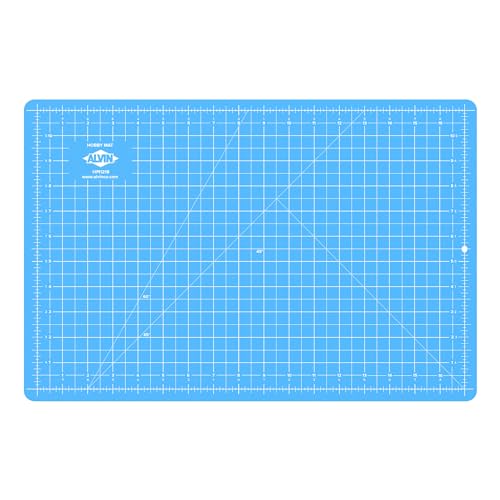
Alvin mats are heavy-duty, industrial-grade surfaces that feel like they could survive a literal lifetime of use. They are dense, thick, and incredibly resistant to the deep gouges that can occur if you accidentally apply too much pressure with your cutter.
Because they are so substantial, they don’t slide around on your table, which is a major safety benefit. If you are cutting through multiple layers of fabric—perhaps for a lined bag or a structured jacket—the grip and stability of an Alvin mat are unmatched.
Think of this as the "buy it once" tool for your studio. If you have a dedicated craft room and need a permanent, rock-solid surface, you cannot do better than this.
Westcott Self-Healing Craft Cutting Mat

Westcott has managed to create a mat that is both lightweight and surprisingly resilient. It is the perfect choice for the knitter who needs to be mobile, perhaps moving from a kitchen table to a workshop or a knitting circle.
The surface has a pleasant, matte finish that reduces glare, which is a subtle but important feature when you are trying to align patterns. While it might not have the same heavy-duty density as the professional lines, it is more than sufficient for standard cutting tasks.
It is a versatile, portable option that fills the gap between hobbyist tools and heavy studio equipment. It is a great choice if you are tight on space and need to store your mat vertically between uses.
MyBinding Self-Healing Mat for Fiber Arts
MyBinding offers a functional, no-frills mat that focuses on the basics of surface protection and blade longevity. It is straightforward and provides a consistent, reliable grid that is essential for measuring fabric for linings or backing.
The self-healing properties are effective, and the mat lays flat right out of the packaging, which is a welcome change from some of the rolled-up mats that require days of flattening. It is a solid, mid-range choice that performs consistently under daily use.
If you are looking for a dependable, everyday mat that doesn’t try to reinvent the wheel, this is a great contender. It does exactly what it promises, allowing you to focus on your craft rather than your tools.
How to Choose the Right Size Cutting Mat
- Small (12" x 18"): Perfect for small-scale projects, trimming yarn ends, or if you have a very limited workspace.
- Medium (18" x 24"): The "Goldilocks" size for most garment sewers; it handles standard fabric widths comfortably.
- Large (24" x 36"): Essential for quilters or those working with large yardage who need to cut long, continuous lines without moving the fabric.
Always measure your available table space before you buy. A mat that hangs over the edge of your table will warp and lose its structural integrity over time. If you only have a small desk, it is better to buy a high-quality small mat than a large one that doesn’t sit flat.
Essential Care Tips for Your Cutting Mat
Never, ever store your cutting mat in direct sunlight or near a heat source like a radiator. Heat is the enemy of self-healing mats; it will cause them to warp, bubble, and lose their ability to "close up" after a cut.
Keep your mat flat whenever possible. If you must store it vertically, slide it between a bookshelf and a wall so it stays perfectly straight. Never fold or roll your mat, as this creates permanent creases that will make accurate cutting impossible.
Clean your mat occasionally with a soft cloth and a mixture of water and a tiny drop of mild dish soap. This removes the tiny fibers and dust that can get trapped in the cuts, keeping the surface smooth and helping your blades last longer.
Safety Rules for Using Rotary Cutters
Rotary cutters are incredibly sharp—far sharper than standard scissors—and they require respect. Always engage the safety lock the moment you finish a cut; it is a habit that will save you from a nasty accident when you reach across the table for your yarn.
Always cut away from your body, and keep your fingers well clear of the blade’s path. Use a heavy-duty acrylic ruler to guide the blade, and ensure your hand is firmly pressing down on the ruler, not the fabric, to prevent slipping.
If you feel like you have to apply excessive pressure to get through the fabric, your blade is dull. Change the blade. A dull blade is far more dangerous than a sharp one because it is more likely to skip or jump off the ruler, leading to ruined fabric and potential injury.
Investing in a quality self-healing mat is one of the smartest decisions you can make to protect your tools and ensure your projects look professional. Whether you choose a heavy-duty professional mat or a portable everyday surface, the key is maintaining it with care and using it with proper safety techniques. Remember that your tools are there to support your creativity, so choose the one that fits your workflow and your space best. Happy making, and may all your cuts be perfectly straight.