
7 Best Craft Mallets For Setting Rivets To Own
Selecting the right mallet is vital for setting rivets. We review the top seven craft mallets to ensure precision, durability, and comfort in your projects.
When you transition from knitting soft fibers to adding hardware like rivets to leather tags or bag straps, the jump in tool requirements can feel daunting. Just as choosing the right needle material dictates how your yarn glides, selecting the correct mallet determines the longevity of your hardware and the health of your hands. A proper mallet acts as an extension of your arm, turning a sharp strike into a precise, clean set. Here are the tools that bridge the gap between fiber arts and leathercraft with professional results.
Tandy Leather Pro Poly Mallet: Best Overall


This mallet is the workhorse of the leather shop, much like a reliable set of stainless steel needles is for a knitter. Its weight is perfectly balanced, allowing for a consistent strike that won’t tire out your wrist during long sessions.
The polyurethane head is dense enough to drive a rivet home in one or two solid taps without marring the finish. It lacks the "bounce" that cheaper rubber mallets have, which is vital when you are setting delicate hardware on a finished project.

If you are just starting to incorporate leather labels into your hand-knits, this is the tool to buy. It’s forgiving, durable, and handles the most common rivet sizes with ease.
Osborne 16-Ounce Rawhide Mallet: Top Choice
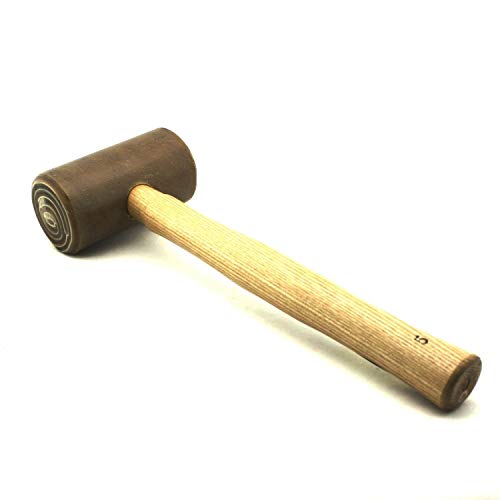
There is something inherently satisfying about the weight and feel of a rawhide mallet. It reminds me of the difference between knitting with heavy, polished wood needles versus light aluminum; the material feedback is simply superior.
Because the rawhide is tightly wound and compressed, it delivers a punch that is powerful yet surprisingly soft on the tool. It absorbs the shock of the strike, preventing the vibration from traveling up your arm.
This is the professional’s choice for a reason. Once the rawhide "breaks in" and conforms slightly to your strike pattern, it becomes an incredibly precise instrument for setting rivets.
Weaver Leather Poly Head Mallet: Best Value
When you are just beginning to experiment with leather accents, you don’t necessarily need to invest in heirloom-quality tools. This poly head mallet provides the essential functionality you need without the premium price tag.
It is lightweight and maneuverable, which makes it ideal for smaller, intricate projects like delicate bag charms. While it might not have the heavy-duty longevity of a rawhide mallet, it performs perfectly for the casual maker.
Think of this as the "starter set" of mallets. It does the job well enough that you can focus on mastering your rivet technique before deciding if you need to upgrade.
Craftool Adjustable Poly Mallet: Versatile

The standout feature here is the ability to swap out heads or adjust the balance, similar to using interchangeable knitting needles. It offers a degree of customization that is rare in entry-level tools.
If you find yourself switching between setting tiny decorative rivets and heavy-duty snaps, this tool adapts to your needs. You aren’t locked into one weight or material, which saves space in your tool kit.
It is a smart choice for the knitter who values efficiency and minimalism. Why own three different mallets when one adjustable frame can handle the variety of your leather-knitting hybrid projects?
Gomph-Hough Rawhide Mallet: Professional Grade

This mallet is built with a level of craftsmanship that mirrors a hand-turned wooden needle. It is dense, perfectly weighted, and designed to last through decades of heavy use.
The rawhide is exceptionally high quality, meaning it won’t fray or shed even after thousands of strikes. When you are setting rivets on expensive, vegetable-tanned leather, you want a tool that won’t leave any marks.
This is an investment piece. If you plan on making leather-bound journals or heavy-duty bag straps a permanent part of your craft, this mallet will be the last one you ever need to buy.
Kyoshin Elle Poly Mallet: Precision Tooling
Japanese tools often prioritize ergonomics and balance, and this mallet is no exception. It feels like an extension of your hand, much like a well-tapered pair of lace needles feels like an extension of your fingers.
The head is designed for high-impact accuracy. It is particularly effective when you need to be exact with your rivet setter to ensure the hardware sits perfectly flush against the leather.
If you are a perfectionist about your finishing work, you will appreciate the control this tool offers. It minimizes the "oops" moments that can happen when a strike goes slightly off-center.
Leather Wranglers Round Maul: The Heirloom

A round maul is to leathercraft what a custom, hand-painted wooden needle is to knitting. It is a beautiful, balanced, and highly effective tool that turns the act of setting rivets into a rhythmic, almost meditative process.
Because the weight is distributed evenly around the head, you don’t have to worry about the mallet rotating in your hand. You get a direct, centered blow every single time, which is essential for consistent rivet setting.
While it is the most expensive option on this list, the ergonomics are unmatched. If you suffer from wrist fatigue or repetitive strain, the design of a round maul is a game-changer for your comfort.
Why Mallet Weight Matters for Setting Rivets
Just as you wouldn’t use a bulky, size 10mm needle to knit fine lace, you shouldn’t use a heavy mallet for delicate rivets. Weight determines the force of the strike, but balance determines the accuracy.
- 10-12 oz: Ideal for small, decorative rivets or thin leather tags.
- 16 oz: The "sweet spot" for most general-purpose leather hardware.
- 20+ oz: Reserved for heavy-duty snaps or thick, multi-layered leather projects.
If your mallet is too light, you will find yourself striking multiple times, which increases the chance of the setter slipping and damaging your work. If it is too heavy, you will over-strike, potentially crushing the rivet or damaging the leather surface.
Understanding Head Materials: Poly vs Rawhide
Choosing between poly and rawhide is a matter of preference and maintenance. Poly is synthetic, incredibly durable, and requires almost no care. It is the "acrylic yarn" of the mallet world: reliable, consistent, and easy to clean.
Rawhide is a natural material that offers a unique, dampened strike. It is like working with high-quality wool; it has a "give" to it that feels natural and reduces the shock to your joints.
- Poly: Best for consistent, low-maintenance, and high-impact work.
- Rawhide: Best for shock absorption, longevity, and a "softer" feel on the leather.
Ultimately, poly is great for beginners who want a "set it and forget it" tool. Rawhide is for the maker who wants to feel the feedback of the strike and values the longevity of a natural material.
Tips for Perfect Rivet Setting Every Time
The secret to a perfect rivet is not just the mallet, but the surface beneath your project. Always work on a solid, non-bouncy surface like a heavy granite block or a dedicated leather-stamping mat.
- Check your alignment: Ensure the rivet setter is perfectly perpendicular to the rivet before you strike.
- Start light: Use one or two lighter taps to seat the rivet before committing to a final, firm strike.
- Watch the leather: If you see the leather compressing or denting around the rivet, your mallet is likely too heavy or you are using too much force.
Remember, practice is just as important in leatherwork as it is in knitting. Don’t be afraid to set a few "test" rivets on scrap leather before you move to your finished, hand-knitted project.
Whether you choose a practical poly mallet or a luxurious round maul, the right tool will make your leather-knitting projects look polished and professional. Treat your mallet with the same care you give your favorite needles, and it will serve you faithfully for years to come. Take your time, find your rhythm, and enjoy the satisfaction of adding that perfect final detail to your handmade work. Happy crafting!