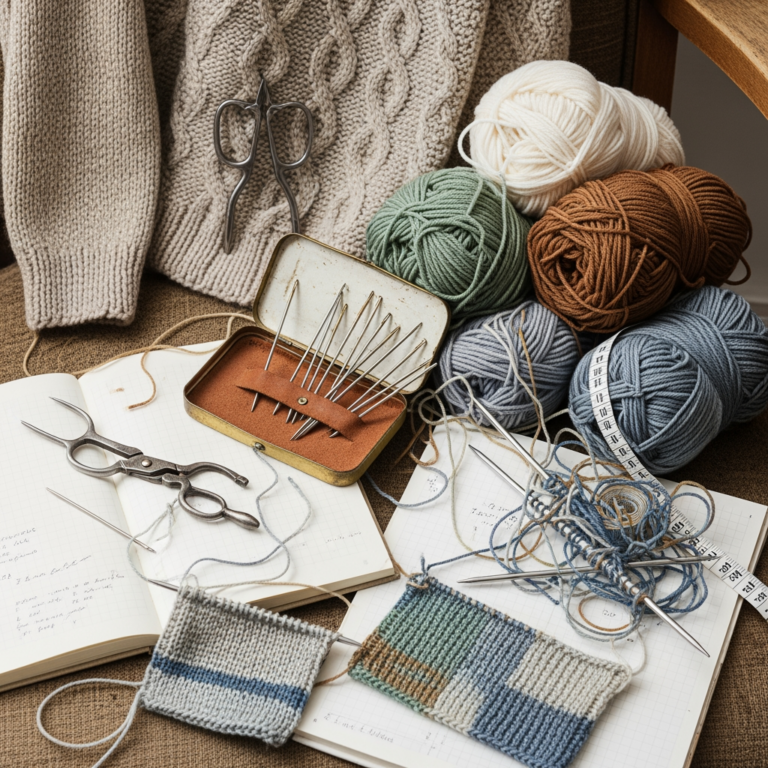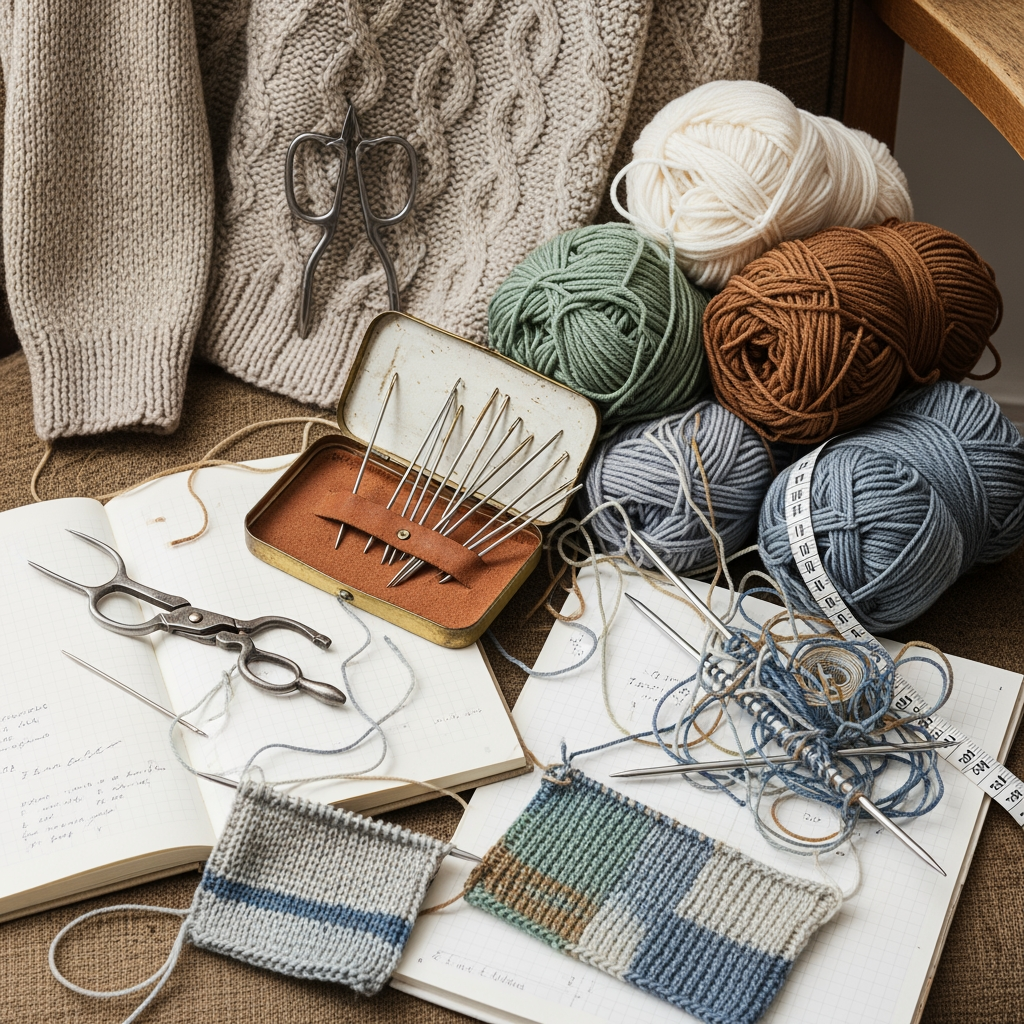
6 Best Needle Threaders For Vision Support To Try
Struggling with eye strain? Explore our top six needle threader picks designed for precision, ease of use, and optimal vision support for every crafter.
Struggling to thread a needle is one of the most frustrating barriers to starting a new project, especially when your eyes grow tired after a long day of knitting. Whether you are working with fine lace-weight yarn or trying to weave in ends on a bulky sweater, precision is non-negotiable. The right tool can turn a tedious chore into a seamless transition, keeping your creative momentum alive. This guide highlights the best needle threaders designed to support those who need a little extra help with visibility and dexterity.
Clover Desk Needle Threader: Best for Stability


If you suffer from hand tremors or simply find it difficult to hold a tiny needle steady, this desk-mounted unit is a game-changer. It sits firmly on your workspace, allowing you to focus your energy on the thread rather than balancing the needle in mid-air.
The mechanism is simple: you place the needle into the slot, lay your thread across the guide, and press a button. It is particularly helpful when you are working with tapestry needles for weaving in ends on a finished project, where the eye is often small and the yarn is thick.
While it is a larger tool that takes up space on your crafting table, the trade-off is unmatched stability. It removes the "fumble factor" entirely, making it ideal for long sessions of finishing work.
Dritz Deluxe Needle Threader: Best for Versatility

The Dritz Deluxe is a classic for a reason, offering a dual-sided design that handles a wide range of needle sizes. It is the "Swiss Army knife" of threaders, perfect for the knitter who switches between delicate embroidery needles and sturdy darning needles.

This tool features a built-in magnifying lens, which is a massive help when you are working under dim lighting. If you are trying to thread a needle while sitting on the couch in the evening, that extra bit of magnification can save you from significant eye strain.
However, because it is a mechanical device, it can be delicate; avoid forcing the thread if you feel resistance. Treat it with care, and it will remain a reliable staple in your notions bag for years.
Singer Automatic Needle Threader: Best for Speed
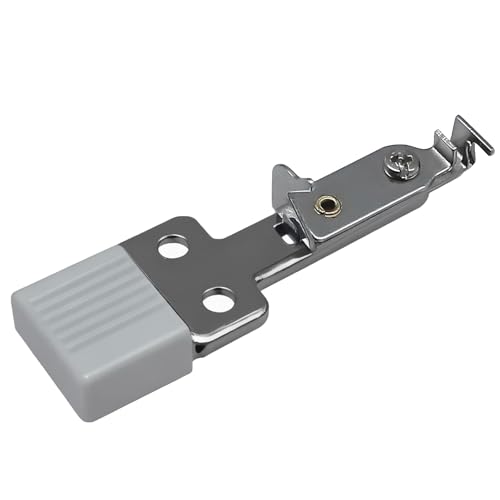
When you are in the middle of a complex colorwork project and just need to secure a loose end, you don’t want to spend ten minutes squinting at a needle eye. The Singer Automatic threader is built for efficiency, grabbing the thread and pulling it through in a fraction of a second.
It works exceptionally well with standard sewing needles and smaller tapestry needles commonly used for grafting or seaming. The design is compact enough to throw into a project bag, making it a great companion for travel knitting.
Keep in mind that this tool is best suited for standard thread or thin yarn. If you are trying to force a thick, multi-ply wool through a tiny eye, the mechanism may struggle, so always match your needle size to your yarn weight.
Bohin Extra Fine Threader: Best for Tiny Eyes

If you frequently work with fine-gauge knitting—think lace shawls or intricate socks—you know the pain of needles with microscopic eyes. The Bohin Extra Fine threader is specifically engineered for these tight spaces where standard wire threaders simply won’t fit.
The wire on this tool is incredibly thin yet surprisingly durable, allowing it to pass through the smallest needle eyes without bending or breaking. It is a specialized tool, but for the knitter who loves fine detail, it is an absolute necessity.
Because the wire is so fine, it can be easy to lose in a pile of yarn scraps. I recommend attaching a small ribbon or a bright bead to the handle so you can always find it at the bottom of your notions tin.
Colonial Needle Threader: Best for Ergonomics
Hand fatigue is a real issue for knitters, and adding a tiny, thin threader to the mix can feel like a chore. The Colonial Needle Threader features a larger, grippable handle that makes it much easier to hold, especially for those with arthritis or limited grip strength.
The ergonomic shape allows you to maintain control without needing to pinch your fingers tightly. It feels substantial in the hand, which provides the confidence needed to complete finishing tasks without frustration.
It is a simple, no-nonsense tool that prioritizes comfort over complex mechanics. If you want something that "just works" without a steep learning curve, this is the one to reach for.
Susan Bates Fast Threader: Best for Beginners

For those just starting their knitting journey, the Susan Bates Fast Threader offers a straightforward, intuitive design. It eliminates the guesswork, guiding the thread into the eye with a clear, visual path that is easy to see even if your vision isn’t what it used to be.
It is lightweight and inexpensive, making it a low-risk investment for a beginner’s kit. You won’t have to worry about complex settings or fragile parts; it is designed to be durable enough for daily use.
While it may not have all the bells and whistles of a desk-mounted unit, its simplicity is its greatest strength. It is the perfect tool to keep in your primary knitting bag for quick repairs on the go.
How to Choose a Threader for Low Vision Needs
When choosing a threader, consider the primary type of needle you use. If you mostly use bent-tip tapestry needles for seaming, you need a threader with a flexible wire or a wide slot.
- Look for high-contrast colors: Tools with bright handles are easier to spot against dark yarn or dim lighting.
- Prioritize grip: If your hands are tired from knitting, choose a tool with a larger handle.
- Consider magnification: If you have trouble focusing, a threader with a built-in lens is non-negotiable.
Don’t be afraid to try a few different styles. What works for a sweater-knitter using worsted weight yarn will be vastly different from what a lace-knitter needs for fine finishing.
Tips for Threading Needles Without Eye Strain
Beyond using a tool, you can reduce eye strain by changing your approach to the task. First, always provide a high-contrast background; place your needle over a white piece of paper if the needle is dark, or a dark piece of fabric if the needle is silver.
- Take breaks: If you have been knitting for hours, your eyes are likely fatigued. Step away for five minutes before attempting to thread a needle.
- Use the "thread-to-needle" method: Instead of moving the needle around, hold the needle steady and move the thread toward it.
- Trim your yarn: A frayed yarn end is nearly impossible to thread. Use sharp embroidery scissors for a clean, crisp cut.
Consistency is key. By setting up your workspace to minimize visual clutter, you make the threading process far less taxing on your eyes.
Essential Lighting Tools for Improved Precision
Even the best threader won’t help if you are working in the dark. As knitters, we often gravitate toward cozy, dim corners, but our eyes need bright, focused light to handle fine details like threading needles.
- Neck lights: These are excellent because they move with you, ensuring the light is always directed exactly where your hands are working.
- Magnifying lamps: A desk lamp with a built-in magnifying glass is the gold standard for detailed finishing work.
- Daylight bulbs: Ensure your lamps use "daylight" or "full-spectrum" bulbs to help distinguish between colors and reduce glare.
Investing in proper lighting is just as important as investing in quality needles. It will extend your ability to knit comfortably for years to come.
Maintaining Your Needle Threading Accessories
Needle threaders are small tools, but they are essential for your workflow. Keep them clean by wiping them occasionally with a soft cloth to remove dust or lint that can accumulate in the delicate wire mechanisms.
Store them in a dedicated notions case rather than loose in your project bag. This prevents the delicate wires from getting snagged on your yarn or bent by heavier items like scissors or crochet hooks.
If a wire threader starts to lose its shape, don’t try to force it. It is usually time to replace it; keeping a few spares on hand ensures you never have to pause your project because of a broken tool.
Finding the right needle threader is about removing the obstacles that stand between you and your finished project. By choosing a tool that matches your specific needs—whether that is stability, ergonomics, or magnification—you can protect your vision and keep your focus on the joy of knitting. Experiment with these options to find your perfect match, and remember that the right tool is the one that makes your craft feel effortless. Happy knitting, and may your ends always be easy to weave in.