7 Best Silicone Grips For Metal Needles To Try
Struggling with slippery metal needles? Discover our top 7 silicone grips that enhance comfort, reduce hand fatigue, and improve control for every knitter.
Metal needles are beloved for their speed and durability, but their slick surfaces can lead to hand fatigue and dropped stitches during long sessions. Adding a silicone grip provides the necessary friction to keep your hands relaxed and your tension consistent. Finding the right grip is a game-changer for knitters who struggle with slippery aluminum or stainless steel tools. Here are seven options to help you customize your favorite needles for a more comfortable knitting experience.
Clover Soft Touch Needle Grips: Best Overall


Clover’s approach to ergonomics is legendary for a reason, and their silicone grips are no exception. These are designed with a contoured, cushioned profile that fits naturally into the palm, reducing the "death grip" many knitters develop when working with thin metal needles.
The material is soft yet remarkably durable, holding its shape even after months of heavy use. Because they are slightly thicker than basic rubber sleeves, they provide a significant boost in comfort for those suffering from arthritis or repetitive strain.
If you are working on a massive project like a king-sized blanket, these grips act as a stabilizer for your hands. They are the gold standard for versatility, fitting a wide range of needle diameters without feeling bulky or intrusive.
Susan Bates Needle Ease Silicone Grippers

Susan Bates has long been a staple in the knitting world, and their Needle Ease grippers reflect a focus on pure utility. These are thinner and more minimalist than other options, making them ideal for knitters who don’t want to change the "feel" of their needle too drastically.
These grippers are particularly effective for preventing needle rotation while you work. If you find yourself constantly adjusting your hold because the needle keeps spinning in your fingers, the textured surface of these grippers provides just enough resistance to keep things steady.
They are an excellent choice for beginners who are still refining their hand position. By providing a subtle tactile anchor, they help you maintain a consistent grip without needing to squeeze the needle tightly.
Addi Needle Grips for Metal Needle Surfaces

Addi is known for precision engineering, and their grip solutions are tailored specifically for their own high-polish nickel and brass finishes. These grips are designed to withstand the slickness of high-end metal, ensuring they don’t slide off mid-row.
The material is slightly tacky, which is a lifesaver when working with slippery silk or rayon yarns. These fibers are notorious for sliding off metal needles, and these grips help you maintain the control necessary to manage such delicate materials.
Be aware that these are designed for specific diameter ranges. Always double-check your needle size before purchasing, as a loose grip will cause more frustration than no grip at all.
Boye Ergonomic Needle Gripping Sleeves

Boye sleeves are often found in starter kits, but they are a surprisingly robust solution for any knitter. They feature a simple, tubular design that slides over the needle shaft to provide a wide, soft surface area for your fingers to rest against.
These are perfect for long-term projects where hand fatigue is the main enemy. Because they cover a larger portion of the needle, they allow you to shift your hand position slightly as you knit, preventing localized soreness.
They are also incredibly easy to clean. If you knit with hand-dyed wool that releases excess dye or oils, a quick wipe with a damp cloth keeps these grips clean and tacky for the next session.
Knitter’s Pride Silicone Needle Cushions

Knitter’s Pride offers a solution that focuses on pressure distribution. These cushions are slightly denser than standard silicone, which provides a firmer surface for your fingertips to press against during complex cable work.
Cables require you to maneuver needles in tight spaces, often putting extra stress on your thumb and index finger. These cushions act as a buffer, absorbing the pressure that would otherwise dig into your skin during a long cable-heavy pattern.
They are best suited for knitters who prefer a firmer, more tactile feedback from their tools. They don’t compress as much as softer rubber, giving you a more grounded feel while you work.
HiyaHiya Needle Grips for Smooth Surfaces
HiyaHiya needles are famous for being exceptionally slick, which is great for speed but tough on grip. Their dedicated silicone grips are engineered to counteract this smoothness without adding unnecessary weight to your project.
These grips are particularly useful if you are a "tight" knitter who tends to pull the yarn firmly against the needle. The added friction helps you slide stitches across the needle shaft more smoothly, preventing the "tug-of-war" that can happen with high-tension knitting.
They are remarkably low-profile. If you prefer the look and feel of a sleek metal needle but need just a tiny bit of extra purchase, these are the most discreet option on the market.
Tulip Etimo Needle Grip Assistive Tools
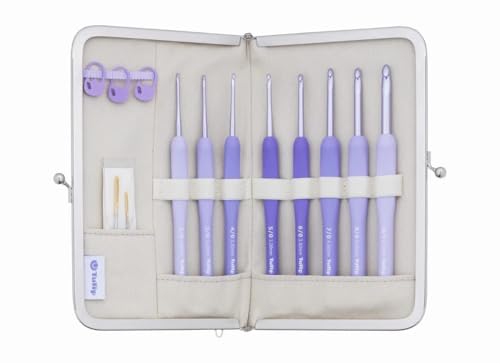
Tulip is renowned for their ergonomic crochet hooks, and they have brought that same level of anatomical consideration to their knitting accessories. These grips are shaped to encourage a relaxed, open hand position.
These are the most "sculpted" options available, designed to fill the hollow of your palm. If you struggle with hand cramping during lace knitting, where you have to hold very thin needles for extended periods, this added volume is a literal relief.
While they are a higher investment than basic silicone sleeves, the ergonomic payoff is significant. They transform the experience of using thin metal double-pointed needles or circulars, making them feel much more substantial in the hand.
Why Metal Needles Benefit From Extra Grip
Metal needles are the preferred choice for many because they allow for rapid stitch movement. However, that lack of friction comes at a cost: your muscles have to work harder to keep the needles from sliding out of your grip.
When you add a silicone grip, you are essentially reducing the amount of force required to hold the needle steady. This is a critical adjustment for anyone prone to repetitive strain injuries or those who knit for hours at a time.
Furthermore, metal is a cold material. Silicone grips provide a small thermal barrier, making the needles feel warmer and more comfortable in your hands during long winter knitting sessions.
How to Apply Silicone Grips Without Damage
The most common mistake when applying silicone grips is using force or sharp objects. Always ensure the needle is clean and dry before sliding the grip on; any residual hand lotion or oil can make the grip slide around later.
If the grip is tight, a tiny drop of water or a light dusting of cornstarch can help it slide into place. Once the moisture evaporates, the grip will lock onto the metal surface securely.
Avoid using oils or silicone-based lubricants, as these will never fully dry and will cause the grip to slip indefinitely. If you need to move the grip, simply twist it gently while pulling; never yank, as this can stretch the silicone and ruin its fit.
Troubleshooting Common Grip Slippage Issues
If your grip keeps sliding down the needle, it is almost always a sign that the diameter is slightly too large. You can often fix this by wrapping a small piece of medical tape or masking tape around the needle shaft to create a "stopper" for the grip to rest against.
If the grip itself has become slick due to dust or lint, a gentle wash with mild dish soap will restore its natural tackiness. Avoid harsh chemicals or alcohol, which can cause the silicone to degrade or become brittle over time.
Finally, remember that silicone is a flexible material. If a grip has stretched out after years of use, it is time to replace it rather than trying to force it to work. A fresh grip is a small price to pay for continued comfort and pain-free knitting.
Finding the right silicone grip is a personal journey that depends on your hand size, your knitting style, and the specific needles you use. By choosing the right level of cushion and friction, you can turn even the slickest metal needles into comfortable, reliable tools. Don’t be afraid to experiment with different brands until you find the one that makes your hands feel best. Happy knitting, and may your stitches always be smooth and your hands remain pain-free.