6 Best Tassel Makers For Adding Decorative Flair
Elevate your textile projects with our top six tassel makers. This guide explores the best tools to create consistent, decorative flair for any craft item.
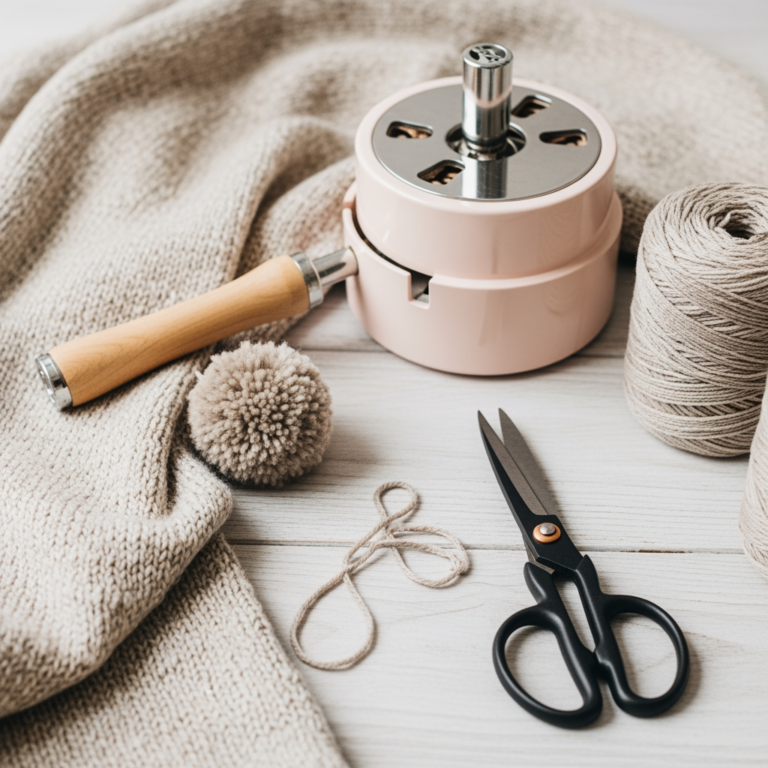
Tassels are the unsung heroes of fiber arts, capable of transforming a simple knitted scarf or a plain throw pillow into a polished, boutique-quality piece. Achieving that perfect, uniform drape requires more than just wrapping yarn around your hand; it demands precision and consistency. Whether you are finishing a heavy wool blanket or adding delicate silk accents to a shawl, the right tool makes all the difference. This guide will help you navigate the best tassel makers on the market to ensure your finishing work looks as professional as your stitches.
Clover Tassel Maker: Best Overall for Versatility


The Clover Tassel Maker is a staple in my notions bag because it handles a massive range of sizes with absolute consistency. It features an adjustable design that allows you to create tassels from 1-1/4 inches up to 4 inches, making it a true workhorse for any project.
Because it is made of smooth, high-quality plastic, yarn slides off effortlessly during the assembly process. This is a huge advantage when working with sticky fibers like mohair or high-twist wools that tend to snag on rougher surfaces.
The tradeoff here is the learning curve; the sliding mechanism requires a firm hand to lock into place. However, once you master the tension, you will never go back to using a piece of cardboard.
Loome Tool: Best for Multi-Craft Fiber Projects
If you are the type of maker who dabbles in weaving, pom-poms, and macramé alongside your knitting, the Loome is a dream. It is a multi-functional wooden tool that functions as a loom, a tassel maker, and a pom-pom maker all in one.
Its compact, minimalist design appeals to those of us who hate cluttering our workspace with single-use plastic tools. Because it is made of wood, it has a lovely, tactile feel that plastic simply cannot replicate.
Be aware that because it is a multi-purpose tool, it lacks the specific "guides" that dedicated tassel makers have. It requires a bit more manual dexterity to keep your yarn wraps perfectly aligned.
Susan Bates Tassel Tool: Best Budget-Friendly Pick

Sometimes you just need a simple tool that gets the job done without any bells and whistles. The Susan Bates tool is an affordable, no-nonsense plastic frame that is perfect for beginners who are just starting to experiment with decorative finishes.
It is lightweight and nearly indestructible, making it a great choice to toss into a project bag for on-the-go crafting. It doesn’t have the adjustable features of more expensive models, but it provides a reliable, fixed size that works for most standard fringe applications.
Don’t let the low price point fool you into thinking it is "cheap" or ineffective. It provides the exact same structural integrity as higher-end tools, provided your yarn weight remains consistent.
Beadsmith Tassel Maker: Best for Precise Jewelry
When you move into the realm of fine-gauge threads, metallic embroidery floss, or silk, standard tassel makers are often too bulky. The Beadsmith tool is specifically engineered for finer work, allowing for the tight, delicate wraps required for jewelry and ornament making.
The precision of this tool ensures that your "head" or knot area is compact and clean. This is critical when you are attaching tassels to delicate crochet edgings or beaded jewelry where a bulky knot would look out of place.
If you are working with heavy, worsted-weight wool, this tool will likely be too small for your needs. It is best reserved for those fine-finishing touches that elevate a garment to a professional level.
ArtBin Tassel Maker: Best for Large Scale Decor
When I am finishing a chunky, oversized throw blanket, I need a tassel that makes a statement. The ArtBin maker is robust and designed to handle the volume of yarn required for heavy-duty, large-scale tassels.
The wider frame accommodates thicker yarn weights, such as super-bulky roving or multi-strand blends, without feeling cramped. This is essential for maintaining a consistent "fullness" in your tassels, which can look straggly if you don’t use enough fiber.
The size of this tool means it isn’t ideal for delicate accessories. However, for home decor projects, its sturdy construction is unmatched.
Darice Tassel Maker: Best for Simple Quick Tasks
The Darice tool is the quintessential "quick fix" tool for when you have a deadline and need a tassel fast. It is intuitive, straightforward, and requires zero setup time, which is perfect for when you are finishing a gift at the eleventh hour.
It is particularly useful for teaching children or beginners how to make their first tassel. The simple design removes the intimidation factor often associated with complex fiber tools.
Because it is a basic frame, you are limited to the specific sizes provided. It is a great entry-level tool, but you may find yourself outgrowing it as your projects become more complex.
How to Choose the Right Tassel Maker for Your Yarn
Choosing the right tool is entirely dependent on the weight and texture of your yarn. A thin, slippery silk thread will behave very differently than a rustic, high-twist Highland wool.
- For Fine Threads: Look for tools with narrow channels to keep the wraps tight.
- For Bulky Yarns: Ensure the tool has a wide enough gap to accommodate the thickness without forcing the wraps.
- For Novelty Yarns: Use tools with smooth, non-porous surfaces to prevent snagging on sequins or eyelash fibers.
If you are working with a superwash wool, remember that it tends to be heavier and "drapier" than non-superwash. You will need a sturdier tool to hold the weight of the yarn while you secure the knot.
Essential Materials for Professional-Grade Tassels
Beyond the tool itself, your choice of materials determines the longevity of your tassel. I always recommend using a strong, non-stretchy cord or a matching yarn strand for the "tie-off" knot to ensure it doesn’t loosen over time.
- Tapestry Needle: Essential for weaving in ends securely inside the tassel head.
- Sharp Scissors: Use dedicated fabric shears; dull blades will fray the yarn ends and ruin the look.
- Steamer: A quick blast of steam can help settle the fibers and make them hang straight.
Avoid using cotton thread for the tie-off if the tassel is heavy, as it may snap under tension. Stick to a high-twist wool or nylon-blend thread for maximum durability.
Step-by-Step Guide to Securing Your Tassel Knots
The secret to a professional tassel is the "choker" knot that forms the neck. You want this to be tight enough to compress the fibers but not so tight that it breaks the yarn.
- Wrap your yarn around the tool until you reach the desired fullness.
- Use a separate, strong length of yarn to tie a tight "choker" around the top bundle before removing it from the tool.
- Once the bundle is off the tool, wrap that same strand multiple times around the neck and secure it with a double knot.
- Thread the ends of the tie-off yarn into the center of the tassel using a tapestry needle to hide them completely.
Never rely on a simple overhand knot on the outside of the tassel. It will eventually unravel with use, especially on items like pillows or scarves that see a lot of movement.
Expert Tips for Trimming Tassels for Even Edges
Even the most careful wrapping can result in slightly uneven ends. To get that "fresh from the salon" look, you must trim your tassels with intention.
Lay your tassel flat on a cutting mat and use a clear acrylic ruler to mark a straight line across the ends. Use a rotary cutter if you have one, as it provides a much cleaner edge than scissors on thicker yarn bundles.
If you are nervous about cutting too much, start conservatively. You can always trim more, but you can never add length back once the fibers are shorn.
Mastering the art of the tassel is a simple way to add a signature touch to your hand-knits. By choosing the right tool for your specific fiber weight and following a few professional finishing techniques, you can ensure your work stands the test of time. Don’t be afraid to experiment with different yarn textures to see how they drape and settle. Happy making, and may your tassels always hang perfectly straight.