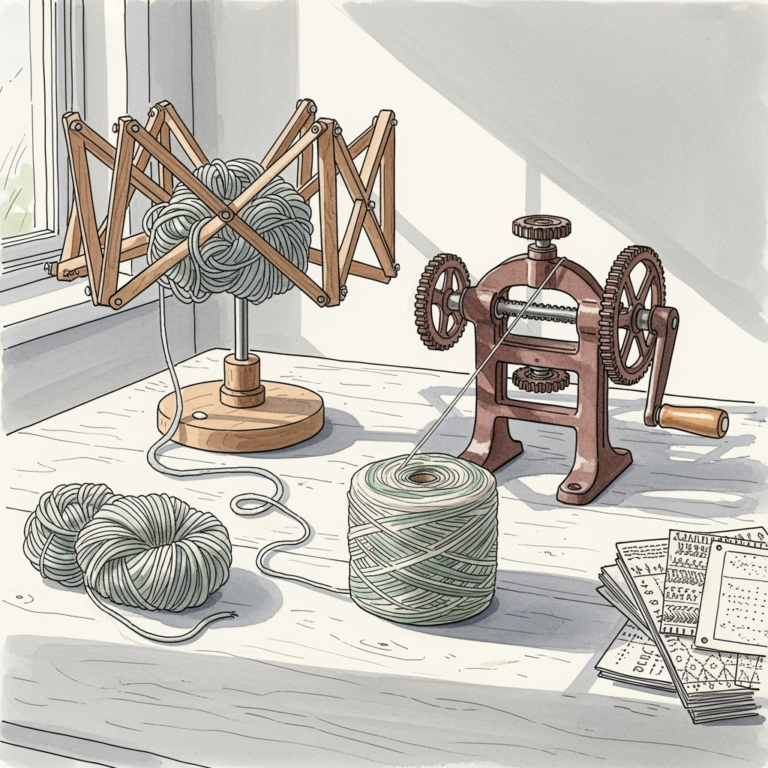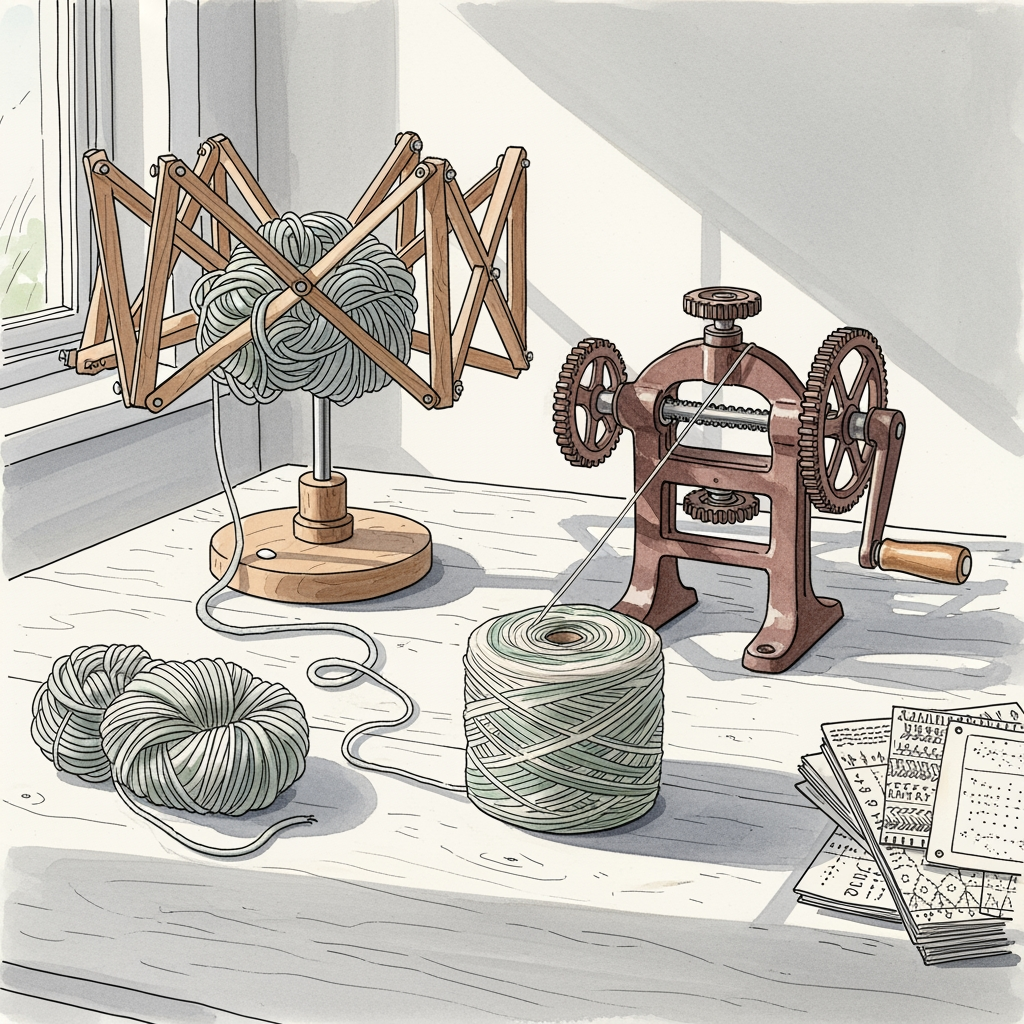
6 Best Winding Kits For Beginner Stash Organization
Organize your yarn stash easily with these 6 top-rated winding kits. Our guide explores the best beginner-friendly tools to keep your skeins neat and tangle-free.
Transitioning from tangled hanks to neat, center-pull cakes is a rite of passage that every serious knitter must eventually undertake. A good yarn winder transforms your stash from a chaotic pile of yarn barf into an organized, professional-looking library of fibers. By investing in the right equipment early, you save yourself hours of tedious detangling and protect your yarn from unnecessary stress. This guide breaks down the best tools to help you curate your stash with confidence and ease.
Stanwood Needlecraft Large Metal Yarn Ball Winder


If you have ever tried to wind a bulky-weight wool or a large skein of superwash merino by hand, you know the frustration of a plastic winder struggling under the weight. The Stanwood Large Metal winder is the gold standard for those who want a tool that doesn’t feel like a toy. Its heavy-duty metal gears provide a smoothness that plastic alternatives simply cannot replicate.
The primary advantage here is the metal gear construction, which prevents the stripping issues common in cheaper models. When you are winding a 400-yard hank of lace-weight mohair, you need consistent tension and a steady spin. This unit handles high-volume winding without wobbling or skipping, making it a reliable workhorse for your studio.
However, keep in mind that this is a larger piece of equipment that requires a sturdy table edge. If your craft space is a tiny corner of a coffee table, the footprint might feel a bit overwhelming. The bottom line: this is an investment piece for the knitter who knows they will be building a long-term stash.
KnitPicks Yarn Ball Winder: Best Budget Choice
For the beginner who is just starting to accumulate hanks and isn’t ready to drop a significant amount of money, the KnitPicks winder is a fantastic entry point. It is lightweight, portable, and surprisingly capable for its price bracket. It gets the job done for standard-sized skeins of worsted or DK weight yarn.
The trade-off for the lower price is the plastic gear assembly, which can be sensitive to aggressive cranking. If you try to force a massive, 200-gram skein onto this winder, you might find the gears protesting. It is best suited for standard 50-100 gram hanks that don’t require heavy-duty torque.
Think of this as your "starter" tool; it’s perfect for learning the mechanics of winding without a major financial commitment. Once you master your tension control, you can decide if you need to upgrade later. For most casual knitters, this unit will serve faithfully for years.
Lacis Wooden Yarn Ball Winder: Elegant Design
There is something undeniably satisfying about using tools made from natural materials rather than molded plastic. The Lacis wooden winder is a beautiful addition to any knitting nook, offering a vintage aesthetic that looks lovely even when sitting on a shelf. It functions as a piece of decor as much as a utility item.

Beyond the looks, the wooden construction offers a different tactile experience. It feels substantial in the hand and operates with a quiet, grounded rhythm. It is a great choice for the knitter who appreciates the "slow craft" movement and wants their tools to reflect that ethos.
Be aware that wooden gears can be slightly more temperamental than metal regarding humidity and temperature changes. You may need to occasionally apply a tiny bit of wax to the gears to keep them gliding smoothly. If you value craftsmanship and longevity, this is a wonderful, heirloom-quality choice.
Nancys Knit Knacks Heavy Duty Yarn Winder
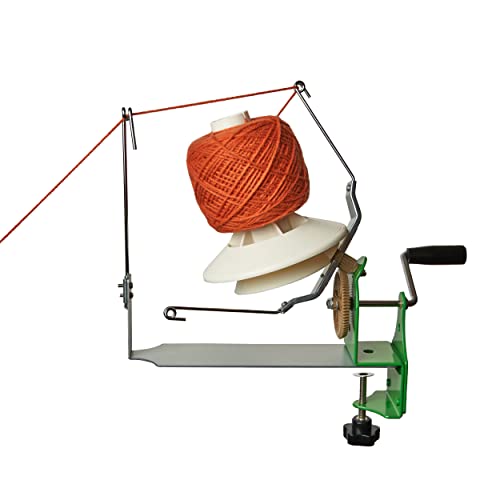
When you are dealing with expensive, hand-dyed luxury fibers like silk or cashmere, you do not want to risk a winder that jams or snags. Nancys Knit Knacks is renowned for engineering tools that prioritize the safety of the yarn above all else. Their heavy-duty winder is built to withstand years of daily use in a busy studio.
This model is particularly adept at handling varied yarn weights, from delicate cobweb lace to heavy, multi-ply aran weight. It features a robust design that minimizes the risk of the yarn slipping under the spool or tangling in the gears. It is essentially the professional-grade option for the dedicated home knitter.
The weight and size of this unit mean it stays put on your table without constant adjustment. While it is more expensive, the peace of mind it provides when winding a $40 skein of artisan wool is well worth the cost. It is a "buy it once, use it forever" kind of tool.
U-nitt Hand Operated Yarn Winder for Beginners

Sometimes you just need a straightforward, no-nonsense tool that works right out of the box. The U-nitt winder is designed for simplicity, making it an excellent choice for someone who finds complex gadgets intimidating. It features a clear, intuitive setup that allows you to start winding within minutes of opening the package.
The design is compact and efficient, making it easy to store in a project bag or a small drawer. It handles standard yarn weights with ease and provides a nice, even tension for most common knitting projects. It is a utilitarian tool that respects the beginner’s need for clarity and ease of use.
One thing to watch for is the table clamp; ensure it is tightened securely before you begin. If the base shifts, your yarn cake will turn out lopsided, which can cause tangles later. For the price, it is an incredibly reliable tool that simplifies the winding process without any unnecessary bells and whistles.
ChiaoGoo Hand-Operated Yarn Winder and Swift

Buying a winder and a swift together in a set is often the smartest move for a beginner. A winder is useless without a swift to hold the hank, and ChiaoGoo offers a high-quality pairing that ensures compatibility. This setup is designed to work in perfect harmony, reducing the likelihood of tension issues.
The swift is the umbrella-style tool that holds your hank open while the winder pulls it into a cake. By buying them as a set, you eliminate the guesswork of whether the tension settings will align. ChiaoGoo is a brand known for precision, and that attention to detail carries over into their winding equipment.
This is the ultimate "all-in-one" solution for someone building their stash from scratch. You get a consistent, professional result every time, which is essential for maintaining the integrity of your yarn. If you are serious about your knitting, this is the most efficient way to get your organizational system up and running.
Why Every Beginner Needs a Dedicated Yarn Winder
Many beginners start by winding yarn into balls by hand, but this often stretches the fibers. When you pull yarn from the center of a hand-wound ball, it can become tangled or lose its original elasticity. A dedicated winder creates a "cake" that pulls from the center, keeping the yarn relaxed and tangle-free.
Using a winder also allows you to inspect your yarn for knots, breaks, or inconsistencies in the ply. As you feed the yarn through the winder, you can catch manufacturing defects before you spend hours knitting them into a garment. It is a proactive quality control step that saves you from potential heartache later.
Furthermore, center-pull cakes are much easier to store and stack in your stash. They don’t roll away under the couch, and they take up less physical space than loose hanks. Investing in a winder is an investment in the longevity and organization of your entire fiber collection.
How to Properly Use a Swift With Your New Winder
A swift is essentially a rotating frame that holds your hank of yarn in a circle so it can be wound off smoothly. To use it, you must first remove the ties from your hank—but do this carefully! Keep the yarn loops intact so they don’t tangle before you get them onto the swift.
Place the hank over the swift, then expand the arms until the yarn is taut but not stretched. If the yarn is too loose, it will fall off; if it is too tight, you risk stretching the fiber, which can ruin your gauge. Always ensure the swift is positioned directly in front of the winder for a straight, even feed.
Once set up, use one hand to guide the yarn gently and the other to turn the winder handle at a steady, rhythmic pace. Don’t rush the process; a consistent speed is the secret to a perfect, professional-looking cake. If the swift starts to spin too fast, simply slow your winding hand to regain control.
Essential Tips for Maintaining Your Winding Tools
Like any mechanical device, your yarn winder requires a little bit of care to keep it running smoothly. Periodically check the gears for any stray bits of fiber or dust that might have accumulated. Use a soft brush or a blast of compressed air to clear out the mechanism to prevent jamming.

If your winder starts to sound "crunchy" or feels resistant, a tiny drop of sewing machine oil on the moving parts can work wonders. Be extremely careful not to get any oil on the parts that touch the yarn, as this could stain your fibers. A little maintenance goes a long way in ensuring your winder lasts for years.
Finally, always store your winder in a dry, cool place when not in use. Extreme temperatures can warp plastic components or cause metal to oxidize. By treating your tools with respect, you ensure they remain reliable partners in your knitting journey.
Troubleshooting Common Yarn Winding Tension Issues
If your yarn cakes are coming out lopsided or "mushy," the issue is almost always a tension problem. This usually happens when the yarn is being fed into the winder too loosely or at an inconsistent speed. Try holding the yarn taut between your fingers before it enters the winder guide to create even resistance.
Another common issue is the yarn slipping off the base of the spool. This often happens if you are winding too fast or if the yarn is too slick, like a high-twist mercerized cotton. Slowing down your pace and ensuring the yarn guide is positioned correctly will usually solve this immediately.
If you find that your yarn is snapping during winding, check for snags in the swift or the winder’s guide. Sometimes, a tiny burr on a plastic part can catch the fiber and cause it to break. A quick polish with a fine-grit sandpaper can smooth out those rough spots and get you back to winding in no time.
Building a well-organized stash is a rewarding process that makes every future project feel more accessible and enjoyable. By choosing a winder that fits your specific needs—whether it’s a budget-friendly starter or a professional-grade metal model—you are setting yourself up for knitting success. Remember that tools are meant to serve your creativity, so take the time to learn their quirks and maintain them well. Happy winding, and may your yarn cakes always be perfectly tensioned and tangle-free.