6 Best Knitting Thimbles For Guiding Metallic Strands
Master metallic knitting with our top six thimbles. Discover how these essential tools prevent fraying and ensure smooth, consistent tension for your projects.
Knitting with metallic strands adds a sophisticated, luminous quality to any project, but it often comes with the frustration of uneven tension and abrasive fibers. These specialized yarns can easily cut into your skin or tangle, making a reliable knitting thimble an essential part of your toolkit. By guiding these slippery, often delicate strands through a dedicated tool, you gain the control necessary to maintain consistent gauge. This guide explores the best options to help you master the shimmer without the struggle.
Clover Adjustable Ring: Best Overall Choice


The Clover Adjustable Ring is a staple in many knitting bags for a reason: it balances versatility with a design that fits almost any finger size. Its open-loop construction allows you to bend the metal to fit your specific knuckle, ensuring it stays in place during long sessions of stranded colorwork.
Because metallic yarns can be notoriously slippery, the smooth, rounded guide on this ring prevents the strand from catching or fraying as it feeds into your work. It is particularly effective for those who switch between different weights of yarn, as the ring doesn’t trap the fiber in a fixed-size hole.
The primary trade-off is that the metal can feel slightly rigid if you have sensitive joints. However, for most knitters, the ability to adjust the tension by slightly bending the guide wire makes it the most reliable "set it and forget it" tool for metallic blends.
Prym Knitting Thimble: Best for Comfort
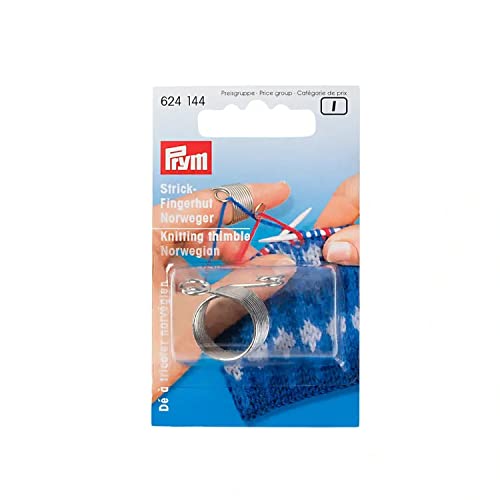
If you find that metal rings dig into your skin during a long afternoon of knitting, the Prym Knitting Thimble offers a much softer approach. It features a plastic, ergonomic design that sits comfortably on the fingertip, acting as a shield against the abrasive nature of metallic filaments.
This thimble is ideal for knitters who struggle with the "yarn burn" that occurs when metallic threads slide rapidly across the skin. The guide itself is well-integrated into the plastic housing, providing a smooth path for the yarn without the sharp edges sometimes found on cheaper metal alternatives.
While it lacks the infinite adjustability of a wire ring, its contoured shape is designed to stay put without needing to be cinched tight. It is a fantastic choice for those who prioritize hand health and comfort over the ability to customize the fit of the tool itself.
Tulip Yarn Guide: Best for Precision
Tulip is renowned for its high-quality manufacturing, and their yarn guide is no exception for knitters who demand absolute precision. This tool features a refined, polished surface that ensures metallic strands glide through with zero friction, which is vital when working with delicate, high-end metallic lace.
The precision of the guide ensures that your yarn is delivered to the needle at the exact same angle every time. This consistency is the secret to avoiding the "laddering" or uneven tension that often plagues projects using metallic-synthetic blends.
Because it is a more specialized tool, it may take a few rows to get used to the positioning on your finger. However, once you find the "sweet spot," you will notice a significant improvement in the uniformity of your stitches, especially in complex cable or lace patterns.
Susan Bates Yarn Ring: Best Budget Pick

The Susan Bates Yarn Ring is the quintessential "no-frills" tool that gets the job done without breaking the bank. It is a simple, lightweight metal ring with a small loop that keeps your metallic strand separated from your main yarn, preventing tangles during colorwork.
If you are a beginner looking to experiment with metallic yarns for the first time, this is an excellent, low-risk investment. It is easy to slide on and off, and it performs exactly as expected for basic stranded knitting or holding a single metallic strand alongside a wool base.
Keep in mind that because it is a basic design, it lacks the sophisticated tension-adjusting features of more expensive models. It is best suited for knitters who already have a decent grasp of their own tension and just need a little help keeping their yarns organized.
Lacis Metal Thimble: Best for Durability

Lacis tools are built to last, and their metal thimble is a robust option for the knitter who wants a tool that will survive decades of heavy use. Constructed from sturdy, high-grade metal, this thimble is resistant to bending and maintains its shape even after years of being stored in a crowded project bag.
This durability is particularly helpful when working with metallic yarns that have a high "memory" or stiffness. The tool provides a firm, stable anchor point that allows you to pull the yarn through with confidence, knowing the guide won’t deform under pressure.
Because of its rigid construction, it is less "forgiving" than the adjustable wire rings if your finger size fluctuates. However, if you are looking for a permanent addition to your knitting kit that won’t require replacement, the Lacis thimble is a professional-grade choice.
KnitPro Yarn Guide: Best for Tension

The KnitPro Yarn Guide stands out for its unique design that allows for better control over tension, which is the biggest hurdle when working with metallic fibers. By providing a structured path for the yarn, it helps you maintain a consistent pull, preventing the metallic strand from bunching up or snapping.
This guide is particularly useful for knitters who tend to knit tightly, as it helps distribute the tension more evenly across the yarn strand before it reaches the needle. It effectively acts as a secondary "finger," taking the strain off your own skin and providing a smoother delivery system.
While it may look slightly more complex than a simple ring, the learning curve is short. It is a highly effective tool for anyone who finds that their metallic-infused projects end up with uneven, distorted stitches due to inconsistent tensioning.
Why Metallic Strands Require Special Tools
Metallic yarns are often composed of a core fiber wrapped in a thin, flat metallic film. This structure makes them prone to splitting, fraying, and snapping if they are subjected to excessive friction or sharp needle tips.
Using a thimble acts as a buffer between your skin and the yarn, preventing the metallic edge from cutting into your finger. Furthermore, these tools help manage the "springiness" of the yarn, ensuring that the metallic component doesn’t pop out of the stitch pattern.
- Friction reduction: Guides provide a smooth surface for the yarn to slide over.
- Tension stability: Prevents the metallic strand from being pulled too tightly.
- Finger protection: Shields the skin from the abrasive nature of metallic filaments.
How to Prevent Metallic Yarn From Snagging
The most common cause of snagging is the interaction between the metallic strand and the wood or bamboo of your knitting needles. If you are using metallic yarn, consider switching to slick, nickel-plated or stainless steel needles to allow the yarn to glide more freely.

Additionally, always ensure your yarn guide is free of any burrs or rough spots. Even a tiny imperfection in a metal thimble can catch the flat metallic film, causing it to unravel or break mid-row.
If you find that your yarn is still snagging, check your knitting speed. Slowing down slightly allows the metallic strand to settle properly into the stitch without being forced, which is often the difference between a smooth fabric and one riddled with pulled loops.
Adjusting Tension for Slippery Fibers
Metallic yarns are notoriously slippery, often behaving differently than pure wool or cotton. Because they lack the "grip" of natural fibers, your stitches may appear looser or more uneven if you don’t adjust your tensioning technique.
Using a thimble allows you to create a controlled "drag" on the yarn. By wrapping the yarn through the guide in a specific way, you can create a slight resistance that mimics the natural friction of wool, helping you maintain a consistent gauge throughout the project.
- Experiment with wraps: Try wrapping the yarn around the guide twice if the yarn is too slippery.
- Check your gauge: Always knit a swatch, as metallic yarns often require a different needle size to achieve the same gauge as your base yarn.
- Mind the weight: Metallic strands are often lighter than they look; don’t let the weight of the ball pull the yarn too hard.
Maintaining Your Knitting Thimble Tools
Your knitting thimble is a precision tool and should be treated as such. After finishing a project, wipe the guide down with a soft cloth to remove any residual fibers or oils from your hands, which can accumulate and create drag.
If you use a metal thimble, periodically check the guide hole for any signs of wear or sharp edges that may have developed over time. If the metal becomes scratched, you can often buff it smooth with a high-grit polishing cloth to restore its original finish.
Store your thimbles in a separate small container or pouch within your knitting bag. Keeping them loose with your needles can lead to them getting bent, scratched, or lost in the depths of your yarn stash.
Investing in a quality knitting thimble is a small step that yields massive improvements in the quality of your metallic-infused projects. Whether you prioritize the ergonomic comfort of a plastic guard or the rigid reliability of a steel ring, the right tool will transform your experience from frustrating to fluid. Remember that your personal knitting style and hand anatomy are the final deciders, so don’t be afraid to experiment with different designs. With the right guide in place, you are ready to add that perfect, professional shimmer to your next heirloom piece.