6 Best Needle Felting Pliers For Wire Armatures
Crafting sturdy wire armatures is essential for needle felting. Explore our top 6 pliers picks to ensure precise bending, cutting, and shaping for your art.
Creating a sturdy wire armature is the secret foundation that allows your needle-felted creatures to stand tall and hold their expressive poses. Just as choosing the right needle size can make or break a delicate lace project, selecting the correct pliers dictates how gracefully you can manipulate your wire skeleton. Without the proper tools, you risk kinking your wire or causing hand fatigue that mirrors the strain of knitting with needles that are too heavy for your wrists. These six pliers represent the gold standard for fiber artists who demand precision and durability in their structural work.
Xuron 485FN Needle Nose: Best Overall Precision


If you have ever struggled with a finicky cable cross, you know the value of a tool that feels like an extension of your own fingers. The Xuron 485FN is exactly that, offering a level of control that makes bending fine-gauge armature wire feel almost intuitive.
The standout feature here is the precision tip, which is thin enough to get into tight spaces without distorting the rest of your wire frame. It features a light return spring that prevents your hands from cramping during long sessions, much like using ergonomic knitting needles for an all-day project.
Because these pliers are designed for fine-scale work, they aren’t meant for heavy-duty industrial wire. If you try to force them on thick, hardened steel, you might damage the tips. Treat them with the same care you would accord your favorite set of polished nickel needles.
BeadSmith Professional Series Chain Nose Pliers
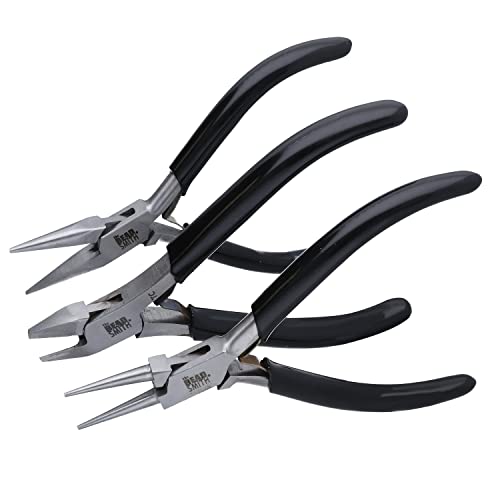
For those who prioritize a firm grip, the BeadSmith Professional Series is a reliable workhorse. Their flat interior jaws provide a secure hold on the wire, ensuring that your loops and joints don’t slip while you are shaping a limb or a neck.
Think of these as your go-to bamboo needles—sturdy, dependable, and slightly forgiving. The box-joint construction means the jaws stay perfectly aligned over time, preventing the "wobble" that can ruin a precise bend.
Be aware that these are slightly heavier than the Xuron model. If you are prone to wrist fatigue, you may find them a bit tiring after an hour of intense armature building. However, for sheer stability, they are hard to beat.
Lindstrom RX7890 Ergonomic Wire Bending Pliers

When your project involves complex, multi-jointed armatures, you need a tool that minimizes repetitive strain. The Lindstrom RX7890 is designed with an ergonomic handle that distributes pressure evenly, much like the way circular needles reduce the weight of a heavy wool blanket on your lap.
These pliers are an investment piece, similar to upgrading from basic aluminum needles to high-end carbon fiber ones. The micro-beveling on the edges ensures you won’t accidentally nick or scar your wire, which is vital if you are using thinner, softer metals.
The primary tradeoff is the price point; these are professional-grade tools for serious artists. If you only build an armature once a year, you might find them overkill, but for a daily maker, the comfort is unmatched.
Wubbers Medium Bail Making Pliers for Armatures

Creating consistent loops for joints or attachments is often the most frustrating part of armature construction. Wubbers Bail Making pliers feature round, stepped jaws that allow you to create perfectly uniform circles every single time.
This tool is essentially the "circular needle" of the wire world—it creates a consistent shape that helps your armature maintain structural integrity. You can easily create a small loop for a finger or a larger one for a hip joint by simply moving the wire up or down the stepped jaw.
Because the jaws are round, they don’t provide the same "flat-grip" surface as chain-nose pliers. You will likely need to pair these with a standard set of flat-nose pliers to get the job done properly.
Hakko CHP PN-2007 Micro Needle Nose Pliers
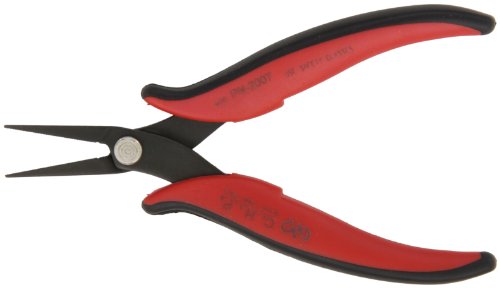
If you are working on miniature needle-felted figures, you need a tool that can navigate tiny, cramped spaces. The Hakko CHP PN-2007 is remarkably slim, allowing you to reach into the center of a dense wire structure without disturbing the surrounding work.
The grip is soft and non-slip, which is incredibly helpful when your hands are covered in stray wool fibers. It’s a nimble tool, perfect for those "fine-gauge" moments where you are tucking in an end or securing a tiny wire loop.
Do not be fooled by the lightweight feel; these are surprisingly robust. However, they are not designed for heavy-duty bending. Use them for the final shaping and detail work rather than the initial structural skeleton.
Beadalon Slim Line Chain Nose Pliers for Detail
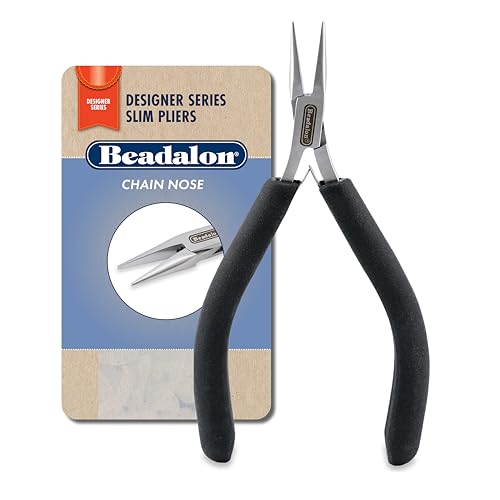
Sometimes you just need a simple, slim tool that doesn’t get in your own way. The Beadalon Slim Line pliers are fantastic for those final adjustments, like tightening a connection or tucking a sharp wire end into the wool.
They are the "tapestry needle" of your armature kit—unassuming, specialized, and essential for the finishing touches. They are lightweight and easy to maneuver, making them ideal for beginners who are still learning how much pressure is needed for wire manipulation.
The jaws are quite thin, which makes them excellent for detail but less effective for heavy bending. Keep these on your desk for the delicate finishing work, and you will find yourself reaching for them constantly.
Essential Features for Needle Felting Armatures
When selecting your pliers, look for cushioned handles and return springs. These features reduce the physical toll on your hands, allowing you to focus on the structure rather than the discomfort.
The jaw material is also critical; you want hardened steel that won’t deform under pressure. If the jaws are too soft, they will eventually lose their alignment, making it impossible to create precise, clean bends in your wire.
- Spring-loaded mechanisms: Essential for reducing hand fatigue.
- Box-joint construction: Ensures the jaws stay aligned for years.
- Non-slip grip: Vital for maintaining control when your hands are dusty with fiber.
Why Wire Gauge Matters for Your Sculpted Forms
In knitting, the weight of your yarn dictates the needle size; in felting, the gauge of your wire dictates the stability of your sculpture. Thicker wire (lower gauge numbers) provides the core support, while thinner wire is used for fingers, toes, and delicate features.
If you use wire that is too thin for the size of your sculpture, the armature will sag under the weight of the wool. Conversely, wire that is too thick will be impossible to bend into expressive, naturalistic poses.
Always match your pliers to your wire gauge. Attempting to bend heavy-gauge wire with delicate, micro-tip pliers will lead to tool breakage and frustration.
Preventing Wire Breakage in Needle Felting Art
Wire breakage usually happens at the stress points—the exact spots where you have bent the wire back and forth too many times. Think of this like "fatigue" in a knitting needle; if you bend the wire sharply in the same place repeatedly, the metal will eventually snap.
To prevent this, use your pliers to make smooth, sweeping curves rather than sharp, acute angles. If you must make a tight bend, do it once and do it decisively.
Avoid "kinking" the wire, which creates a weak point. If you see a kink forming, stop immediately and try to smooth it out before continuing, as that spot is now compromised.
Safety Tips for Handling Armature Wire Tools
Wire ends are sharp, and when you are working with pliers, it is easy to accidentally slip and poke yourself. Keep your work area well-lit and always trim your wire ends cleanly to avoid jagged edges that can snag your wool or prick your fingers.
Never use your pliers to cut wire unless they are specifically designed as "cutters." Most needle-nose pliers are for bending only; using them to cut wire will notch the jaws and ruin their precision.
Always wear safety glasses when cutting wire, as the small end pieces can fly off at high speeds. Treat your tools with respect, keep them clean of fiber debris, and they will serve your creative process for years to come.
Building a wire armature is a craft in itself, requiring the same patience and precision as any complex knitting pattern. By choosing the right pliers and understanding how your tools interact with the wire, you can create a stable, expressive foundation for all your needle-felted projects. Remember that just as your favorite needles feel like an extension of your hands, the right pair of pliers will make your wire work feel seamless and fluid. Start with one or two quality tools, practice your bends, and watch your sculpted figures come to life with newfound structure and grace.