7 Best Cotton Warp Threads For Durable Foundations
Discover the top 7 cotton warp threads for sturdy weaving. Learn how fiber strength and twist impact project longevity and ensure a durable, reliable foundation.
Choosing the right warp thread is the silent foundation upon which every successful textile project is built. Just as a knitter selects the perfect wool to ensure a garment holds its shape, a weaver must prioritize tensile strength and consistency in their warp. These seven cotton selections represent the gold standard for durability, ensuring your loom setup remains stable from the first pick to the final fringe. Understanding these materials will transform your weaving experience from a battle against breakage into a seamless creative flow.
Maurice Brassard 8/4 Cotton: Best Overall Warp
When you need a reliable workhorse that won’t snap under tension, Maurice Brassard 8/4 cotton is the industry standard for a reason. It offers a consistent diameter and a smooth finish that glides through heddles without snagging.
This yarn is ideal for weavers who want to focus on pattern development rather than troubleshooting broken warp ends. Because it is mercerized, it has a slight sheen and increased strength, making it forgiving for those still refining their tensioning skills.
The only real trade-off is its slight stiffness compared to unmercerized options. For most projects, this isn’t a drawback, but it does mean your finished fabric will have a crisp, structured hand rather than a soft, drapey one.
Maysville 8/4 Carpet Warp: Best for Rugs
Maysville carpet warp is built for projects that require serious structural integrity and resistance to abrasion. If you are weaving heavy-duty rugs or sturdy wall hangings, this thread provides the necessary backbone.
It is significantly more robust than standard weaving cottons, designed specifically to withstand the high tension required for floor textiles. You can beat your weft firmly into place without worrying about the warp threads bowing or losing their alignment.
Be aware that this is a heavy, utilitarian thread that is not suitable for delicate garments. It has a matte, rustic appearance that complements traditional rug designs but might feel too coarse for scarves or home linens.
Bockens Cottolin: Best for Table Linens
Cottolin—a blend of 60% cotton and 40% linen—is the secret weapon for heirloom-quality table runners and napkins. It combines the absorbency of cotton with the crisp, clean finish of linen.
When you weave with Cottolin, you get a fabric that feels substantial yet elegant. It is the go-to choice for weavers who want their work to stand the test of time, as the linen content adds a durability that pure cotton sometimes lacks.
The catch is that linen is less elastic than cotton, meaning your warp needs to be wound with precise, even tension. If you are a beginner, practice on a small sample first to get a feel for how the fibers behave under pressure.
Gist Yarn Beam Cotton: Best for Beginners
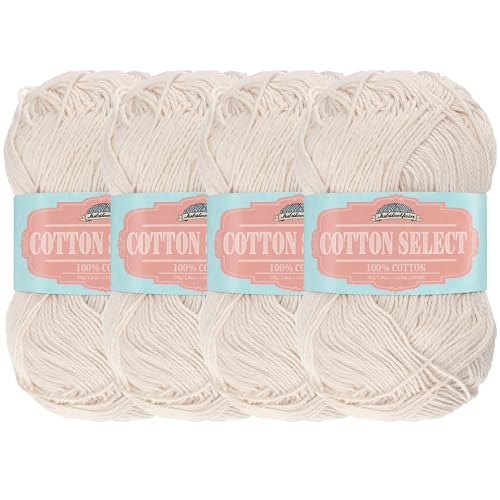

Gist Yarn’s Beam is engineered with the modern weaver in mind, prioritizing ease of warping and high-visibility color choices. It is a smooth, high-quality cotton that is remarkably resistant to fraying during the threading process.
For those just starting out, the frustration of a tangled or breaking warp can be enough to make you walk away from the loom. Beam minimizes these hurdles, allowing you to get to the actual weaving much faster.
While it is a premium product, the investment is worth it for the peace of mind it provides during your first few projects. It is a reliable, predictable thread that lets you learn the mechanics of your loom without fighting your materials.
Venne Organic Cotton: Best Eco-Friendly Choice
Venne organic cotton is the clear winner for makers who prioritize sustainability without sacrificing quality. It is produced with environmentally conscious practices, ensuring that your textile art has a lower ecological footprint.
Beyond its ethics, the yarn itself is exceptionally uniform and tightly plied. This results in a warp that is remarkably strong and free of the slubs or weak spots that can plague lower-quality organic fibers.
It is a fantastic choice for fine-detail work, such as intricate tea towels or delicate decorative pieces. Just remember that because it is organic and untreated, it may have a slightly different feel during the warping process compared to heavily processed commercial yarns.
Ashford Mercerized Cotton: Best for Precision

Ashford’s mercerized cotton is all about consistency, making it the top pick for projects requiring exact sett and tight geometric patterns. The mercerization process swells the fibers, resulting in a thread that is stronger and more lustrous than its unmercerized counterparts.
If you are working on a project with a high thread count, you need a yarn that doesn’t add unnecessary bulk. This cotton is thin, strong, and highly resistant to pilling, which keeps your shed clear and your pattern crisp.
It is a specialized tool, so treat it as such; it excels in precision but might feel too "slick" for weavers who prefer a more organic, textured look. Always check your WPI (wraps per inch) to ensure it matches your reed size perfectly.
Louet 8/4 Cotton: Best for Sturdy Projects
Louet 8/4 cotton is a reliable, versatile staple that feels like a classic weaving yarn. It has a matte finish and a substantial feel that makes it perfect for everyday items like placemats and sturdy bags.
It is particularly good at holding its own against the friction of the reed. If you tend to be a bit heavy-handed with your beater, this thread will hold up well and maintain its integrity throughout the weaving process.
It is a straightforward, no-nonsense yarn that performs exactly as expected. While it may lack the high-sheen elegance of some luxury options, its durability makes it an essential addition to any weaver’s stash.
How to Calculate Warp Length for Your Loom
Calculating your warp length is the most critical step to avoiding the heartbreak of running out of yarn mid-project. You must account for your desired finished length, plus the loom waste, which includes the fringe and the yarn trapped in the loom’s mechanics.
Always add at least 15 to 20 percent extra for "take-up" and "shrinkage." Weaving inherently draws the warp threads in, and washing your final piece will cause the fibers to bloom and contract.
Measure twice, and then add a little more for safety; it is always better to have a few extra inches of fringe than to be forced to tie on new warp ends. Keep a notebook to track these calculations for every project to build your own library of successful setups.
Understanding Ply and Twist in Warp Threads
The ply and twist of a thread determine its strength and how it behaves under the tension of a loom. A 8/4 cotton means the yarn is made of four plies, which creates a balanced, round thread that resists untwisting.
A high-twist yarn is generally stronger and smoother, making it ideal for warp because it won’t snag on the heddles. Low-twist yarns, while softer, are prone to breaking under the constant stress of the shed opening and closing.
When selecting your warp, look for a tight, consistent twist that feels firm to the touch. This structural integrity is what prevents your warp from becoming "fuzzy" or wearing down as you pass the shuttle back and forth.
Tips for Maintaining Proper Warp Tension
Proper tension is the difference between a professional-looking textile and a distorted, wavy mess. Start by ensuring your warp is wound onto the back beam with even pressure, using heavy paper or sticks between layers to prevent sinking.
If you notice one section of your warp is looser than the rest, use tensioning devices or small weights to bring it back into alignment. Never try to "fix" a loose warp by simply tightening the front beam; you must address the issue at the source.
Finally, listen to your loom; a properly tensioned warp will have a consistent, musical "ping" when plucked. If it sounds dull or feels mushy, your tension is likely uneven, and you should adjust before proceeding further.
Mastering your warp is the single most important step in graduating from a casual hobbyist to a confident weaver. By choosing the right fiber for your specific project and respecting the mechanics of tension, you ensure that your loom remains a tool of expression rather than frustration. Take the time to experiment with these seven cottons, and you will quickly see how the right foundation elevates every piece you create. Happy weaving, and may your shed always be clear and your edges perfectly straight.