7 Best Yarn Swifts For Large Hanks Worth Considering
Discover the 7 best yarn swifts for large hanks. Learn how these essential tools simplify winding, prevent tangles, and improve your fiber craft efficiency.
Finding the right yarn swift is the difference between a relaxing evening of winding and a frustrating afternoon spent untangling a bird’s nest of luxury fiber. When you invest in hand-dyed hanks, you need a tool that handles them with the care they deserve. This guide explores the best options for large hanks to ensure your yarn stays pristine from skein to ball. Choosing the right mechanism will save your wrists and protect the integrity of your yarn’s twist.
Stanwood Needlecraft Wooden Umbrella Swift


This is the gold standard for many serious knitters, and for good reason. Its robust construction handles even the largest, most voluminous hanks of bulky wool without wobbling or losing its grip on the table.
The umbrella mechanism is incredibly smooth, allowing the swift to rotate with minimal friction. This is vital when you are winding delicate, high-twist yarns that might snap if the swift catches or jerks.
If you frequently work with 100-gram hanks or larger, the wide-diameter reach of this model is a significant advantage. It holds the yarn taut but not overstretched, preventing the fiber from losing its bounce before it even hits your needles.
Amish Style Wooden Tabletop Yarn Swift
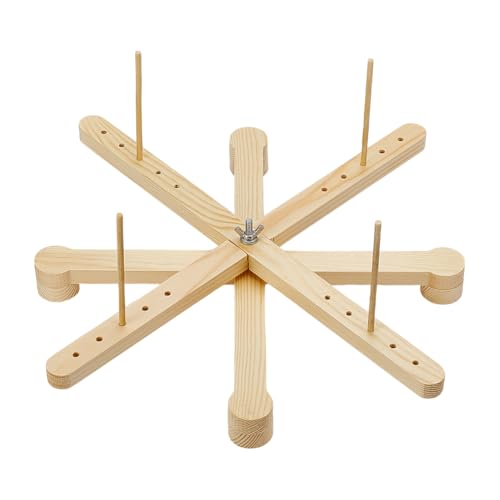
If you prefer a low-profile setup, the Amish style swift is a fantastic alternative to the traditional umbrella design. It sits flat on your workspace and consists of two wooden arms that rotate around a central pivot point.
Because it doesn’t have the vertical height of an umbrella swift, it is much easier to store when not in use. It is also exceptionally sturdy; there are no complex gears or hinges to break, making it a "buy it for life" kind of tool.
The main trade-off is that you must manually adjust the pegs to fit the circumference of your hank. While this takes a few extra seconds, it offers superior tension control, which is helpful if you are winding a particularly loose or uneven hand-spun skein.
Lacis Wooden Umbrella Swift for Large Hanks

Lacis is a name synonymous with quality in the fiber arts world, and their umbrella swift reflects that heritage. This model is specifically engineered to accommodate the extra-large hanks often found in artisanal, small-batch yarns.
It features a heavy-duty clamp that secures firmly to almost any table edge. If you are winding a massive 200-gram skein of lace-weight mohair, you need this level of stability to prevent the swift from tipping over mid-wind.
The wood finish is polished to a high sheen, ensuring that no stray splinters snag your delicate fibers. Smooth rotation is the priority here, providing a consistent flow that keeps your yarn cake uniform and tangle-free.
Knit Picks Yarn Swift for Easy Winding

Knit Picks has long been the go-to for knitters who want functional, affordable tools without the fuss. Their umbrella swift is lightweight and user-friendly, making it an ideal choice for those who are new to winding their own yarn.
It is designed to be highly portable, which is perfect if you like to wind your yarn at a knitting group or in a different room than your storage stash. It folds down into a compact shape that fits easily into a project bag.
While it is lighter than some of the professional-grade wooden models, it performs admirably for standard-sized hanks. It is a reliable entry-level investment that will serve you well until your stash grows into the hundreds.
Strauch Ball Winder and Swift Combo Kit

For the knitter who is tired of buying individual components, the Strauch combo kit is a total game-changer. These tools are built to work in perfect harmony, which significantly reduces the physical strain of winding large amounts of yarn.
The swift is designed with a high-speed, low-drag bearing system. When paired with the heavy-duty ball winder, you can turn a mountain of yarn into neat, center-pull cakes in a fraction of the time.
This setup is an investment, but it is one that pays off if you are a frequent buyer of hanks. It is the ultimate productivity tool for someone who spends more time prepping yarn than actually knitting.
Nancy’s Knit Knacks Heavy Duty Swift
If you have ever had a swift collapse under the weight of a massive, heavy wool skein, you will appreciate the durability of this model. It is built like a tank, designed to withstand the rigors of heavy, daily use.
The construction materials are top-tier, featuring reinforced joints that don’t loosen over time. This is particularly important if you are winding yarn at high speeds, where vibration can cause cheaper swifts to rattle or shift.
I recommend this for knitters who work with heavy, dense yarns like worsted or bulky wools. It provides the necessary resistance to keep the tension even, which is essential for achieving a perfect center-pull cake every time.
ChiaoGoo Hand-Operated Wooden Swift

ChiaoGoo is beloved for their needles, and their swift carries that same reputation for precision engineering. This is a beautiful, functional piece of equipment that looks as good as it performs.
It operates with a very natural, fluid motion that feels intuitive to the hands. If you are someone who enjoys the tactile experience of fiber arts, you will appreciate the craftsmanship of the wood and the smoothness of the rotation.
It handles large hanks with ease and provides a very consistent winding experience. It is a sophisticated choice for the knitter who values both aesthetics and performance in their studio space.
How to Properly Setup Your New Yarn Swift
Setting up your swift is a critical step that many knitters rush, often leading to twisted yarn. Start by ensuring your clamp is tightened securely to a flat, stable surface; a wobbly table will result in uneven tension.
When opening an umbrella swift, expand it slowly until the yarn is taut but not stretched. If the yarn is too loose, it will slip off the arms; if it is too tight, you risk stretching the fibers and altering your gauge.
Always center the hank on the swift arms before you start winding. If the hank is off-center, the swift will bobble as it rotates, which creates inconsistent pull and increases the likelihood of a tangle.
Umbrella vs Amish Style: Which is Better?
The choice between these two styles depends largely on your space and the type of yarn you use most often. Umbrella swifts are generally faster to set up and provide a more "hands-off" winding experience.
Amish style swifts are superior for stability and longevity, as they lack the moving parts that can wear out over years of use. They are also much better for those who store their tools in tight spaces.
- Choose Umbrella if you want speed and convenience.
- Choose Amish if you want durability and a small storage footprint.
- Consider your yarn: Large, loose hanks often fare better on the adjustable pegs of an Amish swift.
Essential Tips for Winding Tangled Hanks
Even with the best swift, you will eventually encounter a tangled or poorly wound hank. The first rule is to never force the swift to rotate if you feel resistance; stop immediately and investigate the snag.
If you are dealing with a particularly messy hank, use your fingers to gently tease out the loops before they reach the swift. It is much easier to fix a tangle while it is still on the swift than after it has been wound into a tight cake.
- Check the ties: Ensure all figure-eight ties are removed before winding.
- Go slow: Speed is the enemy of a tangled hank.
- Light is key: Ensure your workspace is well-lit so you can spot potential snags before they become knots.
Investing in a quality yarn swift is one of the smartest decisions you can make for your fiber arts practice. By choosing a tool that matches the scale and weight of your favorite yarns, you ensure that every project starts on the right foot. Take your time with the setup, keep your workspace clear, and enjoy the meditative process of turning a hank into a ready-to-knit cake. Happy knitting!