7 Best Heavy Duty Clamps For Winding Setups Tested
We tested seven heavy-duty clamps for winding setups. Discover which models offer the best grip, durability, and value for your professional workshop needs.
A loose yarn winder is every knitter’s nightmare, often resulting in tangled hanks and wasted hours of untangling before the real work begins. Securing your equipment to a sturdy surface is the difference between a meditative winding session and a frustrating mess of yarn barf. After years of watching students struggle with shifting winders, I have identified the specific hardware that keeps your setup rock-solid. These seven clamps are the industry gold standard for ensuring your yarn cake stays perfectly tensioned from start to finish.
Stanely 900 Series Trigger Clamp: Best Overall
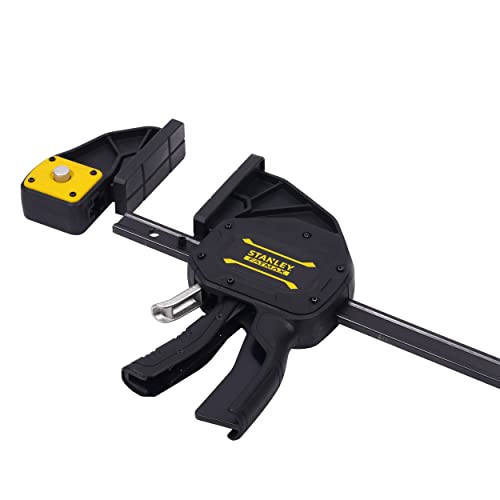

The Stanley 900 Series is a workhorse that feels like a natural extension of your winding station. It offers a perfect balance of clamping force and ease of use, which is vital when you are trying to hold a swift in one hand and the winder in the other.
Its trigger mechanism allows for one-handed operation, meaning you don’t have to perform a circus act just to secure your equipment. The pressure is consistent, ensuring that even if you are winding a heavy, lofty wool-silk blend, the winder won’t shift under the tension of the yarn.
While it is bulkier than some specialized hobby clamps, the reliability is unmatched. If you wind large 100g hanks frequently, this is the tool that will save your sanity.
Pony 32124 Spring Clamp: Best Budget Option
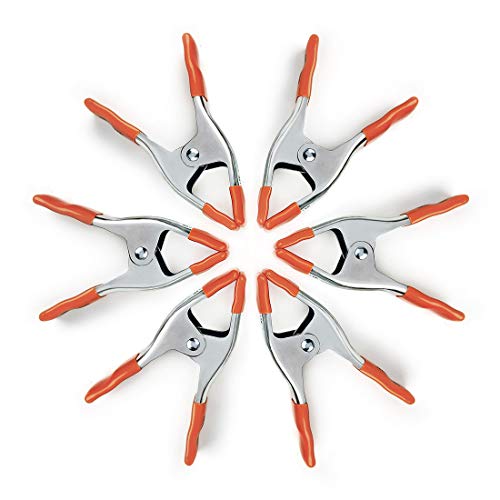
Sometimes you don’t need a heavy-duty industrial solution; you just need something that keeps your winder from walking across the table. The Pony 32124 is an affordable, no-nonsense spring clamp that does exactly what it promises without unnecessary bells and whistles.
Because it relies on a simple spring mechanism, it is incredibly fast to attach and remove. This is ideal for knitters who don’t have a dedicated "winding station" and need to clear their dining room table quickly once the yarn is caked.
The trade-off here is raw power; it won’t hold up to the aggressive torque of a high-speed electric winder. However, for standard tabletop manual winders, it provides plenty of security for the price.
IRWIN Quick-Grip Mini Clamp: Best for Stability
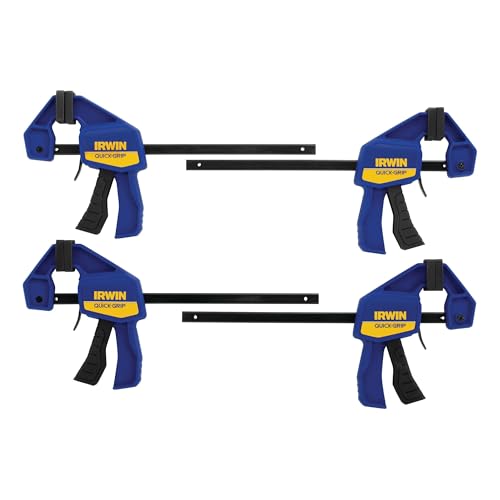
Stability is the name of the game when you are dealing with slippery fibers like alpaca or bamboo. The IRWIN Quick-Grip is designed to hold tight, minimizing the micro-vibrations that occur when you turn the handle of your winder.
These clamps feature non-marring pads that protect your table’s finish, which is a major plus if you are winding on a vintage wooden desk. The "Quick-Grip" action is smooth, allowing you to fine-tune the pressure so you don’t over-tighten and stress the plastic housing of your winder.
If you find that your cakes are uneven or "leaning," it is often because your winder is wobbling during the process. This clamp eliminates that movement entirely.
Bessey XM5 Spring Clamp: Best for Tight Spaces
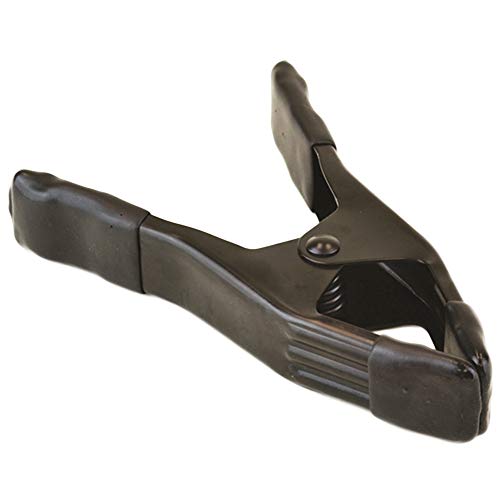
If your winding setup is cramped—perhaps tucked into a corner of your craft room—the Bessey XM5 is your best friend. Its compact profile allows it to fit into tight spots where a full-sized trigger clamp would simply be too cumbersome.
Don’t let the small size fool you; the spring tension is surprisingly strong. It provides a focused, precise grip that is perfect for smaller table edges or winder bases with limited surface area for attachment.
It is particularly useful for those who use a tabletop swift that requires a very specific mounting angle. You can maneuver this clamp into positions that larger tools simply cannot reach.
Workpro Quick-Release Clamp: Best Heavy Duty
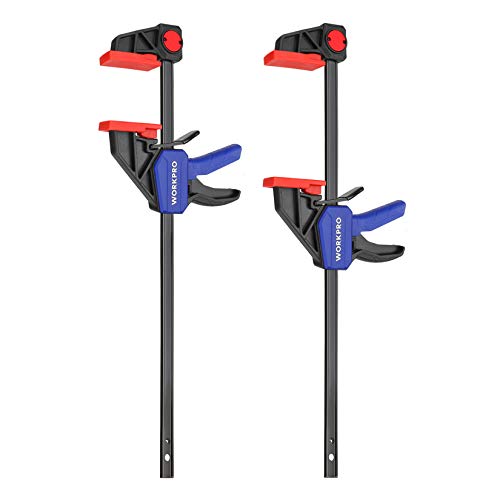
When you are winding large, dense hanks of worsted-weight wool, the pressure on your winder can be significant. The Workpro Quick-Release clamp is built for serious, heavy-duty applications where movement is not an option.
The quick-release button is a game-changer for speed. Once you finish your project, you can pop the clamp off in a fraction of a second, letting you move on to the actual knitting immediately.
This is the clamp for the knitter who buys yarn in bulk and winds for hours at a time. It is robust, durable, and designed to withstand the rigors of frequent use without losing its clamping integrity.
Wilton 4-Inch Resin Clamp: Best for Durability

Resin construction is the secret to this clamp’s longevity. Unlike metal clamps that can eventually rust or bend, the Wilton 4-Inch Resin Clamp is virtually indestructible in a normal home environment.
It provides a wide, stable base of contact, which distributes the clamping force evenly. This is crucial for preventing the "cracking" sound that sometimes happens when you tighten a metal clamp too hard against a plastic winder base.
Because it is lightweight, you won’t feel like you are lugging around heavy hardware. It is a reliable, long-term investment for your fiber arts toolkit.
Tekton 3-Inch Spring Clamp: Best for Precision
Precision is everything when you are working with delicate, hand-dyed yarns that are prone to snapping if they snag on a winder. The Tekton 3-Inch Spring Clamp offers a delicate touch that prevents you from overtightening.
The pivoting pads are the standout feature here, as they adjust to the angle of your table edge. This ensures that the clamp sits flush, maximizing the surface area and preventing the winder from sliding sideways under pressure.
It is a fantastic choice for those who value control over raw force. If you are a methodical winder who likes everything perfectly aligned, this is the tool for you.
How to Choose the Right Clamp for Your Yarn Winder
Selecting a clamp isn’t just about the tool; it’s about understanding the interface between the winder, the table, and the yarn. First, measure the thickness of your table, as some clamps have limited "jaw capacity."
Consider the material of your winder base. Plastic bases are prone to stress fractures, so you want a clamp with broad, padded surfaces. If your winder has a metal base, you have more flexibility, but you still need to protect your furniture.
- Table thickness: Ensure the clamp jaw opens wider than your table edge.
- Winder base footprint: Look for clamps with flat pads to avoid point-pressure.
- Tension level: High-speed winders require more force than manual ones.
Essential Features for Stable Winding Setups
A stable setup is defined by the elimination of "creep"—the tendency of a winder to slowly shift during the winding process. You want a clamp that features a non-slip grip, ideally made of rubber or a high-friction synthetic material.
The handle ergonomics matter more than you think. You will be using this tool every time you start a new project, so choose one that feels comfortable in your hand and doesn’t require excessive force to engage.
Finally, look for a "quick-release" feature. It sounds like a luxury, but when you have a ball of yarn halfway through the winding process and need to adjust the angle, you will be grateful for the speed.
Preventing Table Damage When Using Heavy Clamps
We all love our fiber arts, but we don’t want to ruin our dining tables in the process. Heavy-duty clamps can leave permanent indentations on soft woods like pine or cherry.
Always use a protective barrier between the clamp and the table. A simple square of felt, a piece of scrap leather, or even a thick silicone coaster works wonders to distribute the pressure and prevent marring.
- Felt pads: Excellent for preventing scratches on polished wood.
- Leather scraps: Provide a firm, non-slip grip without damaging the finish.
- Silicone mats: Add extra friction and protect against deep indentations.
Investing in a quality clamp is one of the most practical upgrades you can make to your fiber arts workspace. By choosing a tool that offers the right balance of stability and surface protection, you ensure that your winding process is as smooth as your finished fabric. Take the time to secure your equipment properly, and you’ll find that your yarn cakes are more uniform and your knitting time is far more enjoyable. Happy winding, and may your yarn always flow freely.