6 Best Transfer Tools For Shifting Stitches To Use
Discover the 6 best stitch transfer tools to streamline your knitting. This guide compares top options to help you move loops safely and boost your efficiency.
Every knitter eventually faces the moment when they must move a set of active stitches off their needles to try on a garment or hold sleeves for later. Choosing the right tool for this transition is the difference between a seamless process and a frustrating session of rescue knitting. Whether you are working on a delicate lace shawl or a heavy wool sweater, the method you choose impacts your yarn’s integrity and your own peace of mind. Here are the most reliable tools for shifting your stitches safely and efficiently.
ChiaoGoo Stainless Steel Stitch Holders
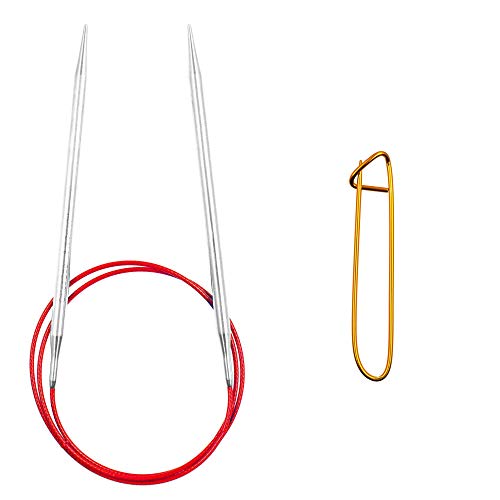

These stainless steel holders are the gold standard for durability and long-term storage. Because they are made of smooth, surgical-grade steel, they won’t snag your yarn or react with delicate fibers like animal wool or silk.
They are particularly effective for heavy projects where weight might bend a flimsier plastic alternative. If you are setting aside a sweater body for several months, these holders provide a rigid, secure environment that keeps your stitches perfectly aligned.
However, they are rigid, which can make a garment feel bulky or awkward to try on while the stitches are held. Use these primarily for long-term storage rather than for "try-on" sessions.
Clover Locking Stitch Markers for Transfers

If you need to move a small number of stitches—like the thumb gusset of a mitten—locking stitch markers are your best friend. They snap securely into place, ensuring that even the most slippery silk or rayon yarn stays put.
The beauty of these markers lies in their portability and low profile. Unlike a long needle or cord, they don’t add weight to your work or get caught on your clothing while you are moving around.
Just be careful with high-twist yarns; the plastic hinge can occasionally catch a stray ply if you aren’t paying attention. Always double-check that the marker is fully clicked shut before setting your project down.
CocoKnits Nylon Stitch Holding Cord Set

These hollow silicone cords are arguably the biggest innovation in stitch management in recent years. You simply slide the tip of your knitting needle into the hollow end of the cord and push your stitches across.
They are incredibly versatile because they allow your garment to drape naturally while the stitches are held. This makes them the ideal choice for trying on sweaters or shawls to check the length before binding off.
Because they are flexible, they don’t hold a permanent shape, meaning you can easily coil them up inside your project bag. They are a must-have for any knitter who frequently adjusts fit mid-project.
Knitter’s Pride Mindful Collection Pins

These pins function like oversized, decorative safety pins and are perfect for holding small sections of work. They are aesthetically pleasing, which makes the tedious process of transferring stitches feel a bit more intentional and enjoyable.
The smooth finish ensures that your yarn travels across the metal without friction. They are especially useful for holding stitches in intricate cable patterns where you need to keep the sequence of the twist clear.
While they are beautiful, they are best suited for smaller stitch counts. Using them for a massive sweater body would be cumbersome and lead to uneven tension.
Susan Bates Flexible Plastic Stitch Holders

These classic U-shaped holders are a staple in almost every knitter’s kit, and for good reason. They are inexpensive, easy to find, and create a very secure "bridge" for your stitches.
The plastic is smooth and snag-free, making them safe for most wool and acrylic blends. They provide a rigid structure that prevents the stitches from twisting, which is vital when you are ready to pick them back up and resume knitting.
One drawback is the locking mechanism, which can sometimes be stiff or prone to popping open if the holder is overstuffed. Never force more stitches onto these than the manufacturer recommends, or you risk the holder snapping open.
Brittany Birch Wood Stitch Holding Needles

For those who prefer the feel of natural materials, birch wood needles offer a gentle, grippy surface. They are excellent for very slick yarns, such as bamboo, cotton, or superwash wool, which often slide off metal holders.
The warmth of the wood makes them comfortable to handle, and they are lightweight enough that they won’t distort the fabric of your project. They are a fantastic choice for luxury fibers that you want to treat with extra care.
Because they are wood, they can be more fragile than their metal counterparts. Keep them away from high-moisture environments to prevent warping, and avoid using them with extremely heavy, dense projects.
How to Safely Move Stitches Between Tools
The safest way to move stitches is to work them directly from your needle onto the holder as if you were knitting, but without the yarn. This ensures that the stitches remain oriented correctly on the holder.
If you are using a cord, ensure the diameter of the cord is slightly smaller than your needle tip. This creates a smooth transition and prevents the stitches from snagging on the junction between the needle and the cord.
Always count your stitches as you transfer them. It is much easier to catch a mistake at the moment of transfer than it is to realize you are missing a stitch three rows after you pick the work back up.
Preventing Dropped Stitches During Transfers
The most common cause of dropped stitches is rushing the transition between the needle and the holder. Take your time, and if you are using a pointed tool, ensure you aren’t accidentally splitting the yarn ply.
When using cord holders, make sure the stitches are pushed well onto the cord before removing the needle completely. It is often helpful to tie a small knot in the ends of the cord to ensure the stitches cannot slide off accidentally.
If you are working with slippery materials like mohair or silk, keep the stitches on the needle as long as possible. Only transfer them when you are ready to begin the next step of your project.
Choosing Between Cords and Rigid Holders
Choosing between a cord and a rigid holder depends entirely on the project’s goal. If you need to try the garment on to check the fit, a flexible cord is non-negotiable because it allows the fabric to mimic the final drape of the finished piece.
If you are putting a project away for a long period, a rigid holder is generally superior. It keeps the stitches organized and prevents them from getting tangled or compressed during storage.
- Use Cords for: Try-ons, sleeves, and projects in progress.
- Use Rigid Holders for: Long-term storage, complex cable patterns, and small stitch counts.
Essential Tips for Managing Large Projects
For large projects, label your holders or cords with the needle size and the date you set them aside. It is surprisingly easy to forget which needle size you were using after a few weeks of working on other things.
If you are holding a large number of stitches, consider using two separate holders instead of one. This reduces the weight on the fabric and makes it easier to handle the project without accidentally stretching out the neckline or armhole.
Finally, always store your project in a breathable bag while it is on holders. This prevents moisture buildup, which can lead to unwanted odors or fiber damage over time.
Managing your stitches is an essential skill that elevates your knitting from a hobby to a refined craft. By matching the right tool to your fiber type and project goals, you ensure your hard work remains safe and ready for the next row. Remember that the best tool is the one that gives you the most confidence when you return to your needles. Happy knitting, and may your stitches always stay secure.