7 Best Rotatory Cutters For Fabric Strips To Try
Discover the top 7 rotary cutters for precise fabric strips. We evaluate key features like ergonomic grips and blade sharpness to improve your quilting craft.
Precision in fiber arts isn’t just about your needle size; it’s about the consistency of your fabric strips when preparing for rag rugs or fabric-yarn projects. Using a dull blade or an awkward handle can lead to uneven tension, which ruins the drape of your final creation. Whether you are cutting strips for a thick, chunky knit or fine bias tape for binding, the right rotary cutter is your most reliable assistant. Let’s explore the tools that turn hours of tedious prep work into a seamless part of your creative process.
Fiskars 45mm Comfort Loop Rotary Cutter


This cutter is a staple for a reason, particularly for those who suffer from hand fatigue after long sessions of cutting fabric for yarn. The loop handle design allows you to keep a relaxed grip, which is vital if you are prone to repetitive strain from hours of knitting or crochet.
It features a simple sliding blade guard that is easy to engage, making it a safe choice for busy craft rooms. However, the plastic construction can feel slightly lightweight compared to professional-grade metal tools.
If you struggle with arthritis or simply want a tool that doesn’t require a death grip, this is a solid entry point. Just keep in mind that the lightweight frame means you’ll need to apply consistent downward pressure yourself.
Olfa RTY-2/DX Ergonomic Rotary Cutter
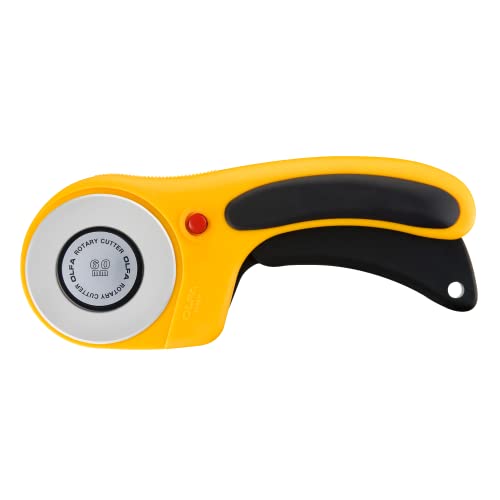
Olfa is the gold standard in the quilting world, and that expertise translates perfectly to fiber arts prep. The RTY-2/DX features an ergonomic handle that naturally fits the palm, reducing the stress on your wrist when cutting through multiple layers of heavy cotton.
The dual-action safety lock is a standout feature, as it keeps the blade retracted when not in use and snaps open with a simple squeeze. This is vital if you have curious pets or children wandering through your studio.
While the price point is higher, the durability of the mechanism is unmatched. It’s an investment, but one that will likely outlast several cheaper alternatives.
Clover 45mm Rotary Cutter for Precision

Clover is known for its thoughtful engineering, and this cutter is no exception for those who value extreme accuracy. The blade guard is spring-loaded, meaning it automatically retracts the moment you lift the cutter from the fabric.
This feature is excellent for knitters who are cutting strips for "fabric yarn," where precision width is the difference between a smooth strand and a lumpy, uneven mess. If your strips vary in width, your finished knit will have inconsistent gauge, which is a nightmare to block.
The handle is slim and lightweight, making it ideal for smaller hands or those who prefer a pen-like grip. It lacks the heavy-duty power of some ergonomic models, so it’s best suited for lighter-weight fabrics.
TrueCut 45mm Rotary Cutter with Guide

The TrueCut system is a game-changer if you struggle with keeping your cuts perfectly straight. When paired with the matching ruler, the cutter locks into a track, ensuring your fabric strip is exactly the same width from end to end.
For a knitter preparing fabric for a "rag rug" project, this level of consistency is non-negotiable. If your strips are uneven, the resulting fabric yarn will have thick and thin spots, leading to a lumpy, unpredictable texture in your stitches.
This system is slightly more complex to set up, but the trade-off is professional-grade results. It is the best choice for beginners who haven’t yet mastered the "steady hand" required for freehand cutting.
Gingher 45mm Rotary Cutter for Fabric
Gingher has a long-standing reputation for high-quality scissors, and their rotary cutter maintains that same legacy. The weight of the tool is substantial, providing a sense of stability that helps the blade glide through thick fabrics like denim or wool blends.
Because it is heavier, you don’t need to push down as hard to get a clean cut. This is a massive benefit if you are cutting long strips for an extended period, as it saves your forearm muscles for the actual knitting.
The aesthetic is classic and understated, fitting well in a traditional sewing space. While it doesn’t have the high-tech bells and whistles of newer models, its reliability is its greatest strength.
Martelli 45mm Ergonomic Rotary Cutter

The Martelli cutter is designed specifically for those with limited hand strength or mobility issues. The handle is unique, allowing you to use your palm to push the cutter rather than your fingers.
This is a massive advantage if you are cutting many yards of fabric to create yarn for a large-scale project. By shifting the effort from your small hand muscles to your larger arm and shoulder muscles, you can work much longer without pain.
It takes a little bit of practice to get used to the handle shape, but the ergonomic payoff is significant. If you find yourself needing to stop and stretch your hands every ten minutes, this is likely the tool you need.
Dritz 45mm Comfort Grip Rotary Cutter
The Dritz Comfort Grip is a reliable, no-nonsense tool that is widely available and very user-friendly. It features a soft-grip handle that prevents the cutter from slipping, even if your hands are a bit clammy from a long day of crafting.
The blade change process is straightforward, which is important because a dull blade is more dangerous than a sharp one. A sharp blade glides; a dull one forces you to use excessive, jerky movements that lead to slips.
This is an excellent "everyday" cutter for the knitter who prepares fabric strips only occasionally. It doesn’t have the specialized ergonomic features of higher-end models, but it gets the job done consistently.
Essential Features for Rotary Cutters
When choosing a cutter, look for these non-negotiable attributes to ensure your fabric prep is as smooth as your knitting:
- Blade Guard Mechanism: Always prioritize a safety lock that is easy to engage but impossible to ignore.
- Handle Ergonomics: Look for a shape that allows you to maintain a neutral wrist position while cutting.
- Blade Compatibility: Ensure the cutter takes standard 45mm blades, as these are the easiest to find and replace.
- Weight Distribution: A slightly heavier cutter can actually reduce fatigue by doing more of the work for you.
Safety Tips for Using Rotary Cutters
Rotary cutters are incredibly sharp, often sharper than the sewing scissors you might be used to. Always cut away from your body, and never try to "catch" the cutter if it falls off your table.
Keep your blades sharp at all times. A dull blade requires more pressure, which makes it much more likely to skip or jump off the ruler and cut your fingers.
Always use a self-healing cutting mat underneath your fabric. Using a rotary cutter on a hard surface like a wood table will ruin your blade edge in a single pass and can damage your furniture.
Maintaining Your Rotary Cutter Blades
Your blades are the heart of your cutting system, and they require regular care to stay effective. If you notice your fabric "tagging" or fraying at the edges, it is time to change the blade immediately.
You can extend the life of your blades by wiping them down with a light machine oil occasionally to prevent rust. Avoid cutting over pins or staples, as even one small nick will create a "hitch" in the blade that ruins your fabric strips.
Don’t be afraid to change your blade; it is the cheapest way to improve your crafting experience. A fresh, sharp blade makes the entire process of preparing fabric yarn feel effortless and precise.
Preparing fabric strips for your next project doesn’t have to be a chore if you have the right tool in your hand. By selecting a cutter that matches your grip strength and project volume, you ensure your fabric yarn is consistent and your hands stay healthy. Remember that a sharp tool is a safe tool, and investing in quality blades will save you both time and frustration. Now, choose your cutter, prep your fabric, and get back to the joy of making.