7 Best Stitch Pattern Books For Design Inspiration
Discover seven essential stitch pattern books to elevate your craft. These curated guides offer endless design inspiration for knitters of all skill levels.
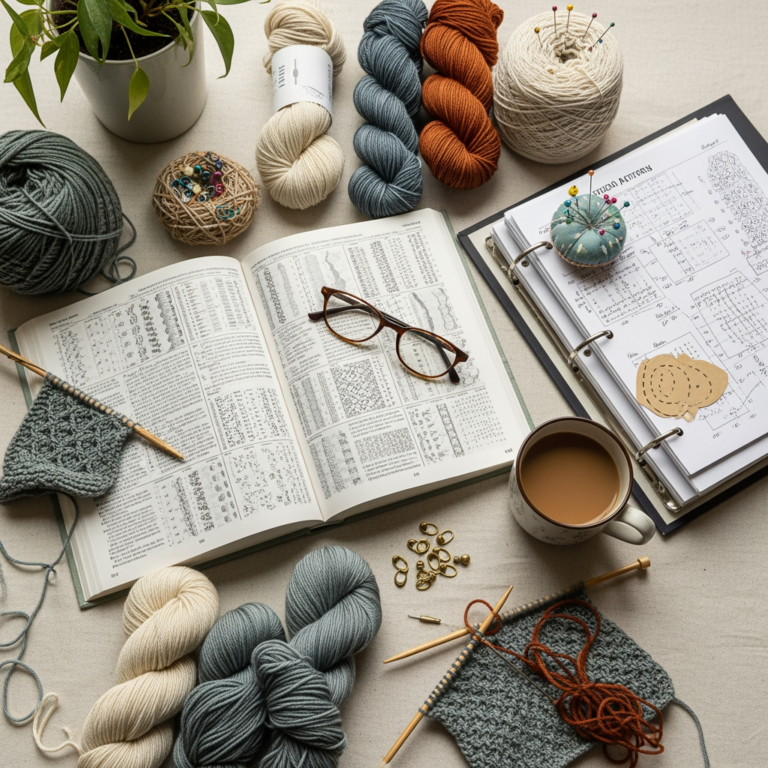
Every knitter eventually reaches a point where the standard stockinette stitch no longer satisfies their creative hunger. Building a personal library of stitch dictionaries is the most effective way to transition from following patterns to designing your own garments. These books serve as a visual map for texture, color, and structural possibilities. Here are seven essential titles that will sharpen your skills and elevate your projects.
Barbara Walker’s A Treasury of Knitting Patterns


This series is the undisputed gold standard of the knitting world. Walker’s work is less about pretty pictures and more about the fundamental architecture of knitting.
If you want to understand how a cable crosses or how a lace eyelet is born, this is your textbook. The black-and-white charts are stark, but they remove the distraction of color, forcing you to focus entirely on the stitch mechanics.
Be aware that these books are dense and utilitarian. They don’t offer much in the way of "lifestyle" photography, but they offer the most reliable, time-tested stitch instructions ever compiled.
The Japanese Knitting Stitch Bible by Hitomi Shida

Hitomi Shida’s designs are nothing short of sculptural. When you look at these patterns, you are seeing a masterclass in combining complex twists, bobbles, and lace into a single, cohesive fabric.
These stitches are perfect for the knitter who wants to create a "statement" garment. They require patience and a high level of focus, as the charts can be intricate and non-intuitive for those used to Western-style knitting.
Because these patterns are so dense, they often create a very heavy, thick fabric. Always swatch with a high-twist wool to ensure your stitch definition remains crisp and doesn’t get lost in the complexity.
Vogue Knitting Stitchionary: The Ultimate Source

Think of this as the "greatest hits" collection of the knitting world. It is a massive, comprehensive volume that covers everything from simple ribs to complex intarsia.
It is an excellent reference tool for the knitter who wants a bit of everything in one place. The photography is polished and professional, which helps you visualize how a stitch might look in a finished garment.
However, because it covers so much ground, it doesn’t dive as deep into the mechanics as a Barbara Walker volume. It is a fantastic starting point for inspiration, but you might need more specialized books for advanced techniques.
400 Knitting Stitches by Potter Craft Editors

This book is the perfect "workhorse" reference for your knitting bag. It is organized logically, making it easy to flip through when you have a sudden design idea.
I find this volume particularly useful for beginners who are just starting to experiment with textures. The instructions are straightforward and the layout is clean, which reduces the intimidation factor of trying something new.
Don’t expect groundbreaking, avant-garde designs here. This is a solid, reliable collection of classic stitches that will serve you well for years of everyday knitting.
Up, Down, All-Around Stitch Dictionary by Wendy Bernard
This book changes the way you think about stitch orientation. Most stitch dictionaries are written for bottom-up knitting, but Bernard provides the keys to knitting patterns sideways or top-down.
This is a game-changer for someone who loves to modify sweater patterns. If you’ve ever wanted to add a lace panel to a raglan sleeve, this book provides the necessary adjustments to make it work.
It bridges the gap between "following a pattern" and "understanding construction." It’s an essential read for anyone who wants to stop being a passive knitter and start being an active designer.
The Harmony Guides: 450 Knitting Stitches Volume 2

The Harmony Guides have been a staple in my library for decades. This volume is particularly strong on texture and cable variations that add depth to simple silhouettes.
These stitches are highly versatile and work well in various yarn weights. If you are working with a rustic, woolen-spun yarn, these patterns will pop beautifully without requiring overly complex needle manipulation.
The layout is very traditional, which makes it easy to follow even if you are tired after a long day of knitting. It is a reliable, no-nonsense resource for adding interest to otherwise plain sweaters.
AlterKnit Stitch Dictionary by Andrea Rangel

If you are a stranded colorwork enthusiast, this book is non-negotiable. Rangel moves beyond the traditional Fair Isle motifs to include modern, graphic, and even cheeky designs.
The real beauty here is that these charts are designed to be "plug-and-play." You can easily swap these motifs into any standard sweater pattern that uses a similar gauge.
Keep in mind that colorwork requires a different tension than standard knitting. Always swatch your chosen motif in the round to ensure your floats—the yarn carried across the back—don’t end up too tight or too loose.
How to Choose the Best Stitch Book for Your Needs
Choosing the right book depends entirely on your current knitting goals. If you are a beginner, look for a book with large, clear illustrations and a focus on fundamental textures.
If you are an advanced knitter, look for books that focus on construction or complex manipulation. Ask yourself: do I want to learn new techniques, or do I just want a library of beautiful patterns to copy?
- For the Designer: Prioritize books that explain how to modify stitches.
- For the Texture-Lover: Look for books with high-contrast, sculptural stitch patterns.
- For the Color-Work Fan: Focus on books with modular, repeatable motifs.
Translating Stitch Patterns Into Your Own Designs
The biggest mistake knitters make is trying to force a stitch pattern into a project without considering gauge. A lace pattern that looks airy on 4mm needles might become a dense, solid mess on 3.25mm needles.
Always calculate your stitch repeat. If your pattern repeat is 12 stitches and your sweater body is 120 stitches, you have a perfect fit; if it’s 125, you have to decide where to hide those extra 5 stitches.
Use graph paper to map out your design before you cast on. Seeing the relationship between the stitch pattern and the garment shape on paper will save you from the heartbreak of ripping back a finished sleeve.
Tips for Swatching New Stitches for Best Results
Swatching is not a punishment; it is a vital part of the creative process. When testing a new stitch, always knit a swatch at least 6 inches square to get a true sense of how the fabric behaves.
Wash and block your swatch exactly as you intend to wash the final garment. A superwash wool will grow significantly after a soak, while a high-twist cotton might shrink or tighten up.
- Check the drape: Hold the swatch up to see how it hangs.
- Check the edges: Does the pattern cause the fabric to curl?
- Check the wrong side: Are there floats or knots that might be uncomfortable?
Building a library of stitch dictionaries is an investment in your creative longevity. By understanding the mechanics behind the stitches, you gain the freedom to customize every project to your exact specifications. Start with one or two volumes that speak to your current aesthetic, and watch as your confidence grows with every new row. Happy knitting, and may your needles always find the right path.