
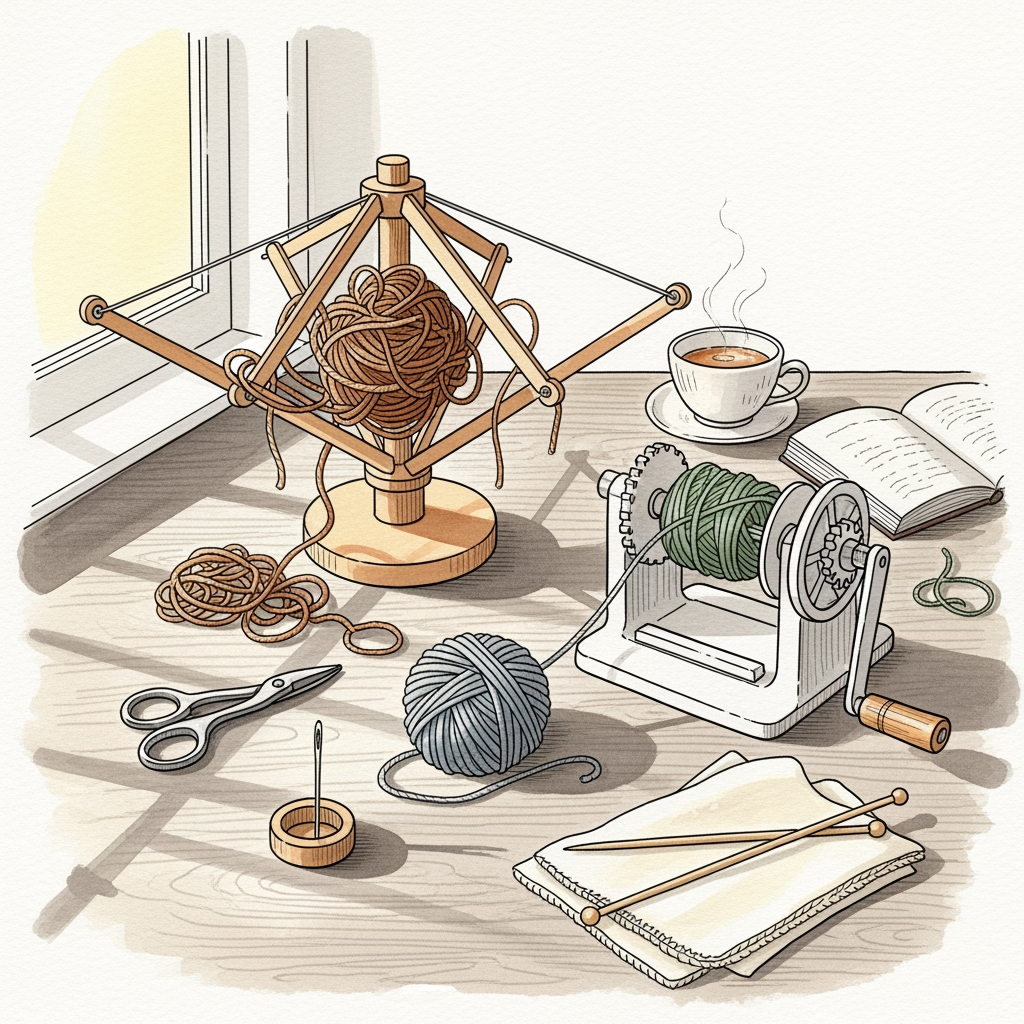
6 Best Yarn Swifts For Quick Skein Winding Reviewed
Need to wind yarn? We review the 6 best yarn swifts to save you time. Discover top picks for durability, smooth rotation, and ease of setup in our guide.
There is nothing quite as satisfying as turning a beautiful, hand-dyed hank of yarn into a neat, ready-to-knit center-pull cake. However, attempting to wind a skein by hand or over the back of a chair is a recipe for a tangled, frustrating mess. A high-quality yarn swift is the essential bridge between a loose hank and a productive knitting session. Choosing the right one depends on your space, your budget, and how often you find yourself falling in love with those gorgeous, untwisted hanks.
Stanwood Needlecraft Umbrella Swift: Best Overall
The Stanwood Needlecraft Umbrella Swift is the gold standard for most home knitters because of its consistent, fluid rotation. Its metal clamp and sturdy construction mean it doesn’t wobble or shake, even when you are winding a particularly large or heavy skein of wool.
The umbrella mechanism allows you to adjust the diameter easily, accommodating everything from tiny lace-weight hanks to massive 200-gram skeins of bulky yarn. Because it is made with smooth, finished wood and metal components, there are no rough edges to snag delicate fibers like mohair or silk.
If you find yourself winding yarn at least once a week, this is the investment that pays for itself in saved time and sanity. It strikes the perfect balance between portability and industrial-strength reliability.
Knit Picks Yarn Swift: Best Budget Choice
If you are a casual knitter who only occasionally buys hanks, the Knit Picks Yarn Swift is a fantastic entry point. It features a lightweight, functional design that gets the job done without requiring a significant financial commitment.
While it lacks the heavy-duty bearings of more expensive models, it spins smoothly enough for standard worsted or DK weight yarns. It is compact and folds down into a small footprint, making it ideal for knitters with limited storage space or those who only wind yarn at the dining room table.
Be mindful that it may struggle with very heavy, slippery fibers that require high tension. For the occasional project, however, it is a reliable tool that keeps your yarn organized without breaking the bank.
Lacis Wooden Umbrella Swift: Premium Durability
The Lacis Wooden Umbrella Swift is a beautiful piece of craftsmanship that feels like an heirloom tool. Built with high-quality hardwoods, it is designed to withstand years of heavy use without the joints becoming loose or creaky.
What sets this swift apart is the precision of its assembly; the arms move with a satisfying, balanced weight that prevents the yarn from suddenly jerking or catching. It is particularly well-suited for luxury fibers like cashmere or hand-spun singles that require a gentle, consistent touch during the winding process.
While it comes at a higher price point, the durability is unmatched. If you want a tool that you can pass down to the next generation of knitters, this is the one to choose.
Amish-Style Wooden Tabletop Swift: Sturdy Design


Amish-style swifts are a favorite among knitters who prefer a non-clamping, stationary solution. Instead of an umbrella mechanism, these consist of wooden pegs that you adjust to fit the circumference of your skein, providing a very stable base that won’t mar your table surface.
Because they sit directly on the table, they are incredibly sturdy and unlikely to tip over during a fast-winding session. They are also easy to disassemble and store flat, which is a major advantage if you don’t have a dedicated craft room.
However, they do require a bit more manual setup to ensure the pegs are spaced correctly for the hank size. Once set, though, they provide a smooth, rhythmic rotation that is perfect for those who like a hands-on, mechanical feel.
Strauch Jumbo Ball Winder and Swift: Pro Grade
When you are dealing with massive quantities of yarn, such as winding several hanks for a large sweater project, the Strauch system is the professional choice. This is equipment designed for the serious maker who values speed and efficiency above all else.
The swift is engineered to handle high-speed winding without creating excessive friction or static. It is particularly effective for those who use a mechanical ball winder, as the swift’s tension is perfectly calibrated to feed the winder without causing the yarn to snap or tangle.
This is a significant investment, but it removes the "work" from the prep work. If your stash is constantly growing and you find yourself spending more time winding than knitting, this is the upgrade you need.
Nancy’s Knit Knacks Heavy Duty Swift: Best Value
Nancy’s Knit Knacks has built a reputation for creating tools that are specifically designed to solve the common frustrations knitters face. Their heavy-duty swift is built to be a workhorse, featuring reinforced joints and a high-quality finish that prevents yarn from catching.
It offers a "best value" proposition because it occupies the sweet spot between consumer-grade and professional equipment. It is robust enough for daily use but remains accessible for the dedicated hobbyist who wants a tool that won’t require replacement.
The attention to detail in the hardware ensures that it spins freely for a long time after you give it a push. It is an excellent middle-ground choice for someone who wants reliability without the premium price of professional-grade gear.
How to Properly Setup Your Swift for Skein Winding
The most common mistake knitters make is placing the hank on the swift without properly untwisting it first. Always shake the hank out gently to ensure the loops are lying flat and parallel; if the yarn is twisted, it will inevitably snag as the swift rotates.
Once the yarn is on the swift, adjust the diameter so the hank is taut but not stretched. If the yarn is too loose, it will sag and fall off; if it is too tight, you risk stretching the fibers, which can permanently alter your gauge for the finished project.
Finally, always position your swift so that the yarn feeds into your ball winder or your hands at a slight upward angle. This gravity-assisted feed ensures a smooth, consistent flow and prevents the yarn from jumping off the swift’s arms.
Umbrella vs. Amish Style: Choosing Your Swift
Umbrella swifts are generally faster to set up and adjust, making them ideal for knitters who frequently switch between different yarn weights and hank sizes. They are the go-to for versatility, though they can sometimes feel less stable if the clamp isn’t perfectly tightened to your table.

Amish-style swifts, by contrast, offer superior stability and a smaller, more compact storage footprint. They are perfect for knitters who have a dedicated workspace and prefer a tool that feels solid and grounded during the entire winding process.
Consider your own environment: if you are a "nomadic" knitter who winds yarn in different rooms, the umbrella style is your best bet. If you have a permanent craft desk, the Amish style provides a rock-solid, worry-free experience.
Essential Tips for Preventing Yarn Tangling Issues
The secret to tangle-free winding is to never leave the swift unattended while it is moving. Even the best swift can have a sudden "yarn barf" if a loose end gets caught or if the swift spins faster than you are winding.
- Secure the yarn ends: Always find the two ends of the hank and tie them loosely to the swift arm before you start.
- Watch the tension: Use your fingers to guide the yarn as it comes off the swift; this allows you to feel for knots or snags before they reach the winder.
- Go slow: Resist the urge to race the winder; a steady, moderate pace is much safer for the yarn’s integrity.
Remember that hand-dyed yarns, especially those with high twist, are prone to "ply-back" or twisting on themselves. Keep a close eye on the yarn path and stop immediately if you see the yarn starting to spiral or knot.

Maintaining Your Swift for Years of Smooth Winding
To keep your swift spinning like new, periodically check the screws and tension knobs to ensure they haven’t loosened over time. A tiny drop of food-safe lubricant on the central rotating joint can work wonders if you notice the swift starting to squeak or drag.
If you have a wooden swift, keep it away from extreme humidity or direct heat sources, which can cause the wood to warp or crack. A light dusting with a soft cloth is usually all the cleaning required; avoid harsh chemicals that could strip the finish and create rough spots.
Treat your swift as a partner in your craft, not just a piece of plastic or wood. With minimal care, a quality swift will remain a reliable part of your knitting kit for decades, making every new project start on the right foot.
Investing in a quality yarn swift is one of the most practical decisions you can make to improve your knitting workflow. By choosing a model that matches your space and habits, you eliminate the friction that often precedes a new project. Remember that the goal is to get the yarn off the hank and onto your needles as smoothly as possible so you can focus on the joy of the stitches. Happy winding, and may your yarn always flow freely.
