
6 Best Specialty Adhesives For Securing Bead Knots
Secure your jewelry with confidence. We review the six best specialty adhesives for bead knots, ensuring long-lasting durability and a professional finish.
Securing beads into your knitting or crochet work is a delicate art that relies as much on chemistry as it does on craftsmanship. When you spend hours on a project, the last thing you want is for a knot to slip or a bead to migrate away from its intended spot. Choosing the right adhesive ensures your hard work stays pristine through blocking, wearing, and washing. This guide breaks down the best specialty adhesives to help you lock those knots in place with confidence.
G-S Hypo Cement: The Precision Applicator Choice


If you have ever tried to apply glue to a tiny knot and ended up with a sticky mess on your yarn, you know why the G-S Hypo Cement is a staple in professional kits. Its needle-thin applicator allows you to deposit a microscopic drop exactly where the thread meets the bead.
This precision is vital when working with fine lace-weight yarns or delicate silk threads. Because the glue flows slowly and dries clear, it doesn’t create the stiff, unsightly "crunch" that often ruins the drape of a hand-knit garment.
However, be aware that this adhesive has a distinct scent and requires a steady hand. If you are prone to shaky fingers after a long knitting session, take a break before applying this to ensure you don’t over-saturate your fibers.
E6000 Craft Adhesive: Best for Heavy Bead Work

When you are working with heavy glass beads or metal components on a sturdy wool or acrylic base, E6000 is the heavy hitter you need. It is significantly thicker than other glues, meaning it stays put rather than soaking deep into the yarn fibers.
This thickness provides a structural bond that can withstand the weight of larger beads that might otherwise pull a knot loose over time. It remains slightly flexible when cured, which is a major advantage for knitwear that needs to stretch and move with the body.
The trade-off here is the longer curing time and the strong fumes. Always work in a well-ventilated area and give your project at least 24 hours to set before you attempt to block or wear it.
Loctite Super Glue Gel: Best for Quick Bonding

For the knitter who wants to finish a project and get it on the needles or out the door, the Loctite Super Glue Gel is the go-to solution. Unlike the liquid variety, the gel formula won’t wick instantly into your yarn, giving you a precious second or two to adjust the knot.
The "gel" aspect is what makes this product safe for most natural fibers. It sits on the surface of the knot rather than traveling up the yarn strand through capillary action, which keeps your knitting soft and flexible.
Be careful not to over-apply; a tiny amount is all that is needed for a permanent bond. If you use too much, you risk creating a hard, brittle spot that could potentially snap your yarn during a vigorous blocking process.
Beacon Gem-Tac: Best for Delicate Fiber Bonds

Beacon Gem-Tac is a favorite among knitters who prioritize the longevity of their natural fibers like wool, alpaca, or mohair. It is water-based and specifically designed to bond to porous surfaces, making it an excellent choice for securing knots on yarn.
One of the best features of this adhesive is that it dries completely clear and remains flexible. It won’t turn yellow over time, which is a common issue with cheaper craft glues, ensuring your heirloom-quality lace remains as beautiful years later as it was on day one.
Because it is water-based, it is also very easy to clean up if you have a slip of the hand. If you get a bit on your needles or your fingers, a damp cloth will usually take it right off before it sets.
Aleene’s Jewelry Glue: Best for Secure Knots

Aleene’s Jewelry Glue is formulated to bond metal and glass to various surfaces, making it a reliable choice for beaded knitting projects. It has a medium viscosity that is perfect for saturating a knot without being so thin that it makes the yarn look wet or stained.
It is particularly effective for those "final" knots—the ones you make to secure a thread end after weaving it in. By applying a tiny dab to the knot, you create an extra layer of security that prevents the end from popping out after a few laundry cycles.
Like many jewelry-specific adhesives, it takes a bit longer to dry than a super glue. Use this for projects where you aren’t in a rush to finish, as the extra drying time allows for a stronger, more permanent cure.
Gorilla Super Glue Gel: Best for Durability
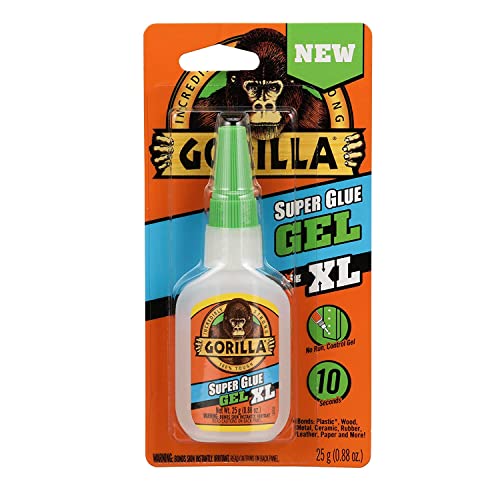
Gorilla Super Glue Gel is famous for its impact toughness, which is a great attribute for knitwear that sees a lot of wear and tear. If you are knitting a beaded cuff or a hat that will be stretched and pulled frequently, this adhesive holds up under stress better than most.
The gel formula is thick enough to stay where you put it, and it dries with a bit more "give" than standard super glues. This prevents the knot from becoming a rigid point of failure that might cut through your yarn.
However, note that this glue can leave a slight white residue if you use too much. Use a toothpick to apply the smallest possible amount directly to the knot, and keep it away from the surrounding yarn strands.
Why Bead Knots Require Specialty Adhesives
When you tie a knot in knitting yarn, the fibers are often slippery, especially if you are using silk, bamboo, or superwash wool. Over time, the friction of wearing the garment can cause these knots to slowly loosen, leading to lost beads.
Adhesives act as a stabilizer, effectively "fusing" the knot into a solid mass that cannot slip. This is particularly important for projects with heavy beads, where the gravity of the bead is constantly working against the integrity of your knot.
Without a drop of glue, even the most secure double or triple knot can eventually work its way loose. Think of adhesive as an insurance policy for your time and effort.
How to Apply Glue Without Staining Your Yarn
The biggest fear most knitters have is ruining their yarn with a visible glue stain. The secret is to never apply the glue directly from the bottle nozzle onto the project.
Instead, squeeze a small amount onto a piece of scrap paper or a plastic lid. Use a fine-tipped tool, such as a toothpick, a needle, or a specialized precision applicator, to pick up a tiny bead of glue and touch it to the knot.
- Work in good light: You need to see exactly where the glue is touching.
- Use a barrier: If you are worried about bleed-through, place a piece of wax paper behind the knot while you apply the glue.
- Less is more: You only need enough to coat the knot, not to soak the surrounding yarn.
Testing Adhesives for Fiber Compatibility
Before you commit to using an adhesive on your main project, always perform a "swatch test." Take a small length of the same yarn you are using and tie a knot with a bead, then apply the glue you have chosen.
Observe how the glue interacts with the fiber once it is fully cured. Does it make the yarn stiff? Does it change the color or texture? Does it remain flexible when you pull on the yarn?
- Synthetic fibers: Often react well to most glues, but can melt if the adhesive is too harsh.
- Natural fibers: These absorb glue more readily, so you will need to be extra careful with the amount used.
- Protein fibers (Wool/Silk): These are generally very receptive, but check for any yellowing over a 24-hour period.
Troubleshooting Common Bead Knot Failures
If you find that your knots are still failing, the most common culprit is residue on the beads themselves or on your hands. Natural oils from your skin can prevent glue from bonding properly, so wash your hands before you begin the finishing process.
Another common issue is applying glue to a knot that hasn’t been pulled tight enough. Glue is a stabilizer, not a replacement for a good, tight knot; always ensure your knot is as secure as possible before applying the adhesive.
Finally, consider the tension of the yarn. If the yarn is under constant tension, the glue may crack over time. In these cases, ensure your beads are positioned so that they aren’t pulling against the knot when the garment is worn.
Securing your bead work doesn’t have to be a source of anxiety if you choose the right tool for the job. By matching your adhesive to your specific fiber and project needs, you can ensure your beautiful beadwork stays securely in place for years to come. Remember to test your method on a swatch, work with precision tools, and always prioritize a light touch. Happy knitting, and may your beads always stay exactly where you placed them.

