7 Best Fastener Kits for Beginner Garment Makers
Master garment making with these 7 essential fastener kits. We review top-rated snaps, buttons, and tools to help beginners secure their projects with ease.
Stepping from the simple joy of a finished scarf into the world of garment making requires mastering the art of the closure. While your knitting needles create the fabric, hardware like snaps and buttons provide the structure that makes a piece truly wearable. Choosing the right fastener kit can be the difference between a professional-looking cardigan and one that pulls at the seams. Here are the best kits to help you bridge the gap between a pile of yarn and a functional, polished garment.
Prym Vario Pliers: The Essential Starter Kit
If you’ve ever struggled to get a snap perfectly centered on a delicate lace-weight placket, you know the value of precision. The Prym Vario Pliers are the industry standard for a reason: they act as a universal punch and press tool.
These pliers work by using interchangeable dies that snap into the jaws, allowing you to switch between punch sizes and fastener types in seconds. It’s a versatile "all-in-one" solution that saves you from buying a separate machine for every project.
The tradeoff here is hand strength. Because these are manually operated, you’ll need a bit of grip to set metal snaps, especially if your fabric is thick or layered with stabilizer.
Dritz Heavy Duty Snap Fastener Tool Kit


When you’re knitting a sturdy wool-blend coat or a heavy-gauge vest, standard snaps just won’t hold up. The Dritz Heavy Duty kit is designed for exactly this kind of structural integrity.
This kit uses a hammer-and-anvil approach, which is often more reliable for heavy-duty hardware than pliers. It provides a solid, forceful strike that ensures the metal prongs penetrate through multiple layers of dense fabric without bending.
Be aware that this method requires a bit of practice to ensure the snap is centered. If you’re prone to "knitter’s fatigue" or have sensitive wrists, remember that the repetitive hammering can be more taxing than a squeezing motion.
KAM Snaps Professional Plastic Snap Kit

Plastic snaps are a revelation for knitters working with lightweight, baby-soft acrylics or delicate cotton blends. They are lightweight, colorful, and—most importantly—they don’t rust when you wash your garments.
The KAM system is the gold standard for plastic fasteners. The kit usually includes a specialized hand press that makes setting these snaps feel almost effortless compared to metal alternatives.
The only real downside is the lack of "heft." They aren’t suitable for heavy-duty outerwear, but for a baby cardigan or a light summer shell, they are the gold standard for ease of use.
GoldStar Tool Metal Snap Press Machine

If you plan on making garments regularly, you might eventually outgrow hand tools. A tabletop press like the GoldStar machine is an investment, but it changes the game entirely.
This is a professional-grade tool that uses leverage to set snaps with minimal physical effort. If you are producing a series of garments, the consistency of a press is unmatched; every snap will be set at the exact same pressure.
It does take up significant desk space, and the initial setup cost is higher. However, if you find yourself struggling to get uniform results with hand pliers, this is the logical next step.
Singer Sew-On Snap and Hook Fastener Set

Sometimes, the best fastener is the one that doesn’t require a hole punch. For delicate knitwear where you don’t want to risk snagging or tearing the fiber, sew-on fasteners are a lifesaver.
This set provides a variety of hooks, eyes, and snaps that you attach using a needle and thread. It’s the safest method for high-end fibers like cashmere or silk, as it preserves the integrity of your stitches.
The tradeoff is time. You’ll need to practice your whip stitch to ensure the hardware is anchored securely, or the weight of the garment will cause the fastener to sag over time.
Tack-It Easy Button and Fastener Applicator
The Tack-It system is designed for those who find traditional buttonhole construction intimidating. It’s a clever tool that helps you place and secure buttons or small fasteners with a simple, guided mechanism.
It’s particularly useful for beginners who haven’t yet mastered the art of sewing machine buttonholes. It keeps the button aligned perfectly, preventing that dreaded "crooked button" look that can ruin a finished sweater.
While it’s great for placement, it’s less about the hardware itself and more about the alignment. You’ll still need to ensure your button choice matches the weight of your yarn.
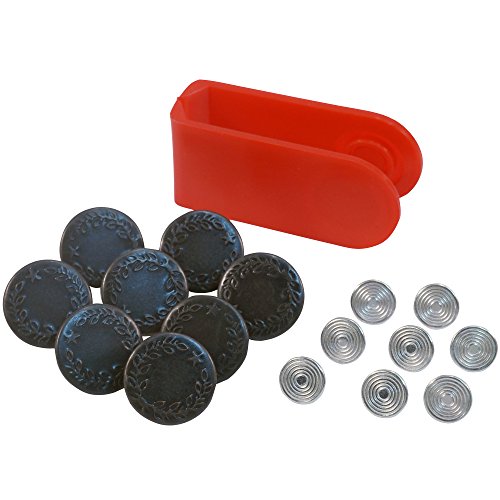
Dritz Jean Button and Rivet Attachment Set

Knitting a "chunky" piece often calls for hardware that mimics denim-wear. This set is specifically designed for those heavier, structural buttons you see on chore coats or heavy-duty cardigans.
These buttons are meant to be hammered into place, creating a permanent, rugged closure. They are perfect for rustic, woolly projects where you want a bit of an industrial aesthetic.
Because these are permanent, there’s no room for error. Always practice on a swatch of the same thickness as your garment before committing to the final piece.
How to Choose Fasteners for Your Knit Fabric
- Lightweight/Drapey Knits: Opt for plastic snaps or sew-on fasteners to prevent the fabric from sagging or tearing.
- Heavy/Structured Knits: Use metal snaps or jean-style buttons that can handle the weight and tension of thick wool.
- Gauge Considerations: If your gauge is loose, you must use a stabilizer (like iron-on interfacing) behind the snap area to prevent the hardware from pulling through the stitches.
Essential Tools for Securing Garment Closures
Beyond the kits themselves, you need a few "knitter’s best friends" to make the process easier. A good pair of sharp embroidery scissors is essential for trimming stray threads before setting a snap.
Don’t forget your measuring tape and a tailors chalk or water-soluble marker. Precision in placement is just as important as the tool you use to set the hardware.
Finally, keep a small stash of clear, fusible stabilizer on hand. Even with the best pliers, a bit of reinforcement on the wrong side of your knit fabric will ensure your snaps stay put for years.
Tips for Installing Snaps Without Fabric Tears
The biggest mistake beginners make is skipping the stabilizer. Knitted fabric is inherently stretchy; if you put a metal snap directly into a loose stitch, the snap will eventually work its way out, leaving a hole in your beautiful work.
Always reinforce the area where the snap will sit with a small square of interfacing or even a scrap of tightly woven cotton fabric. This creates a "gasket" that holds the prongs firmly in place.
Lastly, work on a hard, flat surface. Whether you are using pliers or a hammer, a soft or uneven surface will lead to an uneven snap, which can cause the fastener to pop open or snag on your clothes.
Mastering closures is the final step in transforming your knitting from a hobby into a craft. By choosing the right kit and respecting the unique properties of your fiber, you ensure your garments last as long as the time you put into them. Start with a simple pliers-based kit, practice on your swatches, and don’t be afraid to experiment with different hardware types. Your future self—and your wardrobe—will thank you for the extra attention to detail.