6 Best Sewing Clips For Edge Alignment To Try
Master edge alignment with our top 6 sewing clips. These essential tools ensure precise fabric layering, making your next sewing project easier and neater.
Every fiber artist knows the frustration of watching a carefully aligned seam shift just as the needle pierces the fabric. While pins have been the standard for decades, they often snag delicate yarns or leave unsightly holes in fine-gauge knits. Sewing clips offer a structural alternative that keeps your pieces perfectly positioned without compromising the integrity of your stitches. This guide explores the best clips to help you achieve professional-level finishing on every project.
Clover Wonder Clips: Best Overall for Edge Control
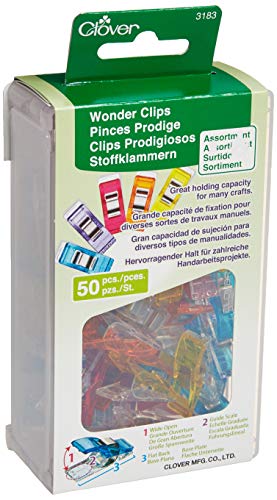

Clover Wonder Clips are the gold standard for a reason. Their flat base allows them to glide effortlessly across your sewing machine bed, ensuring that your fabric stays perfectly level as you feed it under the presser foot.
For knitters working with slippery fibers like silk or bamboo blends, these clips provide a consistent, firm hold that pins simply cannot match. They don’t distort the tension of your knitted fabric, which is crucial when you are joining seams on a delicate, hand-knit garment.
The primary tradeoff is the price point, as they are a premium investment. However, for those of us who spend dozens of hours on a sweater, the peace of mind they provide is well worth the extra cost.
Dritz Sewing Clips: The Essential Value Choice
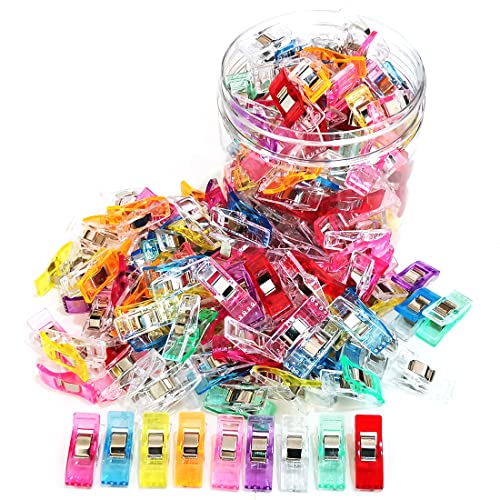
Dritz clips are the reliable workhorse of the sewing kit. They offer a strong, reliable grip that is perfect for securing folded hems or thick, wool-blend facings before you begin your final stitch.
If you are a beginner who is still mastering the art of the mattress stitch or machine-seaming, these are an excellent starting point. They are durable, easy to open, and won’t break the bank when you need to buy a large quantity for a complex project like a modular blanket.
Keep in mind that they are slightly bulkier than the Clover versions. Use them on heavier, sturdier fabrics where a bit of extra weight won’t pull the seam out of alignment.
Wawak Multi-Purpose Clips: Best for Heavy Fabrics
When you are working with chunky, heavy-weight wool or multi-layered construction, standard clips can sometimes pop off. Wawak clips are designed with a higher tension spring, making them ideal for holding thick layers in place.
Think of these as the heavy-duty clamps of the sewing world. They are indispensable when you are joining thick, felted pieces or heavy coat-weight knits where you need to force the fabric to stay put.
Because of their immense strength, be cautious when using them on delicate, loose-gauge knits. They can leave temporary indentations in soft fibers like alpaca or cashmere, so always test on a swatch first.
Singer Quick-Grip Clips: Best for Precise Seaming

Singer Quick-Grip clips feature a unique, slim profile that is perfect for tight spaces. If you are working on small-scale projects like mittens or intricate baby booties, these clips won’t get in your way as you navigate the curves.
They offer just enough tension to hold the edges together without over-stretching the knitted fabric. This is vital when working with high-twist yarns that have a tendency to "snap back" if pulled too tightly.
They are a fantastic middle-ground option for those who find standard clips too large but want more security than a pin. They are best suited for light-to-medium weight projects.
Hemline Assorted Sewing Clips: Best Variety Pack

Variety is often the spice of life, especially when you are switching between different yarn weights and garment types. Hemline’s assorted packs provide clips in multiple sizes, allowing you to choose the right tool for the specific job at hand.
Having a range of sizes is incredibly helpful when you are working on a project with varying thicknesses, such as a sweater with a heavy collar and thin body. You can use the larger clips for the collar and the smaller ones for the side seams.
The tradeoff here is that you might find yourself only reaching for two or three sizes consistently. It is a great way to build your kit, but expect to have a few spares left over.
Taylor Seville Magic Clips: Best for Fine Knits
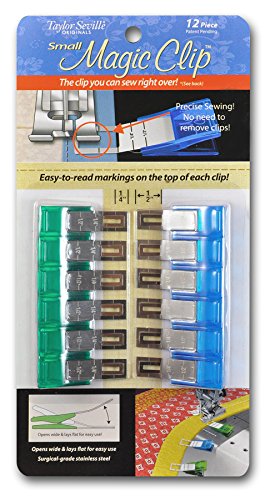
Taylor Seville Magic Clips are designed with a soft, non-slip coating that is a game-changer for fine-gauge knitting. They provide a secure hold that feels gentle against the fibers, minimizing the risk of snagging or distorting your work.
If you are working with luxury fibers like mohair or lace-weight merino, these are the safest choice. They grip the fabric firmly but without the harsh pressure that can cause fiber breakage or permanent distortion.
They are a bit of a luxury item, but if you specialize in delicate, high-end knits, they are an essential tool. They respect the work you have put into your stitches.
Why Sewing Clips Outperform Traditional Pins
Pins are notorious for snagging yarn, which can lead to pulled stitches and ruined gauge. In a knitted fabric, a pin often just slides between the loops, failing to provide the structural tension needed to keep seams aligned.
Clips, by contrast, act as a bridge between the two layers of fabric. They hold the edges in a fixed position, which is essential for preventing the "shifting" that often occurs when working with stretchy, elastic knits.
Furthermore, pins can be dangerous if left in your work, especially if you have pets or small children. Clips are easy to see, easy to remove, and significantly reduce the risk of a stray sharp point finding your finger.
How to Use Clips for Perfect Seam Alignment
The secret to perfect seam alignment is to clip from the center outward. Start by pinning the two ends of your seam, then work your way toward the middle to distribute the fabric evenly.
When you are seaming a sweater side, ensure your rows are perfectly matched before applying the clip. Use the clip to hold the "live" edges together, making sure the fabric is flat and not bunched.
Always remove the clips as you reach them during the seaming process. Never sew over a clip, as it can damage your sewing machine needle or snap the plastic of the clip itself.
Choosing the Right Clip Size for Your Project
Choosing the right clip size depends entirely on the thickness of your project. For fine, delicate knits, opt for smaller, low-tension clips to avoid leaving marks or stretching the fabric.
For bulky, chunky knits or multiple layers, you need a larger clip with a wider mouth and a stronger spring. A clip that is too small for the project will constantly pop off, leading to frustration and uneven seams.
Always perform a "pinch test" on a scrap piece of your yarn. If the clip leaves a lasting mark after 30 seconds, it is likely too strong for that specific fiber.
Maintenance Tips to Keep Your Clips Gripping
Sewing clips are durable, but they can collect dust and lint from your yarn over time. Periodically wipe them down with a damp cloth to ensure the gripping surface remains clean and effective.
Avoid storing your clips in a place where they are under constant tension. If you have a large collection, keep them in a container where they can remain closed but not clamped onto anything else.
If a clip loses its spring, it’s time to retire it. A weak clip is a liability that will only lead to uneven seams and wasted time.
Investing in quality sewing clips will transform the way you finish your knitted garments, turning tedious assembly into a precise, stress-free process. By matching your clip choice to the weight and delicacy of your yarn, you can protect your hard work and achieve a clean, professional finish every time. Start with a few different types to see what works best for your personal knitting style and project needs. Happy seaming, and may your edges always align perfectly.